SECTIONS

HomeArticlesPodcastsJobs

Dual Fuel--Colocating Ethanol, Biodiesel

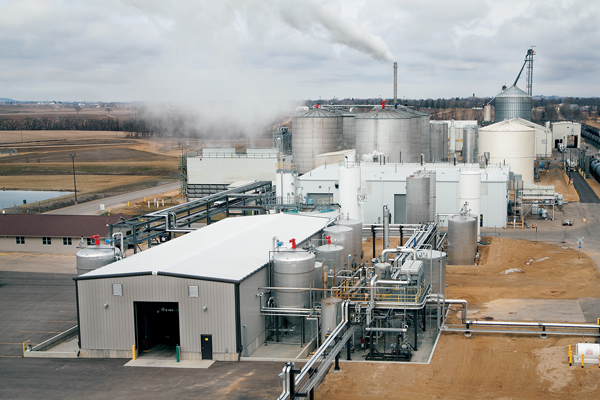
PHOTO: DREIBELBIS-FAIRWEATHER

April 13, 2016

BY Keith Loria

Advertisement

Advertisement

Related Stories

Merkley, Bentz introduce bill to expand RFS definition of renewable biomass

Article image

By Erin Krueger

2 minutes ago

Policy Feedstocks Business 

The Wildfire Reduction Market Expansion Act of 2026 was introduced in both the U.S. House of Representatives and the U.S. Senate on July 22. The bill aims to expand the Renewable Fuel Standard’s definition of renewable biomass to include additional low value woody materials. Specifically, the legislation would expand the RFS’s definition of renewable biomass to include additional forest products manufacturing and wood products manufacturing residuals, including wood residuals, paper residuals, wood chips, bark, shavings and other low-value byproducts. It would also allow slash, storm debris, pre-commercial thinning materials, fuel reduction byproducts and ecological restoration materials from qualifying private, tribal and federal lands to be used as eligible renewable biomass. This includes vegetation removed through defensible space projects and wildfire risk reduction activities in the wildland-urban interface. In addition, the Wildfire Reduction Market Expansion Act would establish a straightforward certification process for qualifying materials sourced form private and federal lands. The legislation also includes language clarifying that existing forest plans and resource management plans do not need to specifically identify renewable fuel production as an intended end use, provided that the underlying forest management activity is otherwise authorized and consistent with applicable law. The House version of the bill, H.R. 9827 was introduced by Rep. Cliff Bentz and referred to the House Committee on Energy and Commerce. To date, Reps. Bennie Thompson, D-Miss.; Bruce Westerman, R-Ariz.; Mike Ezell, R-Miss.; James Gallegher, R-Calif.; Ami Bera, D-Calif.; Max Miller, R-Ohio; Michael Guest, R-Miss.; Kim Schrier, D-Wash.; Robert Latta, R-Ohio; Derrick Van Orden, R-Wisc.; and Randy Fine, R-Fla., have signed on to cosponsor the bill. The Senate version of the legislation, S. 5087, was introduced by Sen. Jeff Merkley, D-Ore., and referred to the Senate Committee on Environment and Public Works. Current cosponsors include Sens. Cindy Hyde-Smith, R-Miss.; Alex Padilla, D-Calif.; John Kennedy, R-La.; Jeanne Shaheen, D-N.H.; Angus King, I-Maine; and Susan Collins, R-Maine. The bipartisan, bicameral bill is supported by more than 75 organizations, including Advanced Woody Biomass Alliance, American Biomass Energy Association, American Farm Bureau Federation, Pellet Fuels Institute, and SunGas Renewables. “Farm Bureau appreciates the introduction of bipartisan legislation that supports farmers, foresters and both public and private forest lands across the United States,” said John Newton, vice president of public policy and economic analysis, American Farm Bureau Federation. “Updating the definition of renewable biomass for the Renewable Fuel Standard will support active land stewardship and reduce wildfire risk through improved management of public lands. Farm Bureau encourages the Senate to swiftly consider the Wildfire Reduction Market Expansion Act of 2026.” A full version of the bill is available on Merkley’s website.

Read More

The U.K. government on July 23 announced plans to broaden eligibility criteria for sustainable aviation fuel (SAF) financing and released updated statistics on the volume of fuel used to meet the country’s SAF mandate last year.

Read More

The Timphaus farming business in Lohne, Germany, began producing biogas in 2011. After 15 years, the family that operates the farm is now expanding its biogas operations to include an EnviThan gas upgrading unit.

Read More

Sustainable aviation fuel (SAF) could become a major driver of Canada's industrial and economic growth, according to a macroeconomic study conducted by Airbus and ICF, unveiled at the Farnborough International Airshow.

Read More

Honeywell Technologies has completed its acquisition of Johnson Matthey’s Catalyst Technologies business for £1.325 billion in an all-cash transaction. The deal strengthens the company’s portfolio across refining, petrochemicals and renewable fuels.

Read More

Upcoming Events

Sign up for our e-newsletter!
BBI International Logo

@ Copyright 2026 - BBI International - All rights reserved.