

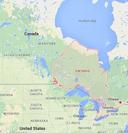
The Ontario government is investing over $2.1 million in four projects to increase forest sector competitiveness and drive innovative uses for mill by-products and underused wood known as forest biomass.

The Intermediate Oilseed Crop Alliance on Aug. 17 announced its formal incorporation as a new 501(c)(6) trade association dedicated to advancing the commercialization of intermediate oilseed crops including camelina, carinata, and pennycress.

Sustainable Northwest, the Intertribal Timber Council, and the U.S. Endowment for Forestry and Communities announced a five-year, $1.7 million award to help Tribes across the country build new markets for wood that's often left behind.

RevaTerra, an advanced materials company engineering natural residuals into industrial-grade bioenergy products, on Nov. 11 announced the final close of an oversubscribed $1.265 million seed financing.

The USDA maintained its forecast for 2026-’27 soybean oil use in biofuel production in its latest World Agricultural Supply and Demand Estimates report, released Aug. 12. The estimate for 2025-’26 soybean oil use in biofuel was revised up.

U.S. biofuel producers consumed 30.749 billion pounds of feedstock in May, up 10% when compared to April and up 8% when compared to May 2025, according to data released by the U.S. Energy Information Administration on Aug. 5.

ADM on July 30 announced a series of investments designed to expand North American oilseed crush capacity and strengthen the company's ability to meet growing demand for renewable fuels and other vegetable oil markets.
The U.S. EPA on July 14 approved a RFS fuel pathway petition filed by Chevron Renewable Energy Group Inc. that will allow the company’s Geismar, Louisiana, faculty to generate RIN for fuel produced from CoverCress oil feedstock.

The USDA is taking steps to speed up progress in plant science by calling on universities and stakeholders to help build new AI tools that can translate the huge amount of germplasm data the agency collects.

The Wildfire Reduction Market Expansion Act of 2026 was introduced in both the House and the Senate on July 22. The bill aims to expand the RFS’s definition of renewable biomass to include additional low value woody materials.
American Farm Bureau Federation President Zippy Duvall on July 16 sent a letter to congressional leadership calling for additional support for U.S. agriculture producers as AFBF analysis predicts farmer losses will deepen in 2027.
The American Soybean Association is urging the U.S. EPA to update its lifecycle analysis for soybean oil used to produce renewable diesel, arguing that current methodologies treat soybean oil differently than comparable feedstocks.
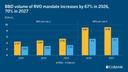
CoBank’s Knowledge Exchange on July 8 released a new quarterly report that discusses the current status of the Renewable Fuel Standard, indicating that this year’s level of blending could determine the future trajectory of the program.

The North American SAF Conference & Expo has expanded its agenda with the addition of a new Tuesday afternoon General Session featuring many of the industry's most influential leaders and organizations.
The USDA maintained its forecast for 2026-’27 soybean oil use in biofuel production in its latest World Agricultural Supply and Demand Estimates report, released July 10. The outlook for soybean oil pricing was unchanged.

Biochar and biocarbon markets are expanding rapidly, but future growth will depend on identifying the right feedstocks for the right applications while balancing cost, performance, availability and carbon intensity.

The U.S. Department of Agriculture on June 25 announced a final rule establishing technical guidelines for the production of regenerative agricultural biofuel feedstocks, a framework intended to help farmers market crops produced using qualifying regenerative practices into biofuel supply chains.
The European Parliament on July 8 voted to reject a proposed EU regulation that would have phased out the use of soybean oil as a biofuel feedstock by 2030. Representatives of the EU’s biobased diesel industry applauded the decision.

President Donald Trump on June 29 signed a proclamation temporarily suspending countervailing duties (CVDs) on certain phosphate fertilizer imports, providing immediate relief to American farmers.
U.S. biofuel producers consumed 27.973 billion pounds of feedstock in April, down nearly 8% when compared to March, but up 4% when compared to April 2025, according to data released by the U.S. Energy Information Administration on June 30.
The USDA’s National Agricultural Statistics Service on June 30 announced U.S. farmers planted an estimated 85.4 million acres of soybeans in 2025, up 5% when compared to last year. Planted acreage is up or unchanged in 20 of the 29 estimating states.

A research team at the University of Illinois Urbana-Champaign has developed a method to produce jet-grade fuel from food waste, contributing to a circular bioeconomy.
ASTM and CSA Group have signed an agreement to develop a joint standard on evaluating biomass supply chain risk. The collaboration builds on CSA Group’s existing CSA W209 standard and aims to expand its use and impact.

Gov. JB Pritzker and the Illinois Department of Commerce and Economic Opportunity on June 22 celebrated Incobrasa Industries’ new soybean processing plant and solar array in Gilman, reinforcing Illinois' position as a growing hub for biofuels.
The USDA on June 25 announced its final Regenerative Feedstock Rule is ready for release. The action provides a voluntary pathway for farmers to capture value from regenerative agriculture practices via the 45Z clean fuel production credit.
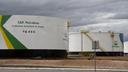
Brazil-based Petrobras on June 17 announced it has completed the production and sale of its first batch of sustainable aviation fuel (SAF) made from CORSIA-certified soybean oil. The soybean oil was sourced from Bunge.

President Donald Trump on June 24 called on Congress to pass E15 legislation and asked lawmakers to approve an additional $11.1 billion in farm aid, including $10 billion in economic support for row and specialty crop farmers.
The USDA on June 18 released data showing the cost of soybean production is expected to increase more than 4% this year, reaching $$683.89 per acre. Per-acre costs are currently expected to expand by an additional 3% in 2027.

Carbon Direct on June 16 released the Criteria for High-Quality Low Carbon Fuels — a globally applicable, consolidated criteria for high-quality low carbon fuels (LCF) procurement on the voluntary market.
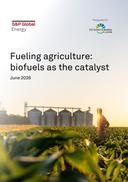
A comprehensive new study from S&P Global Energy finds expanded biofuel demand could transform American agriculture, reignite rural economies and provide global food and energy security. The study was commissioned by USFRA.
Advertisement

@ Copyright 2026 - BBI International - All rights reserved.