


Researchers at the Joint Bioenergy Institute have demonstrated the production of a biobased jet fuel precursor Rhodosporidium toruloides, a type of oil-accumulating yeast that is a promising microbial host for biomanufacturing.

Calumet Inc. has announced a new flight plan for its MaxSAF expansion at Montana Renewables LLC. The facility is expected to reach 200 million gallons of annual SAF production and 17,000 barrels per day of total product sales by year-end 2028.
XCF Global advances commercial execution
By XCF Global Inc.
September 02, 2026
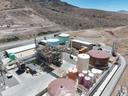
XCF Global Inc., a scaling U.S.-based producer of renewable diesel and SAF, on Sept. 1 announced another milestone in the company's transition from development-stage operations to active, revenue-generating commercial production.
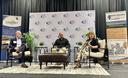
The future of SAF will depend on strong partnerships among farmers, fuel producers, the aviation industry and government leaders, according to panelists participating in a discussion during the 2026 Global Aerospace Summit.

Vancouver International Airport has launched a new online calculator that allows travelers to estimate their flight’s greenhouse gas (GHG) emissions and contribute to the use of sustainable aviation fuel (SAF).

EVA Air on signed an MOU with AIT Worldwide Logistics to jointly advance EVA Air's Green Transportation Program. In the first year of the collaboration, EVA Air will provide 15,000 metric tons of CO₂e in SAF environmental attributes to Microsoft.

KBR announced on Aug. 24 it has been awarded a contract by KazMunayGas-Aero LLP, a subsidiary of NC KazMunayGas JSC, and KazFoodProducts for Kazakhstan’s first sustainable aviation fuel (SAF) production plant.
XCF Global Inc. on Aug. 27 addressed current dynamics across North American fuel markets as U.S. refiners face tighter crude slates following recent production pullbacks and maintenance across Canadian oil sands facilities.

China's first sustainable aviation fuel (SAF) compliance service for foreign-registered business jets was successfully implemented at Beijing Capital International Airport in China, according to Sino Jet.

The U.S EPA released updated RIN data on Aug. 20, reporting that 2.12 billion RINs were generated under the RFS in July, up more than 4% when compared to July 2025. Total RIN generation for the first seven months of the year reached 14.19 billion.
Syzygy Plasmonics on Aug. 18 announced a framework agreement with the International Finance Corp., the private sector arm of the World Bank Group, to support the development of a pipeline of SAF projects across Latin America.
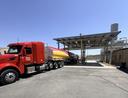
XCF Global Inc. on Aug. 18 announced a key operational and revenue-generating milestone: its flagship New Rise Renewables Reno facility is actively delivering approximately 55,000 gallons of renewable diesel per day to the market.

The European Commission on July 30 approved a EUR 290 million ($338.61 million) Dutch state aid package to support sustainable aviation fuel (SAF). The two approved support schemes aim to boost SAF supply and demand.
MAIRE announced that Nextchem, through its subsidiary MyRechemical, has been awarded licensing, process design package and engineering services by SKY Renewables Burdekin Pty Ltd. for the syngas section of Project Lion in Australia.

Tidewater Renewables Ltd. on Aug.13 announced its renewable diesel and renewable hydrogen (HDRD) complex in Prince George, British Columbia, achieved record average daily throughput of 3,315 barrels per day during the second quarter of 2026.
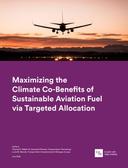
A new report from Clean Air Task Force finds that directing SAF to a small number of high-impact airports, rather than spreading it across the aviation network, could significantly increase the fuel’s climate and public health benefits.

The government of Brazil on Aug. 12 published a decree that establishes rules and regulations for the country’s sustainable aviation fuel (SAF) mandate, formally referred to as the National Sustainable Aviation Fuel Program (ProBioQAV).
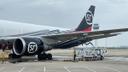
EcoCeres has partnered with SF Group and China National Aviation Fuel Group to launch a customized SAF commercial fueling program in collaboration with the Second Research Institute of the Civil Aviation Administration of China.
XCF Global Inc., an emerging U.S.-based producer of renewable diesel and sustainable aviation fuel (SAF), on Aug. 11 announced sales of renewable diesel from XCF Global's New Rise Renewables Reno facility to Tartan Oil LLC.

The U.S. Energy Information Administration maintained its 2026 and 2027 production forecasts for biodiesel, renewable diesel and sustainable aviation fuel (SAF) in its latest Short-Term Energy Outlook, released Aug. 11.
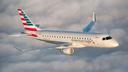
American Airlines and Infinium on Aug. 6 announced its first delivery of electro sustainable aviation fuel (eSAF) to a commercial airport for use in a commercial passenger flight, marking a major milestone in the decarbonization of aviation.
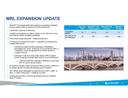
With the initial phase of its MaxSAF 150 initiative now complete, Montana Renewables is preparing to further increase sustainable aviation fuel (SAF) capacity. The company plans to expand SAF production to more approximately 200 MMgy by 2028.

Gevo Inc. on Aug. 6 announced it has cancelled plans to develop a SAF project in South Dakota. Rather, the company remains focused on its North Dakota operations, including plans to expand ethanol production capacity and develop a 30 MMgy SAF plant.
XCF Global Inc., an emerging U.S.-based producer of renewable diesel and SAF, on Aug. 7 provided an operational update on renewable diesel production, initial fuel sales and ongoing optimization work at its New Rise Renewables Reno facility.

Sasol and Topsoe have announced they will prepare for the orderly operational wind-down of their SAF-focused joint venture, Zaffra, while continuing and enhancing their long-standing technology-led licensing collaboration.
KLM, together with SkyNRG and invited guests, on Aug. 5 marked the start of construction of the first facility in the Netherlands fully dedicated to the production of sustainable aviation fuel (SAF).
Par Pacific Holdings Inc. released second quarter financial results on Aug. 5, reporting its Hawaii renewable fuels facility ramped up production during the three-month period after commencing operations in April.
Montana Renewables LLC (MRL) joined the Minnesota SAF Hub in celebration of new supply to Minneapolis-St. Paul International Airport (MSP). MRL will supply up to 30 million gallons of neat SAF annually through its existing Shell offtake agreement.

Argus has launched sustainable aviation fuel (SAF) emissions reduction indexes (ERIs), enabling aviation market participants to compare SAF economics with compliance and voluntary carbon market obligations.
The North American SAF Conference & Expo is excited to announce its expanded its agenda with the addition of the Aviation & Maritime Fuels Forum, a dedicated program exploring the rapidly evolving role of sustainable fuels in the maritime sector.
Advertisement

@ Copyright 2026 - BBI International - All rights reserved.