


The U.S. exported 857,136.9 metric tons of wood pellets in September, down 5% when compared to August and down 1% when compared to September 2025, according to data released by the USDA Foreign Agricultural Service on Nov. 4,

Drax, Brookfield and Radiant, Brookfield’s U.K.-headquartered AI infrastructure platform, announce a new strategic partnership to jointly develop, deliver and operate GW-scale data center capacity at Drax Power Station in North Yorkshire.


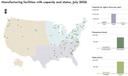
U.S. manufacturers produced approximately 960,000 tons of densified biomass fuel in July, according to the U.S. EIA’s Monthly Densified Biomass Fuels Report. Sales of densified biomass fuel reached 1 million tons during the month.
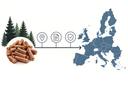
The EU Deforestation Regulation will make traceability a market access requirement for wood pellets. For producers, the challenge is not only collecting documents but turning fragmented supply chain data into an audit-ready system.

USDA NIFA on Oct. 7 announced it has awarded $3.2 million in funding to six projects that support research on the social implications of emerging technologies. One of the projects focuses on biomass supply chains.
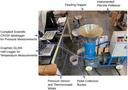
Instrumented farm-scale flat-die pellet production, experimental data and machine learning are being combined to make biomass pelleting more predictable across changing feedstocks and operating conditions.
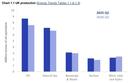
The U.K. Department for Energy Security and Net Zero on Sept. 29 released data showing that total energy production from bioenergy and waste sources fell by 3.4% during the second quarter of 2026 when compared to the same period of 2025.

Guernsey-based sustainable energy developer Cindrigo Holdings Ltd. discussed plans to develop a Finland-based wood pellet production facility in its second quarter earnings release, issued on Sept. 30.

With winter approaching, the Alliance for Green Heat is seeking proposals from firewood banks across the country to expand their capacity to provide free firewood to families struggling to heat their homes.
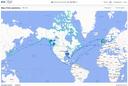
Drax on Sept. 30 introduced a new interactive map feature for its Biomass Tracker tool that visualizes the journey that sustainably sourced woody biomass takes through the company’s global supply chain.
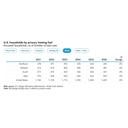
Approximately 1.622 million U.S. households are expected to use wood as a primary heating fuel in 2026, down 4% when compared to last year, according to the U.S. Energy Information’s annual Winter Fuels Outlook, released Oct. 6.

New Zealand’s Energy Efficiency and Conservation Authority on Oct. 1 announced it is investing in five new wood energy aggregation facilities and four projects that aim to produce torrefied biomass and wood pellets.

The USDA on Sept. 30 published a final rule that fundamentally changes the structure and administration of REAP. The program will now require projects to be fully built and operational before an application can even be filed.

Drax Group plc on Sept. 17 released a half-year trading update, noting the company has now substantively contracted all external volumes of biomass fuel required for Drax Power Station during the period of its new low-carbon CfD agreement.
Call for speaker abstracts now open for the 2027 International Biomass Conference & Expo

By BBI International
September 29, 2026
The call for presentation abstracts for the 20th Annual International Biomass Conference & Expo, produced by Biomass Magazine, is now open. The event will take place March 2-4 at the Cobb Convention Center in Atlanta, Georgia.
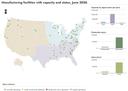
U.S. manufacturers produced approximately 950,000 tons of densified biomass fuel in June, according to the U.S. EIA’s Monthly Densified Biomass Fuels Report. Sales of densified biomass fuel reached 960,000 tons during the month.

NB Power has reached two important milestones in its plan to transition the Belledune Generating Station from coal to sustainably sourced advanced pellets made from wood and agricultural hemp biomass.

A U.K. official on Sept. 1 confirmed that the U.K. government does not intend to introduce replacement subsidies for small-scale biomass generators when the current Renewables Obligation (RO) support scheme expires in April 2027.
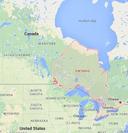
The Ontario government is building a strong and self-reliant economy by investing over $17.3 million in four projects that will modernize forest sector manufacturing, enhance the industry’s competitive advantage and strengthen forestry supply chains.
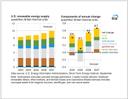
Renewables are expected to account for more than 26% of U.S. electricity generation this year, expanding to nearly 28% in 2027, according to the U.S. Energy Information Administration’s latest Short-Term Energy Outlook, released Sept. 9.
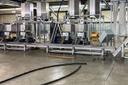
Solutions 4 Manufacturing is offering two pellet mills in Missouri for sale as systems or as individual pieces through an ongoing negotiated sale. Each plant was a complete operating plant with proven production.
The U.S. exported more than 1.08 million metric tons of wood pellets in July, up 15% when compared to June and up 11% when compared to July 2025, according to data released by the USDA Foreign Agricultural Service on Sept. 3.
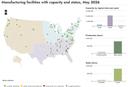
U.S. manufacturers produced approximately 930,000 tons of densified biomass fuel in May, according to the U.S. EIA’s Monthly Densified Biomass Fuels Report. Sales of densified biomass fuel reached 900,000 tons during the month.
The U.K. is expected to consume a record 10.35 million metric tons of wood pellets in 2026, requiring an estimated 10.15 million metric tons of imports, according to a report filed with the USDA FAS Global Agricultural Information Network.

The U.S. Forest Service on Aug. 5 warded $105.5 million in wood innovation grants to 177 projects across the nation. Funded projects include those focused on biochar, bioenergy and wood pellet production.

As the European Deforestation Regulation implementation approaches, traceability will determine continued access to the European market.
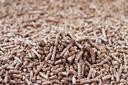
Pellet Mill Magazine examines the challenges holding back North America's industrial pellet industry—and the catalysts that could finally ignite a strong domestic market.
Advertisement

@ Copyright 2026 - BBI International - All rights reserved.