

From Burn Piles to Biochar

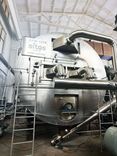
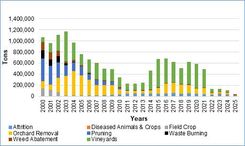

Almond waste, which consists primarily of hulls and shells, presents both challenges and opportunities for growers. IMAGE: STOCK
January 8, 2026
BY Keith Loria
Advertisement
Advertisement
Related Stories

Researchers at Penn State have found that mixing manure with plant biomass can increase methane production — which is necessary for biogas — and improve the economic feasibility of farm-scale anaerobic digestion.

The USDA maintained its forecast for soybean oil use in biofuel production in its latest World Agricultural Supply and Demand Estimates report, released Oct. 9. The outlook for soybean oil prices was also unchanged.

The USDA on Oct. 9 released its latest Crop Production report, predicting soybean production for beans will reach a record high 4.56 billion bushels in 2026, up 1% when compared to the September forecast and up 7% when compared to 2025.

CHAR Technologies Ltd. on Oct. 1 announced the substantial completion of Phase 1 mechanical and electrical construction at its Thorold Renewable Energy Facility, the company's first commercial renewable energy and biocarbon production facility.

The USDA on Oct. 6 announced a $180 million investment to launch the USDA’s Seed Sovereignty Initiative, a major effort to both strengthen U.S. agricultural security by protecting the plant genetic resources and enabling ag innovation.
Upcoming Events

@ Copyright 2026 - BBI International - All rights reserved.