

Study suggests more cost-efficient, carbon friendly method for SAF production
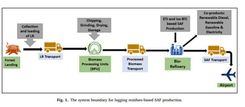

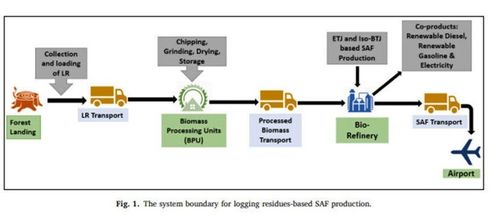
This flow chart depicts sustainable aviation fuel production, beginning with collecting logging residue, processing, and transporting the fuel to the airport. (Graphic first published in Elsevier) / SOURCE: University of Georgia
August 6, 2024
BY University of Georgia
Advertisement
Advertisement
Related Stories
XCF Global Inc. on Oct. 20 announced that it has entered into a definitive agreement to acquire a renewable fuel production facility in Paramount, California through a newly formed subsidiary of XCF, New Rise Renewables Paramount LLC.

The USDA on Oct. 19 announced plans to launch a new Harvest Fuel Relief program to provide $8 billion to U.S. farmers to help offset high fuel costs. The one-time payments will be funded through the USDA’s CCC and administered by the FSA.

The ASEAN Centre for Energy and Airbus have signed MOU) establishing a three-year cooperation program to support the development of sustainable aviation fuel (SAF) in the Association of Southeast Asian Nations (ASEAN).

The IATA, Airbus, and Accenture released a SAF Environmental Attribute Certificate (EAc) Market study which estimates that corporate purchases could support between 1 million and 1.9 million metric tons of SAF by 2030.

Researchers at Penn State have found that mixing manure with plant biomass can increase methane production — which is necessary for biogas — and improve the economic feasibility of farm-scale anaerobic digestion.
Upcoming Events

@ Copyright 2026 - BBI International - All rights reserved.