


At the 2025 International Biomass Conference and Expo, panelists offered insight and solutions for wood pellet and biogas producers to streamline their process and maximize production.

The USDA reduced its outlook for 2024-’25 soybean oil use in biofuel production in its latest World Agricultural Supply and Demand Estimates report, released April 10. The outlook for soybean oil pricing was revised up.

Sen. Roger Marshall, R-Kan., and Rep. Marcy Kaptur, D-Ohio, on April 10 reintroduced legislation to extend the 45Z clean fuel production credit and limit eligibility for the credit to renewable fuels made from domestically sourced feedstocks.

Representatives of the U.S. biofuels industry on April 10 submitted comments to the U.S. Department of Treasury and IRFS providing recommendations on how to best implement upcoming 45Z clean fuel production credit regulations.

The U.S. Energy Information Administration reduced its 2025 forecasts for renewable diesel and biodiesel in its latest Short-Term Energy Outlook, released April 10. The outlook for “other biofuel” production, which includes SAF, was raised.

Renewables are expected to account for 25% of U.S. electricity generation this year, increasing to 27% in 2026, according to the U.S. Energy Information Administration’s latest Short-Term Energy Outlook, released April 10.

Anaergia Inc., through its subsidiary, Anaergia S.r.l., has signed a contract with Techbau S.p.A., a leading Italian company specializing in large-scale engineering and construction projects, for the building of five new biomethane production plants in Italy.

Selecting the right hydrogen sulfide control solution is a critical decision for biogas plants to maximize effectiveness, minimize costs and support environmental and regulatory goals.

Lawmakers in Wisconsin on April 3 announced their intent to introduce legislation that would create a $1.50 per gallon production tax credit for SAF. The bill is currently circulating for co-sponsorship support and will be formally introduced soon.

Neste has started producing SAF at its renewable products refinery in Rotterdam. The refinery has been modified to enable Neste to produce up to 500,000 tons of SAF per year. Neste’s global SAF production capacity is now 1.5 million tons.

Jet Zero Australia Pty Ltd has announced a FEED contract with Technip Energies and continuation of the owner’s engineering services contract with Long Energy & Resources for an ethanol-to-SAF project that will use LanzaJet technology.

A group of 16 senators, led by Sens. Chuck Grassley, R-Iowa, and Amy Klobuchar, D-Minn., on April 8 sent a letter to U.S. EPA Administrator Lee Zeldin urging the agency to increase RVO and account for SREs in the agency’s upcoming RFS rulemaking.

Tidewater Renewables Ltd. has reported that its biorefinery in Prince George, British Columbia, operated at 88% capacity last year. A final investment decision on the company’s proposed SAF project is expected by year end.

A group of small refineries on April 4 sent a letter to President Donald Trump urging him “to sent the multi-national oil and biofuels companies back to the drawing board to come up with a biofuels policy that does no harm.”

Aemetis Inc. on April 8 announced that its production of renewable natural gas (RNG) increased 55% in March compared to February. Aemetis Biogas also completed a sale of LCFS and D3 RINs at the end of Q1.
Mulling Our Value Proposition

April 08, 2025
Editor's note from Biomass Magazine Issue 2.
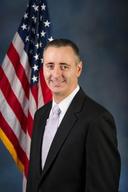
Reps. Brian Fitzpatrick, R-Pa., and Linda Sanchez, D-Calif., and Sens. Thom Tillis, R-N.C., and Mark Warner, D-Va., on April 2 reintroduced legislation that aims to create a $1-per-gallon tax credit for RNG sold for use as transportation fuel.
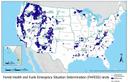
Agriculture Secretary Brooke Rollins on April 3 issued a Secretarial Memo to establish a “Emergency Situation Determination” that aims to empower the U.S. Forest Service to expedite efforts to reduce wildfire risk on National Forest System lands.

The RNG Coalition on April 7 debuted a new brand identity, shortening its name (previously “Coalition for Renewable Natural Gas”) and unveiling a vibrant new logo system that highlights its role as the trusted voice for North America's RNG industry.
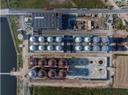
BDI-BioEnergy International has signed a contract with Ghent Renewables BV to begin the construction of a pioneering biofuel feedstock refinery plant. Construction is underway and the facility is expected to be operational by the end of 2025.

Verity Holdings LLC, a subsidiary of Gevo Inc., has partnered with Minnesota Soybean Processors (MnSP) to implement Verity’s proprietary track and trace software. The collaboration aims to unlock additional value through export premiums.

Researchers from the U.S. DOE’s Feedstock-Conversion Interface Consortium describe sources of feedstock variability and why it matters for biorefinery operations.

WM April 2 announced the company will celebrate the official grand openings for four recycling and renewable natural gas (RNG) projects across the U.S. The RNG projects are located near Chicago and Philadelphia.

New York's DCAS has awarded its first tender to buy renewable diesel for its ferries. The tender is part of a plan announced in October 2024 to transition the Staten Island Ferry and other vessels to renewable diesel.

IAG and Microsoft are extending their 2023 co-funded purchase agreement for SAF by five years. The SAF used under the agreement will be produced by Phillips 66’s Humberside refinery and LanzaJet’s facility in the U.S.

The U.S. exported 796,490.2 metric tons of wood pellets in February, down from 825,269.9 metric tons in January, but up when compared to the 696,692.9 metric tons exported in February 2024, according to date released by the USDA on April 3.
Anaergia Inc., through its subsidiary, Anaergia S.r.l., has signed contracts with entities owned by QGM S.á.r.l. for the building of two new biomethane production plants in Italy. Anaergia S.r.l. will serve as the EPC contractor for both projects.
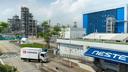
Neste and DB Schenker, a logistics service provider, have collaborated to work towards expanding DB Schenker’s adoption of Neste MY Renewable Diesel in Asia-Pacific. DB Schenker trialed the fuel from December 2024 to February 2025 in Singapore.

The International Air Transport Association has launched the Sustainable Aviation Fuel (SAF) Registry with its release to the Civil Aviation Decarbonization Organization. The registry is now live and under CADO management.

Varo Energy, a European energy company based in Switzerland, on March 31 announced an agreement to acquire Preem, a Sweden-based petroleum and biofuels company that is developing additional renewable diesel and SAF capacity.
Advertisement

@ Copyright 2026 - BBI International - All rights reserved.