


The USDA maintained its forecast for 2026-’27 soybean oil use in biofuel production in its latest World Agricultural Supply and Demand Estimates report, released Sept. 11. The estimate for 2025-’26 soybean use in biofuel production was revised up.

The USDA released its latest monthly Crop Production report on Sept. 11, predicting soybean production for beans will reach 4.53 billion bushels in 2026, up slightly from the previous forecast and up 6% from 2025.

Brimex Energy S.A. de C.V. has announced that its renewable natural gas facility in Lagos de Moreno is the first renewable thermal project in Mexico to be registered on the CleanCounts Registry (M-RETS), operated by CleanCounts.

Axens on Aug. 31 announced that it has been selected by Expander Energy Inc., a Canada-based producer of sustainable aviation fuel (SAF) and renewable diesel (RD), to provide its advanced FT Liquid Upgrading technology.

The U.K. Trade Remedies Authority on Sept. 10 announced it will not apply anti-subsidy duties to imports of renewable diesel from the U.S., as previously proposed duties “would not be in the U.K.’s economic interests.”

The U.S. exported more than 1.08 million metric tons of wood pellets in July, up 15% when compared to June and up 11% when compared to July 2025, according to data released by the USDA Foreign Agricultural Service on Sept. 3.

Total operatable U.S. biofuel production capacity was at 25.299 billion gallons per year in June, essentially unchanged when compared to the previous month, according to data released by the U.S. Energy Information Administration on Aug. 31.

The U.S. biofuel industry consumed 30.46 billion pounds of feedstock in June, up 4% when compared to May and up 6% when compared to June 2025, according to data released by the U.S. Energy Information Administration on Aug. 31.
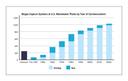
According to data released by the ABC, 1,200 wastewater treatment plants across the U.S. currently capture and use biogas produced from wastewater sludge. Together, these facilities capture more than 100 billion cubic feet of biogas annually.
Bayer and Neste close commercial agreement to jointly scale newgold winter canola for biofuels production

September 10, 2026
Bayer and Neste, the world’s leading producer of renewable diesel and sustainable aviation fuel (SAF), on Sept. 9 announced the companies have finalized a commercial agreement to jointly scale Bayer’s newgold winter canola.

Ameresco Inc. on Aug. 31 announced the groundbreaking of a renewable natural gas (RNG) facility being developed by Ameresco through its subsidiary Neogenyx Fuels at the Adams Land & Cattle feedlot in Broken Bow, Nebraska.

The IRS on Sept. 8 issued guidance on the 45Z clean fuel production credit that provides the 2026 emission rate tables used to calculate the credit and provides guidance on the use of manure-derived fuels and regenerative agriculture practices.

The U.S. Department of Energy on Sept. 8 released an update of its 45ZCF-GREET model, which is used to calculate fuel emissions rates for the 45Z clean fuel production credit. The agency previously updated the model in June 2026.
Jet Zero Australia raises $30 million

By Jet Zero Australia Pty Ltd
September 09, 2026
Jet Zero Australia has achieved three major milestones for Project Ulysses, its proposed commercial-scale sustainable aviation fuel (SAF) and renewable diesel (RD) refinery in Townsville, Queensland, Australia.

Niutech Technology Group Co. Ltd. has signed a sales contract with a global energy major for an industrial continuous waste plastic pyrolysis production line that will produce waste plastic pyrolysis oil that will be used to produce SAF.

1606 Corp. on Aug. 25 provided an update on several initiatives underway surrounding its planned acquisition and redevelopment of the approximately 132-acre Texas biomass power facility and data center.

The BDO Zone Initiative on Aug. 31 released its 2025 Annual Report, Building the Bioeconomy Infrastructure. The report documents the year the network moved from expansion to execution, with CAD $10 billion in announced biomanufacturing investment.

HA Sustainable Infrastructure Capital Inc. has announced the closing of a structured equity investment in the Pasco Resource Recovery Center, a wastewater treatment and reuse facility serving the City of Pasco in Washington State.
Creating yeast strains that aren’t picky eaters

By U.S. Department of Energy
September 08, 2026
Researchers at the Center for Advanced Bioenergy and Bioproducts Innovation (CABBI) engineered a strain of yeast that does not prefer any individual sugar. The strain simultaneously utilized multiple sugars.
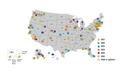
The U.S. Department of Energy’s Alternative Fuels and Feedstocks Office and the National Laboratory of the Rockies have selected recipients for the FY26 Waste to Energy and Materials Technical Assistance program.

The Australian Defence Force has begun rolling out low carbon liquid fuel (LCLF) blends across its network in an effort to strengthen fuel resilience.

OPAL Fuels on Aug. 26 announced that it has completed the renovation and upgrade of its fueling station in Goshen, California. The enhanced facility is expected to dispense approximately 14 million GGE RNG and CNG over the next decade.

Allegany County Industrial Development Agency, Ecostrat and the BDO Zone Initiative have announce the issue of a BDO Zone ‘A’ Rating for Allegany County, New York, for 300,000 bone dry tons per year of low-risk woody biomass

The USDA has released a new Data Modernization Plan to put farmers first, reduce unnecessary burdens on producers, and improve the timeliness, accuracy, and usefulness of the agricultural data that informs decisions across American agriculture.

Researchers at the Joint Bioenergy Institute have demonstrated the production of a biobased jet fuel precursor Rhodosporidium toruloides, a type of oil-accumulating yeast that is a promising microbial host for biomanufacturing.

Carbogenics USA has officially secured its first production facility in Raton, New Mexico, marking a major milestone in the early-stage company’s growth and its ambition to build a regional hub for sustainable carbon innovation.

Calumet Inc. has announced a new flight plan for its MaxSAF expansion at Montana Renewables LLC. The facility is expected to reach 200 million gallons of annual SAF production and 17,000 barrels per day of total product sales by year-end 2028.

KROHNE is highlighting its process instrumentation portfolio engineered for the sustainable aviation fuel (SAF) market. The portfolio enables producers to manage challenging feedstocks, hydrogen service, and demanding process conditions.
Illinois-led team selected for DOE Genesis Mission award

By University of Illinois
September 03, 2026
A multidisciplinary team led by U. of I. chemical and biomolecular engineering professor Huimin Zhao has received DOE funding to develop the world’s first foundation models specifically designed for metabolic engineering.

As the USDA’s regenerative ag feedstock framework moves toward implementation under the 45Z clean fuel production credit, attention is growing towards reallocating reduced-CI feedstock between separately located, but commonly owned elevators.
Advertisement

@ Copyright 2026 - BBI International - All rights reserved.