

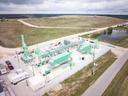
bp’s Archaea Energy has announced the official startup of its original Archaea modular design (AMD) RNG plant in Medora, Indiana. This is the first plant to come online since bp’s acquisition of Archaea in December 2022.

French President Emmanuel Macron has announced plans to convert the country’s two remaining coal-fired power plants to biomass. A whitepaper issued by FutureMetrics predicts how those conversions could boost demand for wood pellets.

The Washington State Department of Commerce on Sept. 26 awarded a combined $4.76 million from the state’s Clean Energy Fund to seven clean energy projects. Several of the awards support the development of biogas projects.

Aemetis Inc. closed the sale of $53 million of IRA investment tax credits generated by its subsidiary Aemetis Biogas LLC to a corporate purchaser on Sept. 29, 2023. The Section 48 investment tax credits were generated from biogas projects.

The U.S. Department of Energy on Sept. 28 announced it is awarding $1.44 million to support a biomass-fueled district heating project under development by the Fond du Lac Band of Lake Superior Chippewa in Cloquet, Minnesota.
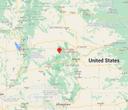
Xcel Energy—Colorado on Sept. 19 announced plans to develop a new 19 megawatt (MW) biomass power plant as part of its Clean Energy Plan, which outlines plans to invest $15 billion across the state to double the supply of renewable energy.

The Surface Transportation Board on Sept. 26 announced that it intends to renew the charter of the Rail Energy Transportation Advisory Committee, which provides guidance on the rail transport of energy resources, including biofuels.

Drax has announced the appointment of Miguel Veiga-Pestana to the new executive committee role of chief sustainability officer, reporting into Drax Group CEO Will Gardiner. Veiga-Pestana is a seasoned leader of strategic sustainability.

Sam Wade, director of public policy at the RNG Coalition, calls on the California Air Resources Board to stay the course and support effective methane measures currently supported the state’s LCFS as the agency updates the program.

The Vermont Climate Council discussed revised recommendations regarding the use of biomass to generate electricity during a Sept. 25 meeting. A formal decision on the revised document is expected at the next council meeting.
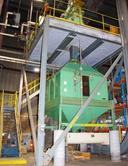
Badger State Ethanol is updating and expanding its grain processing facility to produce 90 MMgy of ethanol along with corn oil and CO2. As a result, surplus processing and support equipment will be sold via a timed online auction.

Agriculture Secretary Tom Vilsack on Sept. 25 participated in a White House press briefing where he discussed how USDA operations, rural America and work on the 2023 Farm Bill could be impacted by the looming government shutdown.
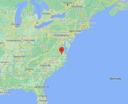
Carbon Streaming Corp. on Sept. 20 announced it will provide Microsoft with carbon removal credits from the Waverly Biochar project, which will be collocated at a wood pellet production facility in Waverly, Virginia.
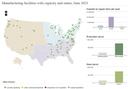
U.S. manufacturers produced approximately 910,000 tons of densified biomass fuels in June, according to the September edition of the U.S. EIA’s Monthly Densified Biomass Fuels Report. Sales of densified biomass reached 870,000 during the month.
Representatives of the RNG Coalition, EBA and GHG Protocol at World Resources Institute met at New York Climate Week to explore avenues for future collaboration to facilitate the accounting and reporting of RNG crediting under the GHG Protocol.
OPAL Fuels, South Jersey Industries sign RNG joint venture

By OPAL Fuels LLC
September 22, 2023
South Jersey Industries and and OPAL Fuels Inc. have entered into a 50/50 joint venture to develop, construct, own and operate RNG facilities. The first facility will be at the Atlantic County Utilities Authority solid waste landfill in New Jersey.
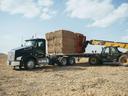
Verbio has launched its second corn stover harvest. Corn stover will be used as feedstock for production of RNG at its large-scale plant in Nevada, Iowa. The facility is also expected to begin producing ethanol during the fourth quater of 2023.
The U.S. EPA on Aug. 21 released data indicating nearly 2.04 billion RINs were generated under the RFS in August, up from 1.84 billion generated in August 2022. Total RIN generation for the first eight months of the year reached nearly 15.45 billion.
The U.S. EPA on Sept. 21 released updated small refinery exemption (SRE) data, reporting that one new SRE petition has been filed under the Renewable Fuel Standard over the past month. Three SRE petitions are now pending.

Strategic Biofuels announced on Sept. 21 that its Louisiana Green Fuels project has been issued an Air Permit from the Louisiana Department of Environmental Quality. The proposed facility will produce renewable diesel and naphtha.

Neste and SQUAKE have announced a strategic partnership that enables businesses to purchase Neste MY Sustainable Aviation Fuel through flight booking systems using SQUAKE’s technology. Goodwings has already implemented the technology.

The U.S. EPA on Sept. 20 announced it is making $4.6 billion in competitive grants available to support state, local and Tribal programs and policies that cut climate pollution. Certain renewable energy and biogas projects are elgible for the funds.
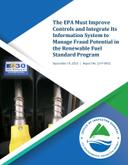
The U.S. EPA has indicated its intent to further strengthen program controls and integrate its information system to manage fraud potential in the RFS in response to recommendations made by the agency’s Office of Inspector General.

WestJet Group CEO Alexis von Hoensbroech, on Sept. 19 at the World Petroleum Congress in Calgary, addressed the airline’s ambitions to achieve net-zero emissions by 2050 and the vital role SAF plays in the future of decarbonizing aviation.

Geoff Cooper, president and CEO of the RFA, discusses how U.S. EPA regulations have caused the number of flex-fuel vehicles (FFVs) capable of running E85 to plummet in recent years, from 2.8 million in 2014 to less than 350,000 in 2022.
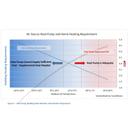
FutureMetrics LLC on Sept. 17 published a new white paper that shows modern wood pellet fueled central heating systems can be a more affordable heating option than heat pumps for buildings in some climates.

Clean Fuels Alliance America, American Soybean Association, National Oilseed Processors Association the U.S. Canola Association are urging the Biden administration to adopt GREET for the purposes measuring GHG reductions for the SAF tax credit.

Royal Caribbean Group on Sept. 19 announced the completion of more than 12 consecutive weeks of biofuel testing in Europe. The compnay's Symphony of the Seas ship successfully tested and used a biofuel blend to meet parts of its fuel needs.

CW Mill Equipment Co. Inc. is celebrating 50 years of operations. The Kanas-based company's products include HogZilla brand industrial grinding machines and high performance hammer mill cutting and grinding tools.

Montana Renewables LLC, a subsidiary of Calumet Specialty Products Partners LP, on Sept. 18 hosted an event to celebrate the first receipts of camelina oil into its biorefinery in Great Falls, Montana. The facility produces renewable diesel and SAF.
Advertisement

@ Copyright 2026 - BBI International - All rights reserved.