


Using E15 gas rather than regular gas will reduce cancer-causing pollutants and smog in Chicago's air, says a new report that reviews and aggregates the results of independent research several institutions.

After a decade of hard work, one of the world's largest ethanol producers is making cellulosic fuel a reality. Under a cloudless sky on a cool, September morning, Poet-DSM Advanced Biofuels celebrated grand opening of Project Liberty.

International buyers for distillers grains are making plans to attend Export Exchange 2014 scheduled for Oct. 20-22 in Seattle, Washington. The event is put on by the U.S. Grains Council and the Renewable Fuels Association.
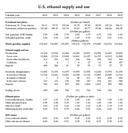
The University of Missouri's Food and Agricultural Policy Research Institute has published a mid-year update to its baseline agricultural report, which was prepared in January. The update includes revised forecasts for ethanol and corn production.

The grand opening of Poet-DSM Advanced Biofuels LLC's Project Liberty is the start of what Jeff Broin, founder of Poet and executive chairman, believes will be a complete transformation of the energy supply.

Brookhaven National Laboratory has announced the launch of the U.S. Department of Energy's Systems Biology Knowledgebase, a new computational platform to help the biological community analyze, store, and share data.
Yes, there are lawmakers that don't get it when it comes to biofuels. They're stuck on lies and propaganda pushed forward by Big Oil. But two recent announcements remind us that it's not all controversy and negativity.

The U.S. Department of Energy is asking for input on landscape design approaches that sustainably integrate cellulosic feedstock production into existing agricultural and forestry systems. Comments are due Sept. 2.

The International Energy Agency has released its third annual Medium-Term Renewable Energy Market Report, which includes forecasts for global biofuel and renewable energy growth. For the first time, the report also includes an investment outlook.

The Department of Commerce's International Trade Administration has amended a recent announcement that it is accepting nominations for its renewable energy and energy efficiency advisory committee. The deadline is now set for Aug. 29.

The EurObserv'ER has released its annual Biofuel Barometer, reporting that last year was the first time the consumption of biofuels in Europe decreased. The report notes the decline is essentially related to Spain and Germany.

Surface Transportation Board recently announced it will require both Canadian Pacific Railway and Burlington Northern Santa Fe Railroad to provide new information on their respective weekly grain order reports.

The Federal Railroad Administration has announced two grants totaling $350,000 to support the development of a Short Line Safety Institute. According to the FRA, the institute will help mitigate risk associated with shipping hazardous materials.
The U.S. EPA has finalized its 2014 renewable volume obligation rule for the renewable fuels standard and submitted it to the Office of Management and Budget for review on Friday, Aug. 22.

Evan Ludowese, a summer intern for the Renewable Fuels Association, reflects with excitement on his experiences working at RFA's St. Louis office.

Malaysian officials recently agreed to permanently exempt imports of U.S. distillers dried grains with solubles and corn gluten meal from the nation's new sanitary and phytosanitary and inspection regulations for agricultural commodities.

Aemetis Inc. has released second quarter financial results, reporting revenue of $57.2 million, a 21 percent increase over the same quarter of 2013. The company also outlined future improvement plans in a recent business update conference call.

The U.S. Energy Information Administration has released the August issue of its Short-Term Energy Outlook, reporting that ethanol production has averaged approximately 940,000 barrels per day over the past three months.

In response to the need to prevent invasive species, researchers at the University of Illinois have developed both a set of regulatory definitions and provisions and a list of 49 low-risk biofuel plants from which growers can choose.

More than 100 organizations recently partnered to issue a letter to John Podesta, counselor to President Obama, urging his support in the release of the U.S. EPA's biogenic accounting framework.

An annual report on Brazil's biofuel sector has been filed with the USDA Foreign Agriculture Service's Global Agricultural Information Network, predicting Brazilian ethanol production will increase 5 percent next year.

The ratio between D6 ethanol renewable identification numbers (RINs) and D4 biodiesel RINs are primary clues indicating the market expects the U.S. EPA to roll back its proposed cuts to the renewable fuels standard (RFS).

Corn use for ethanol production is likely to hit 5.1 billion bushels for the current marketing year, based on current estimates of 14.1 billion gallons of ethanol production, said University of Illinois ag economist Darrel Good in a recent analysis.

The USDA recently published a report that provides uniform scientific methods for quantifying the changes in greenhouse gas (GHG) emissions and carbon storage from various land management and conservation activities.

Much discussion of the E10 blend wall was to be found at the 2014 American Coalition of Ethanol conference. The last day of events began with retailers who were able to get over the wall and install equipment to sell E15 and E85.

A popular breakout session at the 2014 American Coalition for Ethanol conference discussed the potential impacts the Food and Drug Administration's Food Safety Modernization Act may have on plant operations.

Analyzing the past six months of U.S. EPA reports on renewable identification number generation, University of Illinois economist Nick Paulson suggests obligated parties don't expect the EPA's 2014 volumes to be as low as the EPA's proposed levels.

Corn ethanol producers at the 2014 American Coalition for Ethanol conference spoke on how they are differentiating themselves from the pack through the addition of biodiesel, renewable diesel and cellulosic ethanol production.

More than 200 attendees made the trip to the 2014 American Coalition of Ethanol conference in Minneapolis, Minnesota. Gov. Mark Dayton delivered opening remarks at the event's welcome reception, setting the tone for the conference.

The American Coalition for Ethanol revealed a new campaign at its annual conference centered on the slogan "Power by People." The campaign aims to change the way people fundamentally think about the ethanol industry.
Advertisement

@ Copyright 2026 - BBI International - All rights reserved.