


Rep. Randy Feenstra, R-Iowa, and five of his colleagues on the U.S. House Ways and Means Committee on Nov. 18 announced they are seeking additional information from relevant stakeholders on biofuel tax policy. Reponses must be submitted by Dec. 13.
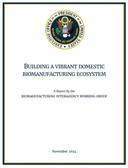
The Biden-Harris administration released a new report, Building a Vibrant Domestic Biomanufacturing Ecosystem, to advance biotechnology and biomanufacturing as part of a broader national bioeconomy implementation plan.

The IRS has issued proposed regulations to implement the energy efficient home improvement credit, as modified by the Inflation Reduction Act of 2022, including provisions of the Section 25 tax credit pertaining to wood stoves.
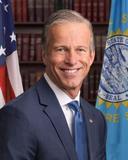
The American Biogas Council on Nov. 15 issued a statement congratulating Sen. John Thune, R-S.D., on his election as the next Senate Majority Leader, noting he has long advocated on behalf of the U.S. biogas industry.
The USDA on Nov. 14 awarded $256.56 million in loans and grants to more than 1,100 clean energy projects under the Renewable Energy for America Program. A portion of that funding will support biogas and renewable natural gas (RNG) projects.

A group of 36 biofuel, biogas, agriculture, energy and fuel retailer trade groups on Nov. 13 sent a letter to federal lawmakers urging Congress to extend several expiring tax credits during its Lame Duck session.
Clean Fuels Alliance America and nine national and state associations on Nov. 14 wrote to House and Senate leaders requesting a one-year extension of the §40A Biodiesel and Renewable Diesel Tax Incentive.
The U.S. EPA on Nov. 12 delivered a proposed rule to the White House OMB pertaining to the RFS. The title of the proposal indicates the rule would waive a portion of the 2024 cellulosic RVO and offer an extension of the 2024 compliance deadline.

On Nov. 13, U.S. EPA Administrator Michael S. Regan announced the appointment of 18 new members and reappointment of 6 members to the Farm, Ranch, and Rural Communities Federal Advisory Committee.
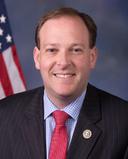
President-elect Donald Trump on Nov. 11 announced he will nominate Lee Zeldin to serve as administrator of the U.S. EPA. Zeldin previously served as a member of Congress, where he cosponsored legislation to repeal and revise the RFS.

NATSO, representing truck stops and travel centers, and SIGMA: America’s Leading Fuel Marketers, on Nov. 8 urged Congress to take action during the Lame Duck session to extend the $1 per gallon biodiesel blenders’ tax credit.
CARB on Nov. 8 approved updates to its LCFS that aim to reduce the CI of the state’s transportation fuel by 30% by 2030. The updates also alter how a variety of biofuels, including biobased diesel and RNG, participate in the program.

Reps. Mariannette Miller-Meeks, R-Iowa, and Sharice Davids, D-Kan., on Nov. 8 introduced legislation that aims to extend the existing second generation biofuel producer tax credit for an additional year, through 2025.
American Biogas Council Executive Director Patrick Serfass has congratulated President Donald Trump on his re-election and said the ABC looks forward to working with the Trump-Vance Administration to grow the biogas industry.

Aemetis Inc. on Nov. 5 announced strong support for the updated Low Carbon Fuel Standard proposal and strongly urges its adoption by the California Air Resources Board at its meeting on Nov. 8.
The American Fuel & Petrochemicals Manufacturers on Nov. 1 petitioned the U.S. EPA to waive a portion of the compliance year 2024 Renewable Fuel Standard renewable volume obligation (RVO) for cellulosic biofuel.

Missouri Attorney General Andrew Bailey on Nov. 1 sent a letter to the California Air Resources Board demanding the agency rescind proposed changes to its LCFS. CARB is expected to vote to adopt proposed LCFS amendments on Nov. 8.

The California Air Resources board has announced an historic agreement with the nation’s leading passenger and cargo airlines to dramatically accelerate the use of sustainable aviation fuel (SAF) for flights within the state.

The USDA on Oct. 30 awarded $120 million to six fertilizer production projects through its Fertilizer Production Expansion Program. One of the awards will support the development of a biochar project in Port Angeles, Washington.
The USDA on Oct. 29 announced it is allocating $200 million to the newly created Biobased Product Market and Access Grant Program, which will support innovative biobased technologies and bridge the gap between pilot-scale demonstrations and commercial viability.
Call for speaker abstracts now open for the 2025 International Biomass Conference & Expo

By BBI International
October 30, 2024
The call for presentation abstracts for the 18th Annual International Biomass Conference & Expo, produced by Biomass Magazine, is now open. The event will take place March 18-20, 2025, at the Cobb Galleria Centre in Atlanta, Georgia.

SAF offers a significant opportunity for growth in the biofuel sector and a new revenue stream for farmers, but realizing that potential will depend on the establishment of favorable policies and adequate incentives, according to CoBank.
A new analysis by S&P Global Commodity Insights supported by Coalition for Renewable Natural Gas (RNG CoalitioN), EBA, ERGaR, and Eurogas provides valuable input to the ongoing revision process of the GHG Protocol.
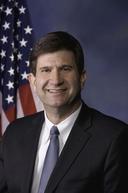
Rep. Brad Schneider, D-Ill., on Oct. 22 introduced the Expanding Clean Fuel Production Act. The bill aims to extend the 45z clean fuel production credit for 10 additional years, through 2037. The credit is currently in place through 2027.
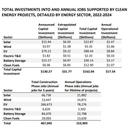
E2 on Oct. 15 released a new analysis on the Inflation Reduction Act’s impact along with a survey of more than 900 businesses that indicates repealing or rolling back the IRA’s provisions would result in losses, layoffs and closures.

The U.S. Treasury Department and IRS on Oct. 18 issued additional guidance for the 40B SAF tax credit. The new guidance, Notice 2024-74, addresses the use of an updated 40BSAF-GREET 2024 model released by the U.S. Department of Energy in October.

The U.S. Supreme Court on Oct. 21 granted a petition to review the U.S. Court of Appeals for the Fifth Circuit’s November 2023 decision related to the administration of small refinery exemptions (SREs) under the Renewable Fuel Standard.
EPA: 1.99 billion RINs generated in September

October 18, 2024
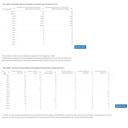
More than 1.99 billion RINs were generated under the RFS in September, up from 1.96 billion generated during the same month of last year. Total RIN generation for the first nine months of the year reached 18.58 billion
The U.S. EPA on Oct. 17 released updated SRE data, reporting that 129 SRE petitions are now pending under the RFS, up from 50 as of mid-September. No new petitions were filed, but nearly 80 previously denied petitions are being reevaluated.
NATSO, representing America's travel centers and truck stops, SIGMA: America's Leading Fuel Marketers, and the National Association of Convenience Stores, are applauding Rep. Mike Carey, R-Ohio, for urging his colleagues to support H.R. 9060.
Advertisement

@ Copyright 2026 - BBI International - All rights reserved.