


Sasol has reached a major milestone in South Africa’s energy and industrial transition, with Natref becoming the first refinery in Africa to achieve product sustainability certification for key fuels production pathways.

U.S. fuel ethanol production capacity expanded in February, according to data released by the U.S. EIA. Biodiesel production capacity and production capacity for renewable diesel and associated biofuels remained steady.

Phillips 66 released Q1 financial results on April 29, reporting a decrease in pre-tax loss for its renewable fuels segment. As economics for biobased diesel fuels continue to improve, the company expects to see additional improvement in Q2.
Restaurant Technologies recycled more than 390 million pounds of UCO in 2025

By Restaurant Technologies
May 04, 2026
Restaurant Technologies Inc. recycled a record 393 million pounds of used cooking oil (UCO) in 2025. Nearly 100% of the UCO was manufactured into renewable diesel or biodiesel for vehicles on the road, or into SAF for aircraft.

Valero Energy Corp. on April 30 released first quarter financial results, reporting a profitable three-month period for both its ethanol segment and Diamond Green Diesel joint venture, which produces renewable diesel and SAF.

Rep. Mike Carey, R-Iowa, has introduced the Strengthening Economic and Energy Development Act, a bill that aims to reinstate the $1 per gallon 40A biodiesel tax credit through 2029. Taxpayers could claim either the 40A credit or the 45Z credit.

The government of Queensland, Australia, has announced it will invest $25 million to support a project that will enable renewable diesel production at Ampol’s Lytton oil refinery. The project could expand in the future to include SAF production.

The American Biofuels Maritime Initiative, which includes members representing the ethanol and biogas industries, on April 23 sent a letter to U.S. Secretary of State Marco Rubio calling for strong U.S. leadership in IMO negotiations.

Rep. Mariannette Miller-Meeks, R-Iowa, pressed U.S. Energy Secretary Chris Wright on his support for biofuels and the administration’s request to reduce DOE funding for renewable fuels by 98% during an April 16 congressional hearing.

Clean Fuels Alliance America welcomes the approval of the latest revision to ASTM D396, the standard specification for fuel oils, which now includes new grades for biodiesel blends containing 21% to 50% biodiesel by volume (B21-B50).

Topsoe has been selected by Abundia Global Impact Group to deliver its HydroFlex technology for multiple plastic waste-to-fuel facilities in North America that will produce chemical feedstock, diesel and SAF.

The U.S. EPA has approved a fuel pathway filed by Summit Next Gen LLC for the production of renewable diesel and SAF from undenatured sugarcane ethanol. The pathway was approved on Jan. 6 and publicly released by the agency on April 20.

EcoCeres Inc. has launched a pilot with GDS Holdings Ltd to use hydrotreated vegetable oil (HVO), also known as renewable diesel, as a low carbon replacement for conventional diesel in data center backup power.

Nearly 1.93 billion RINs were generated under the RFS in March, up 1% when compared to March 2025, according to data released by the U.S. EPA on April 16. Total RIN generation for the first three months of the year reached nearly 4.9 billion.

On April 7, U.S. Department of Agriculture Rural Development Montana State Director Bill Warden announced the agency is investing in the future of Montana’s biofuel industry through Beaverhead Tourism Council in Dillon, Montana.
2026 International Biomass Conference & Expo surpasses 1,000 attendees, demonstrates continued industry growth

By BBI International
April 08, 2026
The 2026 International Biomass Conference & Expo, produced by Biomass Magazine and organized by BBI International, successfully concluded after three days of in-depth discussions, technology showcases, and high-value networking opportunities.

The U.S. Energy Information Administration increased its forecast for 2027 renewable diesel and production in its latest Short-Term Energy Outlook. The forecast for the production of “other biofuels,” including SAF, was maintained.

On April 1, the European Investment Bank and Eni signed a 15-year loan for €500 million to convert selected units of Eni’s Sannazzaro de’ Burgondi refinery, located in the Italian province of Pavia, into a biorefinery.

Neste has published its annual Green Finance Report for 2025. The report demonstrates the company’s commitment to producing renewable fuels and thereby mitigating climate change and accelerating a shift to a circular economy.
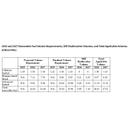
The U.S. EPA on March 27 finalized the 2026 and 2027 RFS RVOs at levels higher than originally proposed. The increase is attributed to the decision delay implementation of provisions penalizing imported fuels and feedstocks until 2028 or later.

NACS and several cosigners on March 26 sent a letter to Congressional leadership reiterating that reinstatement of the lapsed 40A biodiesel blenders credit can quickly and efficiently help control rising diesel prices across the supply chain

Gevo Inc. is delivering sustainable fuels to some of the fastest motorsports. The company recently reported approximately $5 million in revenue in 2025 from producing and selling its patented, proprietary specialty racing fuel blendstock.
Nearly 1.65 billion RINs were generated under the RFS in February, down 10% when compared to the same month of last year. Total RIN generation for the first two months of 2026 reached 3.44 billion, down 2% when compared to the same period of 2025.

Ecostrat Inc. and the BMI Group on March 12 announced a collaboration to leverage BDO Zone Ratings to ‘ready-state’ BMI’s legacy pulp and paper assets across Canada for next-generation investment in the bioeconomy.
Agendas released for co-located events at 42nd Annual International Fuel Ethanol Workshop & Expo

By BBI International
March 18, 2026
Produced by BBI International, the Sustainable Fuels Summit, Carbon Capture & Storage Summit and Ethanol 101 expand FEW into a comprehensive platform for biofuels innovation, carbon management and industry education.

Universal Fuel Technologies’ has announced its Flexiforming technology successfully converts HEFA-derived naphtha into synthetic aromatic kerosene that, when blended with paraffinic SAF, creates a fully synthetic jet fuel.
Abundia Global Impact Group secures licensing and partnership agreement with Topsoe for HydroFlex low carbon upgrade technology

By Abundia Global Impact Group Inc.
March 16, 2026
Abundia Global Impact Group Inc. has entered a multi-project licensing agreement with Topsoe to deploy its HydroFlex technology for the upgrading process at a waste-plastics-to-renewable products recycling facility in Baytown, Texas.
Neste, the world’s leading producer of renewable diesel and sustainable aviation fuel (SAF), has appointed new leadership team members as part of an organizational change that primarily affects the company’s Renewable Products business.

Aemetis Inc. released fourth quarter financial results on March 12, reporting a 61% increase in renewable natural gas (RNG) production. The company also highlighted operations at its California ethanol plant and biodiesel facility in India.
The U.S. EIA reduced its forecast for 2026 renewable diesel production in its latest Short-Term Energy Outlook, released March 10. The forecasts for the production of biodiesel and “other biofuel,” defined to include SAF, were maintained.
Advertisement

@ Copyright 2026 - BBI International - All rights reserved.