



Land Use Research Goes High-Tech
June 03, 2009
NASA researchers are mining satellite data to show the effects of land use change on soil carbon pools, the amount of land dedicated to biofuel feedstocks, and the overall productivity of croplands. When complete, the research may prove useful in determining where high-yield crop production can be maintained for long periods of time and provide an accurate estimation of greenhouse gas (GHG) emissions caused by various crop management decisions.
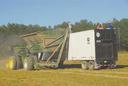
Have Trailer-Will Move Biomass
By Rona Johnson
June 03, 2009
Randy Hill believes he has the solution for transporting and drying large amounts of wet, woody biomass. The president of Advanced Trailer is working with the University of Idaho to evaluate the economic and environmental benefits of using his agricultural crop drying trailers to move biomass.
Changing the Game

By Sam Nejame
June 03, 2009
As the race to produce cellulosic ethanol commercially progresses, companies such as Coskata, Inc. need to remain at the top of their game, or in some cases, change the way the game is played.
Big Oil and Biofuels: Bitter Rivals or Best Friends?
By Todd Taylor and Zach Olson
June 03, 2009
As oil companies become more directly involved with the production of biofuels, the ethanol industry must evaluate its relationship with Big Oil and determine whether to cooperate, compete, or co-exist.
Protecting Shareholder Value Through Strategic Use of Chapter 11 Bankruptcy

By Scott McDermott
June 03, 2009
Many companies believe bankruptcy should only be considered as a final option. However, filing for Chapter 11 bankruptcy can sometimes be used as an effective strategy to protect a company and its stakeholders from further damages.
RIN Compliance Becomes a Full-time Job

By David Bennett
June 03, 2009
The U.S. EPA is the regulating body of renewable identification numbers, as determined by the Energy Independence and Security Act of 2007. However, it is up to individual companies to wade through the evolving regulatory requirements and to comply with the EPA's rules.
World ethanol leaders meet in Brazil to discuss the industry's future
By Hope Deutscher
June 03, 2009
Governors bypass Obama, plea to EPA Administrator directly
By Ryan C. Christiansen
June 03, 2009
Report: Brazil could produce up to 2.1 billion gallons of biofuel from sugarcane residue
June 03, 2009
The Financial Future of Fractionation

By Hope Deutscher
June 03, 2009
Just a year ago, dry fractionation providers were educating ethanol plant managers and owners about the technique's potential for generating multiple revenue streams. Today, fractionation is still causing excitement in the industry, but finding equity sources to finance the installation of fractionation equipment is a challenge.
Sweden's Drive for E85

By Ryan C. Christiansen
June 03, 2009
The European Commission has agreed to continue to allow Swedish ethanol supplier SEKAB to import low-cost Brazilian ethanol at a lower import duty until early next year. Sweden is unique among European Union member states in its promulgation of E85 and flexible-fuel vehicles. Can Sweden continue to secure its import privilege in the face of opposition from the European ethanol industry?
Dow, Algenol plan to build pilot algae-to-ethanol biorefinery
By Hope Deutscher
June 03, 2009
Industry: USDA crop report proves farmers can meet food and fuel needs
By Hope Deutscher
June 03, 2009
Advertisement

@ Copyright 2026 - BBI International - All rights reserved.