


Bayer and bp on May 7 announced that they have entered a long-term strategic alliance to jointly scale the crop camelina, under the brand name newgold. The feedstock can be used to produce biodiesel, renewable diesel and SAF.

Vanzetti Engineering’s centrifugal cryogenic pumps are suitable for use in biogas micro liquefaction plants. They transfer bioLNG produced by micro liquefiers which are downstream from a biomethane upgrading process.

Par Pacific Holdings Inc. on May 5 confirmed that its Hawaii renewable fuels facility began operations in April. The biorefinery has the capacity to produce 61 MMgy of renewable diesel, SAF and other renewable fuels.

The European Commission in April approved a delegated regulation to update the methodology and data for high-ILUC risk biofuels. The change, if formally adopted, would phase out the use of soybean oil as a biofuel feedstock in the EU by 2030.

Ameresco Inc. and HA Sustainable Infrastructure Capital Inc. on May 4 announced their agreement to spin off Ameresco’s biofuels business into Neogenyx Fuels a newly formed joint venture that will continue to develop RNG projects.

U.K.-based Clean Planet Technologies has announced the opening of a pilot facility that converts waste plastic to sustainable aviation fuel (SAF). The facility utilizes pyrolysis, purification, distillation and hydroprocessing technologies.

DP World and its partners displaced nearly 24% of conventional diesel use at the Port of Prince Rupert in 2025, shifting more than 2 million liters to renewable fuel — equivalent to avoiding approximately 5,400 metric tons of CO2.

The U.S. exported more than 1.1 million metric tons of wood pellets in March, up from 608,572.1 metric tons in February and 781,576.4 metric tons in March 2025, according to data released by the USDA Foreign Agricultural Service on May 5.
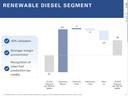
Marathon Petroleum Corp. released first quarter financial results on May 5, reporting a significant increase in adjusted EBITDA for its renewable diesel segment on stronger margins and the recognition of 45Z clean fuel production credits.

The Transport Project (TTP) on May 5 announced that 94% of all on-road fuel used in natural gas vehicles in calendar year 2025 was renewable natural gas (RNG), surpassing the previous year’s record-breaking level.

Praj Industries has announced the establishment of an Advanced Precision Fermentation Lab at Praj Matrix to drive next-generation biotechnology and accelerate India’s transition to high-performance, low-carbon biomanufacturing.

Clean Energy Fuels Corp. on May 4 announced the expansion of its renewable natural gas (RNG) station network with six new stations in operation. The stations are strategically located along major freight transportation routes across the U.S.

Sasol has reached a major milestone in South Africa’s energy and industrial transition, with Natref becoming the first refinery in Africa to achieve product sustainability certification for key fuels production pathways.

U.S. fuel ethanol production capacity expanded in February, according to data released by the U.S. EIA. Biodiesel production capacity and production capacity for renewable diesel and associated biofuels remained steady.

U.S. biofuels producers consumed an estimated 27.136 billion pounds of feedstock in February, down 6% when compared to the previous month, but up 4% when compared to February 2025, according to data released by the U.S. EIA.

Phillips 66 released Q1 financial results on April 29, reporting a decrease in pre-tax loss for its renewable fuels segment. As economics for biobased diesel fuels continue to improve, the company expects to see additional improvement in Q2.

Divert Inc. has announced the opening of its Integrated Diversion & Energy Facility in Longview, Washington. The facility leverages Divert’s high-recovery depackaging technology and anaerobic digestion.
Restaurant Technologies recycled more than 390 million pounds of UCO in 2025

By Restaurant Technologies
May 04, 2026
Restaurant Technologies Inc. recycled a record 393 million pounds of used cooking oil (UCO) in 2025. Nearly 100% of the UCO was manufactured into renewable diesel or biodiesel for vehicles on the road, or into SAF for aircraft.
Johnson Matthey chosen by Liquid Sunshine for new biomethanol fuel plant in China

By Johnson Matthey
May 01, 2026
Guangdong Liquid Sunshine has selected Johnson Matthey as a technology partner for its first commercial-scale project - a biomethanol plant planned in Tiandong County, Guangxi. Construction is expected to begin later this year.
Divert Inc. has announced a strategic partnership with Mitsubishi Corp. serving as the lead investor in Divert’s Series C financing. As part of the partnership, MC has been granted preferred offtake rights for RNG.

XCF Global Inc. on April 30 announced that its New Rise Renewables Reno facility maintain sustainability certification that supports the production and documentation of CORSIA eligible SAF, with certifications valid as of today.

Drax Group plc released a first quarter trading update on April 30, reporting that the company’s pellet production business is performing well, with a continued focus on cost reduction in its U.S. operations.
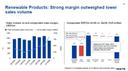
Neste Corp.’s renewable products segment experienced a significant increase in earnings during the first quarter of 2026 despite lower production volumes. The increase is attributed to stronger term sales premiums and surging fossil fuel prices.

Valero Energy Corp. on April 30 released first quarter financial results, reporting a profitable three-month period for both its ethanol segment and Diamond Green Diesel joint venture, which produces renewable diesel and SAF.

PBF Energy Inc. on April 30 announced the St. Bernard Renewables facility produced approximately 16,700 barrels pe day of renewable diesel during the first quarter of 2026, up from 10,000 barrels per day during the same period of last year.

The House on April 30 passed the 2026 Farm Bill by a vote of 224 to 200. The bill includes several bioenergy provisions but does not include language enabling year-round E15 sales. A vote on a stand-alone E15 bill is expected May 13.

CPM|Crown has announced the expansion of its industry-leading equipment and service offering to include a full portfolio of conveyor solutions, strengthening CPM|Crown’s ability to deliver integrated, end-to-end systems.

Vanguard Renewables on April 28 announced the completion of three renewable natural gas (RNG) facilities, marking a significant milestone in the company's mission to transform food waste into a scalable solution for a more diversified energy future.

On April 29, the USDA announced an expanded partnership with the Export-Import Bank of the United States (EXIM) to increase domestic agricultural production and exports, while reducing the agricultural trade deficit. Alongside

Kentucky Gov. Andy Beshear on April 27 signed legislation that creates a tiered tax credit for SAF that allows taxpayers to claim up to $3 per gallon in incentives. The credit is slated to be in effect from Jan. 1, 2029, through the end of 2034.
Advertisement

@ Copyright 2026 - BBI International - All rights reserved.