


The U.K. Department for Transport has announced it will invest £63 million over the next year under its Advanced Fuels Fund to support SAF producers. The agency also issued a response to its consultation on a revenue certainty mechanism for SAF.

Moeve and Norwegian signed a contract to accelerate the decarbonization of air transport between Spain and the Nordic region by promoting SAF. Moeve produces SAF at its La Rábida Energy Park (Huelva) from used cooking oils.

The U.S. exported 879,332.3 metric tons of wood pellets in December, bringing total exports for the full year 2024 to a record 10 million metric tons, according to data released by the USDA Foreign Agricultural Service on Feb. 5.

The U.S. Department of Commerce’s International Trade Administration has announced the Renewable Energy and Energy Advisory Committee will hold a meeting Feb. 12 in Washington, D.C. The event will also be streamed online.

The Singapore Airlines (SIA) Group has signed a memorandum of understanding (MoU) to potentially source neat sustainable aviation fuel (SAF) from Aether Fuels, which plans to commence production in five years.

The IPCC’s methodology has been reviewed and reaffirmed multiple times since its development in 1995, most recently in 2019. Importantly, it is set independently of industry, by the scientists of the IPCC and governments, according to the U.K. REA.

EnviTec Biogas has expanded renewable natural gas (RNG) production capacity at its facilities in Forest and Brandenburg, Germany. The plants produce bio-LNG that can reduce carbon emissions associated with heavy-duty transport.
Castlerock Biofuels LLC, operating locally through its subsidiary EME Biofuels LLC, has announced the selection of Millinocket, Maine, as the site for its new sustainable biocrude production facility. The plant will leverage Ensyn Corp. technology.

The International Air Transport Association on Jan. 31 released its methodology for accounting and reporting the emissions reduction associated with the use of sustainable aviation fuel (SAF) by airlines.

Enviva has announced it will close its 115,000-metric-ton-per-year wood pellet plant in Amory, Mississippi, effective Feb. 7. The company cited market dynamics and the facility’s infrastructure and operations as reasons for the closure.

Marathon Petroleum Corp. released fourth quarter financial results on Feb. 4, reporting a profitable three-month period for its newly formed renewable diesel segment. Improved earnings are attributed to increased capacity utilization.
Patrick Serfass, executive director of ABC, has congratulated Chris Wright on his confirmation to become the secretary of the U.S. Department of Energy and looks forward to working with the agency to support U.S. energy dominance.
Blue Biofuels has signed an agreement to acquire 35.5 acres of land in Frostproof, Florida. The company plans to develop a 3 MMgy facility on the site. Planned expansion projects would boost capacity to 100 MMgy of cellulosic ethanol and SAF.
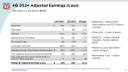
Phillips 66 on Jan. 31 released fourth quarter financial results, reporting improved earnings for its renewable fuels segment on higher margins for its Rodeo complex in California and stronger international results.

Imperial Oil Ltd. on Jan. 31 confirmed construction on the renewable diesel facility at its Strathcona refinery near Edmonton, Alberta, progressing on schedule. The biorefinery project is on track to being operations in mid-2025.

Chevron Corp. released fourth quarter financial results on Jan. 31. During an earnings call, company officials confirmed that the renewable diesel expansion project at the Geismar biorefinery in Louisiana is undergoing final commissioning.
Gevo closes on acquisition of Red Trail Energy, confirms plans to add SAF capacity

By Erin Voegele
February 03, 2025
Gevo Inc. on Feb. 3 completed the previously announced acquisition of North Dakota-based Red Trail Energy LLC, including its ethanol plant, CCS assets and pore space. The company also confirmed plans to produce SAF at the site.
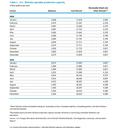
U.S. operatable biofuel production capacity was unchanged in November 2024, according to data released by the U.S. EIA on Jan. 31. Feedstock consumption was up from both the previous month and November 2023.
Clean Fuels Alliance America hosted its annual Clean Fuels Conference in late January. During the event, experts shared the state of the biobased diesel industry today and the outlook for the near-and long-term.

Patrick Serfass, executive director of the American Biogas Council, has congratulated Doug Burgum on his confirmation to become the U.S. Secretary of the Interior and his new role as chair of the National Energy Council.

BerQ RNG has announced the successful closing of $110 million in Solid Waste Facilities Limited Obligation Revenue Bonds issued by the Michigan Strategic Fund. The proceeds will be used to construct four dairy manure-to-RNG projects.

Boeing announced it has become a key project development partner of Norsk e-Fuel, a company developing an industrial-scale power-to-liquids (PtL) facility in Europe that will produce sustainable aviation fuel (SAF).
The U.S. Department of Energy Bioenergy Technologies Office released the Feedstock-Conversion Interface Consortium Capstone Report. The report summarizes the FCIC’s goals, research activities, and achievements over the past three years.

Valero Energy Corp. on Jan. 30 released Q4 financial results, reporting that both its ethanol and renewable diesel segments were profitable during the period. The company also announced that its SAF project in Texas is fully operational.

Texas Gov. Greg Abbot on Jan. 29 announced Summit Next Gen LLC’s proposed ethanol-to-SAF project under development near Houston qualifies under the state’s new Texas Jobs, Energy, Technology and Innovation (JETI) program.

Representatives of the U.S. biofuels and bioenergy industries are among more than 160 companies, trade groups, labor unions and policy organizations that are calling on federal lawmakers to maintain support for the 45Q tax credit.

Legislation introduced in the Kansas legislature on Jan. 15 aims to create a 5-cent-per-gallon tax credit to support the sale of higher ethanol blends, such as E15. Lawmakers are also being asked to consider a similar incentive for biobased diesel.

PyroGenesis Inc. announces that its subsidiary, Pyro Green-Gas Inc., has signed a contract with an integrated environmental services company as part of a large urban waste-to-energy project that will produce RNG.

EnergyNet is seeking biomass energy development proposals on two state-owned properties in Riverside County, California. The parcels are ideal for developers seeking to pioneer or expand their footprint in an established market.

Calumet on Jan. 28 announced disbursement of the first tranche of its $1.44 billion U.S. DOEloan guarantee to support the expansion of SAF production at its Montana Renewables facility will be delayed to allow review by the Trump administration.
Advertisement

@ Copyright 2026 - BBI International - All rights reserved.