


Shell and Rotterdam The Hague Airport have signed a long-term agreement to blend sustainable aviation fuel (SAF) on all aircraft fueled at the airport, starting in 2024. The airport has set a minimum target of 8 percent SAF blending.

Swedish fuel company Preem on Nov. 27 announced it will invest SEK 5.5 billion ($532.82 million) to convert its refinery in Lysekil, Sweden, to produce renewable diesel and sustainable aviation fuel (SAF).

Environment and Climate Change Canada has acknowledged that U.S. feedstocks are in compliances with the land use and biodiversity (LUB) criteria included under the country’s Clean Fuel Regulation, according to a report filed with the USDA.

Virgin Atlantic’s historic flight on 100 percent sustainable aviation fuel (SAF) took off from London Heathrow to New York JFK on Nov. 28. The flight demonstrates the capability of SAF as a safe drop-in replacement for fossil derived jet fuel.
SMRR partners with Topsoe, Chemex Global for Texas biorefinery

By Santa Maria Renewable Resources
November 29, 2023
Santa Maria Renewable Resources has selected Topsoe as its technology provider and will implement the company’s Hydroflex and H2bridge technologies at its planned biorefinery in Texas. Chemex Global will provide FEED for the plant.

A coalition of biofuel and farm groups on Nov. 27 released a statement expressing disappointment in the Fifth Circuit Court of Appeals' Nov. 22 decision remanding to the U.S. EPA six small refinery exemption (SRE) requests.

The U.S. Department of Commerce’s International Trade Administration has announced its Renewable Energy and Energy Efficiency Advisory Committee will hold a virtual meeting on Nov. 30. The meeting is open to the public, but registration is required.

During the Williamtown Air Show in Australia, the Roulettes, the Royal Australian Air Force's aerobatic display team, performed a first public display using Neste’s SAF. The fuel was supplied by Viva Energy in cooperation with Neste and Vitol.

Emirates has become the first airline to operate an Airbus A380 demonstration flight with one of the aircraft’s four engines powered with Neste’s sustainable aviation fuel (SAF). The flight took off on Nov. 22 from Dubai International Airport.
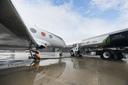
Gulfstream Aerospace Corp. on Nov. 20 announced the successful completion of the world's first trans-Atlantic flight using 100 percent sustainable aviation fuel (SAF). Accomplished on Nov. 19, the flight took place on a Gulfstream G600 aircraft.
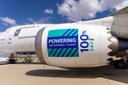
Rolls-Royce on Nov. 13 announced that it has successfully completed compatibility testing of 100 percent SAF on all its in-production civil aero engine types. All the tests confirmed the use of 100 percent SAF does not affect engine performance.

President Joe Biden on Nov. 16 signed a temporary spending package, averting a government shutdown that was set to begin at midnight on Nov. 17. The stopgap bill includes a one-year extension of the 2018 Farm Bill.
Project Speedbird – a joint partnership between Nova Pangaea Technologies, LanzaJet and British Airways – has secured new funding totaling £9 million from the Government’s Advanced Fuels Fund competition.

The U.S. EPA on Nov. 16 released updated RIN data, reporting that nearly 2.11 billion RINs were generated under the RFS in October, up from 1.81 billion generated during the same month of last year.

Reps. Nikki Budzinski, D-Ill., and Zach, Nunn, R-Iowa, on Nov. 15 announced the introduction of a bill that aims to update the USDA’s Biorefinery, Renewable Chemical and Biobased Products Assistance loan guarantee program.
Conestoga to host SAFFiRE cellulosic ethanol pilot plant
By SAFFiRE Renewables LLC
November 28, 2023
Conestoga Energy and SAFFiRE Renewables LLC announced on Nov. 16 their agreement for Conestoga to host SAFFiRE’s cellulosic ethanol pilot plant at Conestoga’s Arkalon Energy ethanol facility in Liberal, Kansas.

Gevo Inc. released Q3 financial results on Nov. 13, reporting that company has completed a planned capacity expansion of its RNG operations and is in the formal due diligence stage with the U.S. DOE regarding a loan guarantee for its SAF project.

Jetex has announced it is now offering sustainable aviation fuel (SAF) at its flagship private terminal in Dubai, giving aircraft operators and private owners the opportunity to significantly reduce carbon dioxide emissions.
Aemetis reports progress with biofuel, biogas projects

November 28, 2023
Aemetis expects to secure the authority to construct air permit for its proposed SAF/RD project in early 2024, according statements made during a Q3 earnings call. Company officials also discussed ongoing biogas, ethanol, biodiesel and CCS projects.
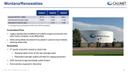
Officials at Calumet Specialty Products Partners L.P. discussed the company’s proposed plans to boost sustainable aviation fuel (SAF) production at its Montana Renewables biorefinery during third quarter earnings call, held Nov. 9.

The U.S. House of Representatives on Nov. 14 voted 336 to 95 to approve a temporary spending bill to avert a government shutdown. The stopgap bill includes a one-year extension of the 2018 Farm Bill.

Emerson, a leader in industrial software and technology, has been chosen by DG Fuels to provide comprehensive automation and project engineering to help transportation sector decarbonization efforts through production of advanced biofuels.

Honeywell has announced that CVR Renewables CVL LLC will utilize its Ecofining technology in its evaluation of a potential project that would produce sustainable aviation fuel (SAF), renewable diesel and other products.

A stopgap spending bill released by House Republicans on Nov. 12 includes a one-year extension of the 2018 Farm Bill, which expired on Sept. 30, 2023. The extension would remain in place through Sept. 30, 2024.

The USDA maintained its 2023-’24 forecast for soybean oil use in biofuel production in its latest World Agricultural and Supply Estimate report, released Nov. 9. The agency’s estimate for 2022-’23 soybean oil use in biofuel production was revised up.
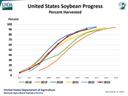
The USDA on Nov. 9 announced 2023 soybean production for beans is currently forecast at 4.13 billion bushels, up 1 percent from the October forecast, but down 3 percent from last year, according to the agency’s latest Crop Production report.
Novozymes, a global leader in biosolutions, marks a significant milestone in the renewable diesel and SAF industry with the launch of Quara LowP, an enzymatic solution designed to transform the feedstock pre-treatment process.

Eni and Saipem on Nov. 6 signed an agreement for the development of biorefining. The agreement supports the development of biorefineries for the production of renewable diesel and sustainable aviation fuel (SAF).

VISION Bioenergy Oilseeds and Makhteshim Agan of North America Inc. (ADAMA) on Nov. 7 announced they have entered into a joint development agreement to bring to market a suite of new crop protection solutions for camelina growers.

Rep. Max Miller, R-Ohio, on Nov. 7 introduced the bipartisan Farm to Fly Act, which aims to create new markets for U.S. agricultural products and strengthen domestic production of sustainable aviation fuel (SAF).
Advertisement

@ Copyright 2026 - BBI International - All rights reserved.