


Heating the Midwest 2012 Conference and Expo: Building the Vision will bring together leaders in the biomass thermal industry to discuss strategies for expanding the use of biomass in the Midwest.

Residual biomass could be sustainably used to produce about 15 percent of the Midwest's electricity, or around 17 percent of the region's gasoline needs, according to a new study released by the Chicago Council on Global Affairs.

The proposed Oneida Seven Generations Corp. biomass power plant in Green Bay, Wis., has received final approval from the U.S. DOE, leaving just a few hoops to jump through before construction can begin.
Cobalt Technologies appointed Bob Mayer as chairman of its Board of Directors and CEO. With more than 30 years of experience in the chemicals and biotech sectors, he joins Cobalt to lead its global development of commercial bio n-butanol facilities.
Half empty, or half full?
November 28, 2011
One of the ironies of modern life is that technology has taken the backbreaking work out of people's lives, so they can buy a gym membership in order to stay fit. There's an attitude lesson to learn in pondering this irony.
Thesis Chemistry to build Iowa biorefinery using stover lignin

By Bryan Sims
November 28, 2011
Thesis Chemistry has selected a 40-acre site in Nevada, Iowa, for a proposed biorefinery center that will produce a range of biobased chemicals derived from corn stover lignin sourced as a byproduct of cellulosic ethanol production in the state.
Novozymes expands R&D capability in Brazil

November 28, 2011
Novozymes launched additional R&D laboratories and customer solutions facilities in Curitiba, Parana, Brazil, increasing its Brazilian workforce by 10 percent as the company takes advantage of the country's expanding biofuels market.
Norwegian wood ethanol makes its way to country's cars

November 28, 2011
Statoil Fuel & Retail, Scandinavia's top fuel retailer, and timber firm/cellulosic ethanol producer Borregaard have signed an agreement to introduce Norwegian timber-based ethanol to drivers in Norway for the first time ever.

One-fifth of the world's energy demands could be met with biomass without damaging food production, according to a new report released by the U.K. Energy Research Centre.

After a delay in implementation and a reduction to large biomass power tariff levels, the U.K.'s Renewable Heat Incentive is open for applications as of Nov. 28.
Working closely with the Iowa Economic Development Authority and the Nevada Economic Development Council, Thesis Chemistry has selected a 40-acre site within the West Industrial Park of Nevada, Iowa, for a proposed biorefinery center.
Butamax Advanced Biofuels LLC commented on the U.S. Patent and Trademark Office's reexamination decisions regarding two of the company's foundational patents. Previously, Butamax filed suit against Gevo for infringement of the '188 and '889 patents.
U.K. Biomass Project Development Continues to Pick up
By Rona Johnson
November 25, 2011
While we in the U.S. are looking to Congress and waiting to see what's going to be cut out of the budget, biomass project developers are busy in the U.K.
Isobutanol blend performs well in marine tests

November 23, 2011
An isobutanol gasoline blend, provided by Gevo Inc., tested well as an alternative marine fuel according the report released Nov. 18 by two boating organizations.
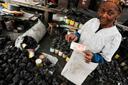
A multi-million Certified Emissions Reduction financing agreement was announced Nov. 23 between Bank of America Merrill Lynch and a project to produce ethanol for clean cooking stoves in Africa.
Research reduces toxins, improves distillers grains

November 23, 2011
Virginia Tech and USDA researchers developed strategy that reduces barley toxins sometimes present in distillers grains used for animal feed. The strategy modifies the ethanol fermentation process and focuses on deoxynivalenol (DON).
Studies evaluate impact of nutrients in DDGS manure
November 23, 2011
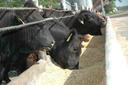
As distillers grains becomes an ever more popular component of cattle diets in feedlots throughout North America, the need to explore the after-effects of that product also become more important.
The super committee's failure and what it means for an extenders package.

The 12-member super committee declared defeat just days ahead of its deadline to deliver a 10-year debt reduction plan to Congress, effectively killing a tentative 2012 Farm Bill proposal put together largely in secret.
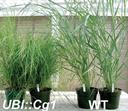
Searching for a way to get around lignin and produce cost-efficient advanced, researchers introduced a maize gene into switchgrass. The result was a 250 percent increase in the amount of starch and easier extraction of fermentable sugars.
Enzyme study shows DDGS dewatering applications

November 22, 2011
A one-month plant trial showed a commercial enzyme could help extract water from distillers grains, saving natural gas, electricity and water used in the ethanol process, though more work needs to be done,
Report offers advanced biofuels primer to investors

November 22, 2011
Financial services company Raymond James published an industry brief in early November discussing the status and potential of the second-generation biofuels industry. The report is a follow up to a similar analysis published by the company in April.
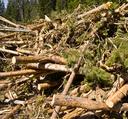
University of Georgia researchers developed new yeast that produces higher volume of ethanol from pine with results published on Nov. 10 in the online journal Biotechnology for Biofuels.

Biomass thermal has great potential in the Midwest, and stakeholders representing various industries across the board are collaborating to gain a better understanding of the opportunities and challenges that lie ahead.

After an ongoing battle between the city and its project developers, a biomass district heating plant planned for downtown Vancouver, Wash., has been officially cancelled.

Through the Model Neighborhood Project, as many as 40 homeowners in Berlin, N.H., will receive subsidies to switch from heating oil systems to advanced wood pellet boilers in the next two years.


A large greenhouse in Sainte-Clotilde-de-Chateauguay, Quebec, unveiled on Nov. 18 its new biomass heating system, complete with a 2-kilometer (1.24-mile) hot water distribution network for its 6.5 hectares (16 acres).

Advertisement

@ Copyright 2026 - BBI International - All rights reserved.