

People, Partnerships & Deals
Don't forget that no two projects are alike
How forward-thinking cellulosic development is key to achieving commercial-scale
How the investment window is opening in the biorefining sector
Wood biomass utilization is taking on a whole new shape in Canada
NASA tests renewable fuel blends in a DC-8
Cereplast's new symbol distinguishes biobased plastic from fossil-based counterparts
How BioAmber is closer to achieving commercial scale than one might think
The AFEX Has Almost Arrived
May 20, 2011
Already licensed, ammonia fiber expansion can cut biomass transport costs
Avjet Biotech selects design, installation partner

Nearly a year after Virginia's first ethanol plant was scheduled to be producing ethanol, the grounds of Appomattox Bio Energy stand quiet, with very little activity.

A research project meant to analyze possible indirect land use change (ILUC) as a result of biofuels production has found no factual evidence that ILUC occurred from 1990 through 2007.
Leaders from several bioenergy industry trade groups sent a letter to members of Congress highlighting biofuel successes, and asking them, in the face of waiver requests, to leave RFS2 alone.

A new study contradicting the findings of the well-known 2010 Massachusetts biomass study by the Manomet Center for Conservation Sciences points out inherent flaws and incorrect assumptions in the Manomet authors' methodology.
Camco to launch largest dairy biogas project in North America

By Anna Austin
May 19, 2011
London-based Camco International Ltd. announced it has officially launched what it believes will be the largest dairy biogas project in North America. The 4.5-megawatt project will involve the installation of several anaerobic digesters in Idaho.
Although the 2010 Manomet study has been attacked and disputed on multiple fronts by biomass industry supporters and stakeholders, William Strauss's study "How Manomet got it Backwards" goes beyond simply listing flaws.
Making the case for advanced biofuels to Congress
Waste Management has forged a strategic investment in Delaware-based Agnion Energy to advance Agnion's thermochemical gasification technology. Kleiner Perkins Caufield Byers, Munich Venture Partners and Wellington Partners joined in the investment.
When acquiring assets, indemnities enforce the deal's various obligations
The new biorefinery will resemble an old, familiar model

Two Nebraska companies want to build a manufacturing facility, Laurel BioComposite LLC, in Laurel, Neb., where distillers grains will be processed into a plastics input. The end product will range from car bumpers to tractor parts.
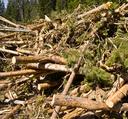
Producing biofuels from wood is a complicated technological process and is not expected to take hold at a commercial scale for more than a decade, according to a study recently conducted by timberland analysis firm Forisk Consulting LLC.

Sustainable forest management goes hand in hand with responsible biomass energy production and is in fact one of the main concerns voiced by biomass opponents. To address the issue, the BCC is holding a webinar on May 24.

While the Forest Health Act of 2011 still awaits Colorado Gov. John Hickenlooper's signature, the wheels are already turning on the act's goal of removing and using 4 million acres of beetle-kill wood from the state's forests.
D.C. Water launches biomass AD, CHP project

By Anna Austin
May 18, 2011
The District of Columbia Water & Sewer Authority has launched two projects at its Blue Plains Wastewater Treatment Plant that will generate heat and power from biosolids and reduce the amount of nitrogen in the anaerobic digester effluent.

Maryland's Gov. Martin O'Malley said he intends to sign into law Senate Bill 690, allowing municipal solid waste to classify as a Tier I renewable in the state and therefore receive renewable energy credits under its renewable portfolio standard.
A research team led by Jamie Hestekin, assistant professor of chemical engineering at the University or Arkansas College of Engineering, recently won the Innovator of the Year award from PBS-based Planet Forward for its algae-to-butanol project.
US reaches debt ceiling, again
May 18, 2011
The U.S. government has reached the $14.3 trillion debt limit, and according to the U.S. Treasury Department, "extraordinary measures to buy additional time will be exhausted by about Aug. 2." A failure to increase the ceiling could be catastrophic.
ICM applies for patent on its next-generation Advanced Oil System

By ICM
May 17, 2011
ICM brought its newest development in the field of corn oil separation online at an ICM-designed 110 MMgy plant recently, and applied for patent protection on its trademarked Advanced Oil System.
Advertisement

@ Copyright 2026 - BBI International - All rights reserved.