


P6 Technologies Inc., the leader in life cycle analysis (LCA) software for renewable fuels, biogas, and chemical companies, on May 2 announced the launch of its LCA for biogas cloud-based software solution.

Holland America Line announced the start of a long-term biofuel test on its flagship, Rotterdam, leveraging 100% low carbon intensity biofuel while sailing within the Norwegian World Heritage Fjords.

Topsoe has signed an agreement with Cepsa to provide its HydroFlex technology for the production of sustainable aviation fuel (SAF) and renewable diesel at a new biorefinery under development by Cepsa in Spain.

CVR Energy Inc. on April 30 confirmed that the feedstock pretreatment unit at the Wynnewood biorefinery in Oklahoma has begun operations. The company also continues to evaluate the development of two proposed SAF projects.

In the journey to decarbonize the aviation industry, the production of sustainable aviation fuel (SAF) has gained significant attention. One method of SAF production, known as co-processing, has emerged as a viable solution in the here and now.

SkyNRG and AEG Fuels completed the delivery of sustainable aviation biofuels for the Bombardier Business Aircraft demonstration fleet flying from KLM Jet Center in Amsterdam, Netherlands to the EBACE in Geneva, Switzerland.
LoCI Controls Inc. on April 30 announced the company has been granted the first-ever U.S. patent that covers the use of emissions measurement to optimize landfill gas collection systems.

The Treasury Department and IRS on April 30 released new guidance on the SAF tax credit and announced the launch of the 40BSAF-GREET 2024 model, which incorporates a pilot-program to encourage the use of climate-smart ag practices for SAF feedstocks.
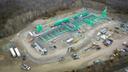
bp’s Archaea Energy on April 30 announced the official startup of its largest original Archaea Modular Design (AMD) renewable natural gas (RNG) plant to date in Shawnee, Kansas, just outside of Kansas City.
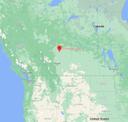
Imperial Oil Ltd. on April 26 released first quarter financial results, confirming that construction on its renewable diesel project under development at its Strathcona refinery near Edmonton, Alberta, is progressing as scheduled.
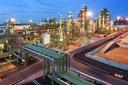
Neste Corp. released first quarter results on April 25, reporting that the company’s operations were negatively impacted by weaker renewable diesel margins during the three-month period. SAF sales volumes are expected to increase throughout 2024.
On April 29, 40 companies and organizations that hold a stake in the development and deployment of sustainable aviation fuel united to announce the formation of the Sustainable Aviation Fuel (SAF) Coalition.

Aemetis Inc. has announced it is implementing the Microsoft Dynamics enterprise resource planning (ERP) system worldwide for all Aemetis operations in the U.S. and India to support current operations and expansion projects.
Valero Energy Corp. on April 25 announced that its SAF project in Texas is progressing ahead of schedule and expected to be operational this year. The company also reported its ethanol and renewable diesel operations were profitable during Q1.

LanzaJet on April 22 announced an investment from Microsoft’s Climate Innovation Fund. This investment from Microsoft enables LanzaJet to continue building its capability and capacity to deploy its sustainable fuels process technology globally.
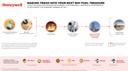
Honeywell on April 24 announced its hydrocracking technology can be used to produce sustainable aviation fuel (SAF) from biomass, helping to make SAF that is 90% less carbon intensive than traditional fossil-based jet fuels.
Vertimass on April 23 announced that the U.S. EPA has approved registration for blending up to 20% of Vertimass green gasoline with conventional gasoline. This new renewable gasoline product, VertiGas20, is made from renewable ethanol.
TotalEnergies and Vanguard Renewables have signed an agreement to create an equally owned joint venture (JV) to develop, build, and operate RNG projects in the U.S. The JV plans to advance 10 RNG projects to construction over the next 12 months.
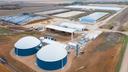
Clean Energy Fuels Corp. on April 23 announced its latest renewable natural gas (RNG) facility at Victory Farms Dairy in Revillo, South Dakota, has successfully completed construction and is injecting pipeline quality RNG into the interstate natural gas infrastructure.

Drax Group on April 18 announced a carbon removals deal with C-Zero Markets, an environmental consultancy. Under the deal, C-Zero will purchase carbon dioxide removals credits from Drax representing 2,000 metric tons of permanently stored carbon.

Vertex Energy Inc. on April 18 announced the renewable diesel production unit at its refinery in Mobile, Alabama, operated at approximately 50% of nameplate capacity during the first quarter of 2024, in line with the company’s previous forecasts.
Calumet Specialty Products Partners L.P. on April 16 released a Q1 operational update, reporting that its Montana Renewables biorefinery operated well throughout the three-month period, with production volumes sequentially improved each month.
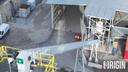
Origin Materials on April 3 announced the successful conversion of wood residue feedstock, such as wood chips, shavings and sawdust, into sustainable intermediates at Origin 1, its first commercial-scale plant.

EcoEngineers on April 15 announced the expansion of its services in compliance with the Canadian Clean Fuel Regulations. The company has been granted a scope extension by the ANSI National Accreditation Board (ANAB).
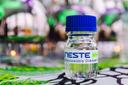
Neste and New Jersey Natural Gas have announced NJNG will fuel its medium-duty trucks and associated equipment with Neste MY Renewable Diesel to help reduce greenhouse gas (GHG) emissions.

WestJet on April 19 announced that it has purchased the first sustainable aviation fuel (SAF) supplied in Canada by Shell Aviation, marking another milestone in WestJet's mission to achieve net-zero emissions by 2050.
Nearly 1.91 billion RINs were generated under the Renewable Fuel Standard in March, down from 1.92 billion generated during the same month of 2023, according to data released by the U.S. EPA on April 18.
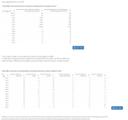
The U.S. EPA on April 18 released updated small refinery exemption (SRE) data, reporting that two additional SRE petitions have been filed under the Renewable Fuel Standard in the past month. A total of 38 SRE petitions are now pending.

Jet2.com on April 16 announced that it will use a blend of sustainable aviation fuel (SAF) at London Stansted Airport in 2024, meaning the leading leisure airline will use SAF on departing flights from two U.K. airports in 2024.

Meridian Energy Group Inc., the developer of a proposed greenfield oil refinery in Belfield, North Dakota, on April 16 announced that the facility will have the ability to co-process up to 4,000 barrels per day vegetable oil.
Advertisement

@ Copyright 2026 - BBI International - All rights reserved.