

In advance of a Senate subcommittee hearing on April 17 on the importance of cleaner vehicles, the RFA stressed the importance of renewable fuels like ethanol in providing “an effective and immediate solution for reducing carbon emissions."

A report filed with the USDA Foreign Agricultural Service's Global Agricultural Information Network on April 11 discusses Colombia's March 15 decision to extend its existing 20-cent-per-gallon duty on U.S. ethanol for the next five years.

UNICA, the Brazilian sugarcane industry association, has released data indicating sugarcane processing by mills in the south-central region of Brazil was up 5 percent during the 2020-'23 harvest season. Ethanol production was also up 5 percent.

Green Plains Inc. on April 11 released its 2022 Sustainability Report, outlining environmental, social and governance priorities and targets. The third annual report highlights progress made towards the company's goal of being carbon netural by 2050.

The U.S. EPA on April 17 announced plans to comply with the consultation requirements of the Endangered Species Act as part of its upcoming RFS “set� rule under a proposed settlement agreement related to a legal challenge filed by CBD.
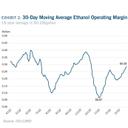
Despite seasonally lower ethanol demand, U.S ethanol production and profitability were in line with long-term averages during the first quarter of 2023, according to CoBank Knowledge Exchange's latest quarterly report, released April 6.

Gevo Inc. and LG Chem Ltd. announced on April 12 that they have entered into a joint development agreement to develop bio-propylene for renewable chemicals using Gevo's ethanol-to-olefins (ETO) technology.

A bipartisan group of 16 senators, led by Sens. Amy Klobuchar, D-Minn., and Chuck Grassley, R-Iowa, on April 11 sent a letter to U.S. EPA Administrator Andrew Regan urging the agency to strengthen the Renewable Fuel Standard.
The USGC has released a handbook about new and evolving high-protein corn co-products produced by the U.S. ethanol industry. It is meant to update international customers on the nutritional profiles of these products and their feed applications.

E15 is now available to drivers in New York state for the first time, according to the RFA. Dandy Mini Mart and Travel Plaza in Nichols has become one of the first retailers in the state to offer E15. New York approved use of the fuel blend in 2019.

Sen. Chuck Grassley, R-Iowa, on April 12 sent a letter to President Joe Biden urging his administration to issue an emergency waiver to allow E15 sales to continue through the summer 2023 driving season.

Technip Energies has been awarded the contract for the FEED phase of LanzaTech's DRAGON SAF project based on LanzaJet alcohol-to-jet (ATJ) technology. The project is on track to be one of the first commercial SAF facilities in the U.K.

Michigan lawmakers on April 12 introduced the Clean Energy Future Plan, a bill package that aims to implement a wide range of clean energy provisions, including a clean fuel standard (CFS) and a clean energy standard.

Industry experts and ethanol producers explain what caused markedly high production margins in 2022—strong markets, exciting policy and good prices—while analyzing the first couple months of 2023 and predicting what's to come. Ethanol producers are coming off an undeniably strong year. 2022 was not devoid of challenges, but it was replete with landmark policy and marketplace dynamics that, on balance, allowed the vast majority of U.S. ethanol producers to do quite well financially. Mirroring that financial success this year would be like a pro baseball pitcher throwing back-to-back perfect games—it doesn’t happen—and, sure enough, the last quarter of 2022 and the first quarter of 2023 already reflect that. But this year’s margins may not disappoint, with at least some of last year’s margin-making factors still in play.

Industry announcements from the May issue of Ethanol Producer Magazine, including Gevo's partnership with Zero6 Energy; Marquis' CCS project starting; the proposed Heartland Greenway pipeline expansion, and more.

The EU does not have to choose between its climate, energy and food security goals when it has a pragmatic, proven, homegrown solution that is already delivering results and could do much more with the right approach.

EPM Editor Tom Bryan reflects on the relative profitability of 2022 while previewing the publication's May content, which includes articles on production margins, diversification, multi-biofuel strategies and recent corn ethanol plant upgrades.

The U.S. EPA on April 12 released two proposed rules that aim to implement new emissions standards for light-, medium-, and heavy-duty vehicles starting with MY 2027. The proposed standards overlook the low-carbon benefits of ethanol.

U.S. fuel ethanol fell by more than 4 percent the week ending April 7, according to data released by the U.S. Energy Information Administration on April 12. Weekly ending stocks of fuel ethanol were down slightly.

Green Plains is developing new technologies and coproducts. CEO Todd Becker talks about the company's various projects related to protein, corn oil, clean sugar and carbon, as well as a newly announced joint venture in SAF.

Growth Energy on April 11 filed its opening brief in its challenge to the U.S. EPA's failure to enforce compliance under the RFS. The lawsuit challenges the agency's use of an alternative compliance related to several overturned SRE petitions.
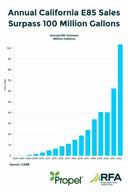
It comes as no surprise that the lowest-cost fuel in California is also the state's fastest-growing liquid fuel, the RFA said April 11 at an event in Sacramento spotlighting the importance of the lower-carbon E85 flexfuel blend.

The U.S. Energy Information Administration has maintained its forecast for 2023 ethanol production in its latest Short-Term Energy Outlook, released April 11. The outlook for 2024 ethanol production was reduced slightly.

When EPA examined concerns about removing the 1-pound RVP waiver during the high-ozone season to facilitate year-round blending of E15, it gave zero consideration to the negative economic impact a "gap year" would have on retailers of the blend.

Metacon has announced Switzerland-based WattAnyWhere (WaW) has ordered its second ethanol-to-green hydrogen reforming system from Metacon subsidiary Helbio. Deliver of the system is planned for the fourth quarter of this year.

New Energy Blue has hired bioenergy veteran Kelly Davis as vice president, a new position. Davis will augment the company's technical, regulatory, and operations expertise as it staffs up to build out a series of clean-tech biomass refineries.
The U.S. Grains Council on April 6 announced it is now accepting applications to join its seven Advisory Teams (A-teams), including the Ethanol A-team, for the 2023-2025 term. Applications are due April 30.

While nuts-and-bolts ethanol plant improvements typically don't make national headlines, facility enhancements and capacity-boosting installations are always happening. Here's a look at some of the work recently completed or still underway.

The U.S. ethanol industry can't allow Brazil to game the system to steal markets away from our producers. We need to correct outdated models of lifecycle emissions and take an unapologetic approach to challenging patently unfair trade practices.

The USDA is expanding its Margin Protection insurance plan, adding more than a thousand counties to the insurance option that provides coverage against an unexpected decrease in operating margin for corn and soybean producers.
Advertisement

@ Copyright 2026 - BBI International - All rights reserved.