


Growth Energy and GasBuddy announced Aug. 13 that drivers across the nation can now take advantage of Unleaded 88's affordable prices through GasBuddy's database and app. The app tracks E15 prices at more than 1,800 retail locations.

FROM THE SEPTEMBER ISSUE: Low Carbon Octane Standard could be the way to increase ethanol use beyond E15.

A new report filed with the USDA Foreign Agricultural Service's Global Agricultural Information Network predicts China will miss its goal to implement E10 by 2020 by a wide margin, likely only achieving a blend rate of 3 to 3.5 percent in 2020.

Data released Wednesday by the Minnesota Department of Commerce prove that the marketplace is already responding to President Trump's elimination of a decades-old regulatory barrier severely limiting the sale of E15 in the summertime.

Aemetis Inc. released second quarter financial results Aug. 8, reporting growth for its biodiesel business in India, outlining improvement projects underway at its corn ethanol plant, and discussing planned RNG and cellulosic ethanol production.

The Minnesota Department of Agriculture announced Aug. 6 funding for a bioenergy pilot plant and three biofuel blending infrastructure projects, including one that that focuses on E15 and E85 distribution.

The U.S. exported 128.42 million gallons of ethanol and 962,592 tons of distillers grain in June, according to data released by the USDA Foreign Agricultural Service on Aug. 2. Exports of both products were both down when compared to June 2018.

Utilizing Market Access Program and Agricultural Trade Program funds, the U.S. Grains Council's Mexico office has invested in marketing U.S. distillers dried grains with solubles (DDGS) through strategic feeding trials in southeast Mexico.

A recent report filed with the USDA Foreign Agricultural Service's Global Agricultural Information Network discusses the current use of biofuels in the European Union and the potential for increased use in the future.
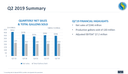
Pacific Ethanol president and said the company's second quarter crush margin improved, but the industry is still suffering from oversupply.

FROM THE JULY ISSUE: Editor Lisa Gibson previews the magazine, including feature articles about Nebraska's importance to the ethanol industry, a review of the 2019 Fuel Ethanol Workshop and Expo, and more.

FROM THE AUGUST ISSUE: Finances, technology, streamlined processes and more take the stage at FEW 2019.

FROM THE AUGUST ISSUE: In Nebraska, ethanol, cattle and agriculture are intertwined, with major impacts on the state's economy.

FROM THE AUGUST ISSUE: Nations around the globe need to follow Brazil, U.S.'s lead in ethanol adoption to lower GHG emissions.

FROM THE AUGUST ISSUE: An inside look at President Trump's June visit to SIRE celebrating year-round E15.

FROM THE AUGUST ISSUE: Emissions testing reforms needed to reduce misinformation about ethanol.

A leading feed mill in Ireland has upped its inclusion rate of U.S. DDGS thanks to the U.S. Grains Council's work to promote the benefits of the feed ingredient in swine diets, adding 75,000 metric tons in additional demand annually.

FROM THE AUGUST ISSUE: Celebrating year-round E15, U.S. Water and Kurita join forces, and Berry named new NEB administrator.

U.S. ethanol exports for industrial uses to India and South Korea reached records in the 2017/2018 marketing and are on pace to achieve those records again in the current marketing year, with potential for dramatic future growth, according to USGC.

The Minnesota Bio-Fuels Association's 2019 First-Half Report highlights the organization's push to grow the use of E15 in Minnesota, and the impacts the 1-pound RVP waiver for the fuel has had on the state.

The USDA has announced awards of $100 million to 48 organizations through the Agricultural Trade Promotion Program (ATP). The U.S. Grains Council was one of the recipients, receiving over $6.8 million.

The New York Department of Agriculture and Markets published a proposed rule July 24 to allow E15 sales within the state. The move will soon open the nation's fourth largest gasoline market to sales of the fuel blend.

Bunge Ltd. and BP plc announced July 22 the formation of BP Bunge Bioenergia, a 50:50 joint venture bioenergy company in Brazil that will operate 11 sugarcane mills to produce ethanol, sugar and renewable electricity.

UNICA, the Brazilian sugarcane industry association, has released data for the second half of June. The volume of sugarcane processed during the period was up slightly from last year. Production and sales of ethanol remained relatively high.

A recently released report from the USDA Foreign Agricultural Services Global Agricultural Information Network says South Korea may soon revise its regulations to allow the use of ethanol-blended fuel.

The first shipment of ethyl tert-butyl ether (ETBE) made with U.S. corn-based ethanol has arrived in Japan, marking the country's new demand for U.S. ethanol-based products and a milestone in U.S. ethanol market development efforts.

Growth Energy, the Renewable Fuels Association and the U.S. Grains Council sent joint comments to Ontario's Ministry of Environment, Conservation and Parks July 8 regarding its proposed plan and schedule for implementing E15.

Casey's General Stores and the Kansas Corn Commission have announced the addition of E15 fuel at several Casey's locations across Kansas, providing Kansas drivers with a lower-priced, cleaner fuel option.

European ethanol producer CropEnergies AG has released fiscal first quarter financial results, reporting ethanol production was down 19 percent during the three month period ending May 31. Revenue and operating profit, however, were up.

The seventh annual Bioenergy Week of the Global Bioenergy Partnership allowed the USGC to highlight how the government and private industry in the Philippines cooperate to promote ethanol to a delegation of sugar-based ethanol producers from India.
Advertisement

@ Copyright 2026 - BBI International - All rights reserved.