


An ethanol export promotion strategy developed in consultation with industry partners and the USDA was presented to U.S. Grains Council members from throughout the grains sector at USGC's 55th Annual Board of Delegates Meeting.

A team of Canadian buyers and end-users of U.S. distillers dried grains with solubles (DDGS) recently visited the United States on a learning journey cosponsored by the U.S. Grains Council and the Corn Marketing Program of Michigan.
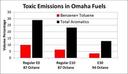
Many gas stations are promoting E0. It not only costs more than regular gasoline that contains 10 percent ethanol, new data shows it also burns dirtier in your engine which then puts more toxic emissions into the air.

Green Plains Inc. has announced second quarter financial results, reporting net income of $7.8 million, or 19 cents per diluted share, compared to $32.3 million, or 82 cents per diluted share, during the same quarter of 2014.

A U.S. Grains Council mission including U.S. environmental and public health specialists recently traveled to China to discuss how air and water quality in that country could be improved through the use of ethanol in the country's fuel.

Brazilian President Dilma Rousseff launched Iogen Energy's cellulosic ethanol technology at the official opening of Raizen's newly expanded Costa Pinto sugar cane mill in Piracicaba, Sao Paulo, Brazil on July 22.

July 27 is the final day members of the public can weigh in on the U.S. EPA's recently released renewable fuel standard (RFS) proposal. As the comment period comes to a close, supporters of the biofuel industry are actively making their voices heard.

The Renewable Fuels Association will once again partner with the Buffalo Chip Campground to host the 75th annual Sturgis Motorcycle Rally, which is set to take place Aug. 3-9 in Sturgis, South Dakota.

Legislation introduced in the state of Queensland in Australia would mandate biofuels blending, starting at 2 percent, writes Mike Bryan of BBI International. This column appears in the August issue of EPM.

The U.S. EPA has released renewable identification number (RIN) generation data for June, reporting that more than 1.56 billion RINs were generated during the month, including more than 12.41 million cellulosic RINs.

The public comment period on U.S. EPA's renewable fuel standard (RFS) proposal is set to close July 27. As of July 22, more than 45,000 comments had already been filed on the proposal.

The National Corn Growers Association announced the investment of an additional $500,000 to Prime the Pump, which seeks to expand fueling infrastructure capable of delivering higher blends of ethanol fuel to American consumers.

The EPA must listen to the voice of the American people, who have an outspoken desire for a strong RFS, writes Bob Dinneen, of the RFA. This column appears in the August issue of EPM.

In July, the U.S. Department of Energy published a notice in the Federal Register inviting public comments on proposed revisions to certain information collection forms, including several focused on biofuel. Comments are due Sept. 8.

The Senate Finance Committee has passed a tax extenders package that includes two-year extensions of tax credits for cellulosic biofuels and biodiesel. The next step for the legislation is consideration by the full U.S. Senate.

The Advanced Ethanol Council is expanding its organizational charter to include other types of advanced biofuels. The new group, called the Advanced Biofuels Business Council, also announced new corporate and board members.

The U.S. Senate Committee on Finance is scheduled to address a tax extenders bill on July 21. Sen. Chuck Grassley, R-Iowa, recently announced he has secured the inclusion of tax incentives for cellulosic ethanol and biodiesel in the legislation.

After reading EPA's proposed rule for the RFS RVO numbers, Ron Lamberty of ACE thought, “What're they figuring?� This column appears in the August issue of EPM.

The U.S. Department of Energy's Office of Energy Efficiency and Renewable Energy is soliciting nominations for candidates to fill vacancies on the Biomass Research and Development Technical Advisory Committee. Nominations are due Aug. 14.

The man who led the effort to form ACE was 67 years old when he took on the project. Today, the organization is still fighting for farmers and all people of the ethanol industry. This article appears in the August issue of EPM.

Brazil and the U.S. have a responsibility to collaboratively build a global biofuels market, writes Leticia Phillips of UNICA, following a visit between Brazilian President and President Obama. This column appears in the August issue of EPM.

The Nebraska Corn Board and Nebraska Corn Growers Association are issuing an urgent call to action to Nebraska farmers to once again get vocal about recent action by the U.S. EPA that would reduce the nation's commitment to renewable fuels.

The U.S. EPA is recognizing green chemistry technologies developed by industrial pioneers and leading scientists that turn climate risk and other environmental problems into business opportunities, spurring innovation and economic development.

MIT researchers have found a way to make yeast produce more ethanol from sugars: Spike the mixture they're growing on with two common chemicals. Adding potassium and an acidity-reducing compound helps the yeast tolerate higher ethanol concentrations.

In early July, the U.S. EPA released renewable identification number (RIN) sales data aggregated by renewable fuel standard (RFS) party type for the first time. The EPA said the data will increase transparency in the RIN market.

An ethanol plant that filed a lawsuit arguing Iowa's excise taxing system was unconstitutional did not prevail, writes Francina Dlouhy of Faegre Baker Daniels. Producers facing this issue would be best served by pushing for legislative reform.

More than 300 corn farmers and ethanol industry leaders joined members of Congress on Capitol Hill July 15 at a rally calling attention to the renewable fuel standard (RFS) and sending a message to the U.S. EPA not to mess with the RFS.

The U.S. Department of Energy's Bioenergy Technology's Office (BETO) has announced plans to hold a workshop focused on the challenges associated with the coproduction of biomass-derived chemicals, products and biofuels.

On July 14, the D.C. Circuit Court of Appeals threw out a lawsuit filed by the Energy Future Coalition and other groups against the U.S. EPA regarding the agency's failure to use E30 as a test fuel in a recent rulemaking.
UNICA joins Global Renewable Fuels Alliance

By Global Renewable Fuels Alliance
July 14, 2015
On July 13, the Global Renewable Fuels Alliance welcomed UNICA, the Brazilian Sugarcane Industry Association, as its newest member. UNICA is the largest organization in Brazil representing sugar, ethanol and bioelectricity producers.
Advertisement

@ Copyright 2026 - BBI International - All rights reserved.