


CARB on Feb. 26 released an updated market notice that outlines its plans for addressing regulatory clarity issues identified by the OAL that have delayed implementation of the LCFS amendments approved by CARB last year.
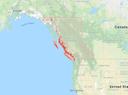
The government of British Columbia on Feb. 27 announced changes to the law governing its Low Carbon Fuels Standard that will require eligible renewable fuels to be produced in Canada. The changes also boost the renewable content requirements for diesel.
Rep. Max Miller, R-Ohio, on Feb. 27 reintroduced the Farm to Fly Act, a bill that aims to accelerate the production and development of sustainable aviation fuel (SAF). Companion legislation was reintroduced in the Senate during January.
U.S. Secretary of Agriculture Brooke Rollins on Feb. 27 announced Tom Schultz will serve as the 21st chief of the U.S. Forest Service. Schultz previously served as vice president of resources and government affairs at Idaho Forest Group.

The General Court of the European Union on Feb. 27 dismissed a challenge against the ReFuelEU Aviation regulations brought by European biofuel producers last year regarding regulation’s exclusion of crop-based fuels.
The Sustainable Aviation Fuel Coalition met with key lawmakers on Capitol Hill on Feb. 26 to discuss critical policies supporting the domestic growth and adoption of sustainable aviation fuel (SAF) in the U.S.

National Association of State Departments of Agriculture members on Feb. 26 voted to amend the organization’s biofuels policies to increase support for domestic and global demand for American produced biofuels.

The Indiana Senate on Feb. 10 voted 46 to 3 in favor of a bill that aims to create tax credits for the sale of higher ethanol blends, the sale of blended biodiesel or renewable diesel, and the blending of biodiesel and renewable diesel.

Energy legislation proposed by Iowa Gov. Kim Reynolds in February, in part, aims to establish new regulations related to the construction, expansion and operation of anaerobic digestion facilities within the state.

More than 1.76 billion renewable identification numbers (RINs) were generated under the Renewable Fuel Standard in January, down from 1.91 billion generated during the same period of 2024, according to data released by the U.S. EPA on Feb. 20.
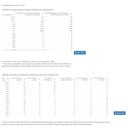
The U.S. EPA on Feb. 20 released updated small refinery exemption (SRE) data showing that 13 previously denied SRE petitions for Renewable Fuel Standard compliance years 2021 and 2022 are being reconsidered. No new SRE petitions were filed.
A coalition of biofuel, agriculture, fuel retailer and petroleum trade groups on Feb. 19 sent a letter to U.S. EPA Administrator Lee Zeldin urging the agency to set robust, timely, multiyear RFS RVOs for 2026 and beyond.

Sam Wade, vice president of public policy for RNG Coalition, is confident that CARB will swiftly address OAL’s concerns regarding recently approved LCFS amendments, allowing the move forward with the updated LCFS program.
CVR pauses development of potential SAF projects pending regulatory, tax credit clarity

February 20, 2025
CVR Energy Inc. released fourth quarter financial results on Feb. 18, reporting reduced renewable diesel production. The company also said it is pausing development of SAF capacity pending clarity on government subsidies.
CARB on Feb. 18 announced that amendments to its LCFS program that were approved in November 2024 have been put on hold following the California Office of Administrative Law’s decision to disapprove the amendments due to clarity issues.
Legislation introduced in the California Senate on Feb. 14 aims to modify the state’s renewable natural gas (RNG) procurement framework and authorizes utilities to recover costs associated with RNG interconnection investments.

The U.K. government on Feb. 10 announced it will move forward with a short-term support mechanism for large-scale biomass generators. The subsidies will provide support for Drax Group plc’s four biomass units post-2027.

Calumet Inc. on Feb. 12 reported that the Trump administration has successfully completed the “tactical” review of the $1.44 billion DOE loan guarantee to support expanded SAF production its Montana Renewables facility.

The U.S. Senate on Feb. 13 voted 72 to 28 to confirm Brooke Rollins to serve as secretary of agriculture. Representatives of the biofuel and bioenergy industries have spoken out in support of her confirmation.

The U.S. Supreme Court on Feb. 6 denied a request from the Trump administration to pause the SRE lawsuit currently pending before the court. The court is currently scheduled to hear oral arguments for the case on March 25.
The U.S. Department of Commerce’s International Trade Administration on Feb. 12 announced it would postpone a meeting of the Renewable Energy and Energy Efficiency Advisory Committee that was scheduled to take place that day.

The U.K. Department for Transport has announced it will invest £63 million over the next year under its Advanced Fuels Fund to support SAF producers. The agency also issued a response to its consultation on a revenue certainty mechanism for SAF.
The U.S. Department of Commerce’s International Trade Administration has announced the Renewable Energy and Energy Advisory Committee will hold a meeting Feb. 12 in Washington, D.C. The event will also be streamed online.
Patrick Serfass, executive director of ABC, has congratulated Chris Wright on his confirmation to become the secretary of the U.S. Department of Energy and looks forward to working with the agency to support U.S. energy dominance.
Clean Fuels Alliance America hosted its annual Clean Fuels Conference in late January. During the event, experts shared the state of the biobased diesel industry today and the outlook for the near-and long-term.
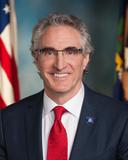
Patrick Serfass, executive director of the American Biogas Council, has congratulated Doug Burgum on his confirmation to become the U.S. Secretary of the Interior and his new role as chair of the National Energy Council.

Representatives of the U.S. biofuels and bioenergy industries are among more than 160 companies, trade groups, labor unions and policy organizations that are calling on federal lawmakers to maintain support for the 45Q tax credit.
Legislation introduced in the Kansas legislature on Jan. 15 aims to create a 5-cent-per-gallon tax credit to support the sale of higher ethanol blends, such as E15. Lawmakers are also being asked to consider a similar incentive for biobased diesel.

Calumet on Jan. 28 announced disbursement of the first tranche of its $1.44 billion U.S. DOEloan guarantee to support the expansion of SAF production at its Montana Renewables facility will be delayed to allow review by the Trump administration.
The Trump administration has asked the U.S. Supreme Court to pause the small refinery exemption (SRE) lawsuit currently pending before the court while the agency “reassesses the basis for and the soundness of the denial actions.”
Advertisement

@ Copyright 2026 - BBI International - All rights reserved.