


Rep. Mike Carey, R-Ohio, on July 18 introduced legislation that aims to extend the existing $1 per gallon blenders tax credit for biodiesel and renewable diesel for one year, through the end of 2025.

A bipartisan group of 16 senators and 36 representatives on July 23 sent a letter to U.S. Treasury Secretary Janet Yellen urging her agency to take immediate action to finalize the rules to implement the 45Z clean fuel production credit.

American Farm Bureau Federation, National Corn Growers Association, Biotechnology Innovation Organization, American Soybean Association, and American Biogas Council are among more than 500 organizations calling for the passage of a new Farm Bill.

The U.K. Department for Transport on July 22 sent a written statement to the U.K. Parliament confirming that, subject to Parliamentary approval, the agency will introduce a sustainable aviation fuel (SAF) mandate starting on Jan. 1, 2025.

The U.S. EPA on July 18 announced it has reached a settlement with Lupton Petroleum Products Inc., and its affiliate Brad Hall Associates Inc., for violations of the Clean Air Act’s conventional and renewable fuel requirements.

The U.S. Department of Transportation’s Federal Aviation Administration has launched $1 billion fiscal year (FY) 2025 funding opportunity that could help U.S. airports develop infrastructure to increase access to sustainable aviation fuel (SAF).

Growth Energy and others filed two intervenor briefs in the U.S. Court of Appeals for the District of Columbia Circuit related to a set of consolidated lawsuits filed by oil industry and environmental petitioners challenging EPA’s RFS “set” rule.

The DOE has announced its intent to fund partnerships between industry stakeholders and Feedstock-Conversion Interface Consortium researchers. The partnerships will address the cost and risk impacts of feedstock and process variability.
Nearly 2.04 billion RINs were generated under the RFS in June, down from 2.06 billion generated during the same month of last year. Total RIN generation for the first half of 2024 reached 12.07 billion.
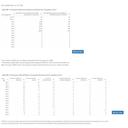
The U.S. EPA on July 18 released updated small refinery exemption (SRE) data, reporting that seven new SRE petitions have been filed under the RFS during the past month. A total of 46 SRE petitions are now pending.
U.S. farm groups are urging the Biden administration to maximize the benefits of the 45Z clean fuels production tax credit by ensuring only fuels made using domestically produced feedstocks are eligible and improving climate-smart ag provisions.

Maine Gov. Janet Mills on July 2 announced the award of a $100,000 grant to the Maine Pellet Fuels Association. The funding will support efforts to expand domestic markets for wood pellet fuel manufactured within the state.
King Charles announced that the U.K. Parliament will soon introduce a bill to support the production of SAF via a revenue support mechanism during his July 17 speech that formally opened a new session of the British Parliament.
On July 17, Clean Fuels Alliance America delivered a formal notice of intent to sue the U.S. EPA for its failure to issue timely 2026 Renewable Fuel Standards. EPA is required to finalize volumes 14 months before the start of the compliance year.

The European Commission on July 2 approved, under EU State Aid rules, Sweden’s plans to provide up to EUR 3 billion in subsidies to support carbon capture and storage (CCS) projects focused on biogenic CO2.

The Canadian government on June 28 released proposed regulations to require landfills to control methane emissions and ensure landfill gas-recovery systems capture as much methane as possible. A public comment period is open through Aug. 28.
DOE: AlgaePrize finalist teams make great strides in projects to unlock algal energy

By U.S. Department of Energy
July 16, 2024
The student teams selected as finalists for AlgaePrize 2023–2025 are working to turn research proposals into results. The teams are making great strides in 15 unique projects that aim to unlock algal energy from a variety of angles.

Reps. Ashley Hinson, R-Iowa, and Angie Craig, D-Minn., and 35 of their colleagues on July 10 sent a letter to U.S. EPA Administrator Michael Regan urging the agency to set 2026 RFS RVOs that accurately reflect growth in biobased-diesel production.

Japan is working to develop standards for SAF according to a report filed with the USDA FAS's Global Agricultural Information Network on July 5. The government is expecting to begin drafting SAF legislation later this year.

The OMB on July 5 published its 2024 Unified Agenda and Regulatory Plan, which outlines rulemakings and other actions under development by federal agencies related to the RFS, biofuel infrastructure, CO2 pipeline safety, and wood heating.

Neste welcomes the French government's decision to approve the sales of transport fuels from 100% renewable raw materials, such as renewable diesel, at fuel stations. To date, sales of these fuels have been limited to logistics companies.

The U.S. EPA’s new set rule unlocks potential for higher revenue streams through renewable identification number generation under the federal Renewable Fuel Standard.

The USDA announced improvements to the camelina pilot crop insurance program for the 2025 and succeeding crop years. USDA’s RMA is expanding coverage options by allowing enterprise units and increasing maximum coverage levels.
The USDA on June 26 awarded nearly $100 million in loans and grants to 473 projects under the Renewable Energy for America Program. Biogas producers were among those selected to receive grant and loan funding.

The USDA on June 26 launched a RFI seeking public comments on procedures for quantifying, reporting and verifying the effect of climate-smart farming practices on the GHG emissions associated with U.S.-grown biofuel feedstocks.

The U.S. EPA on June 25 awarded more than $8.8 million to the Northeast States for Coordinated Air Use Management to support emissions testing and other activities aimed at reducing air pollution from wood heaters.
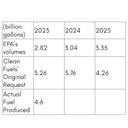
Clean Fuels Alliance America on June 25 filed a formal petition asking the U.S. EPA to reconsider RFS volumes for 2024 and 2025. The agency set biomass-based diesel and overall advanced volumes significantly below actual production of the fuels.

A bipartisan group of six senators on June 20 send a letter to the U.S. EPA, USDA, U.S. Trade Representative, and U.S. Customers and Board Protection expressing concern with dramatic increases in used cooking oil (UCO) imports from China.
The U.S. EPA released updated RIN data on June 20, reporting that nearly 2.01 billion RINs were generated under the RFS during May, down from 2.11 billion generated during the same period of last year.
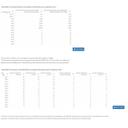
The U.S. EPA released updated small refinery exemption (SRE) data on June 20, reporting that one new SRE petition has been filed under the RFS in the past month. A total of 39 SRE petitions are now pending.
Advertisement

@ Copyright 2026 - BBI International - All rights reserved.