

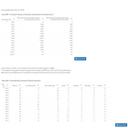
The U.S. EPA on Feb. 19 released data showing five additional SRE petitions have been filed under the RFS during the past month. A total of 31 SRE petitions are currently pending, up from 26 that were pending as of mid-January.

The House Committee on Agriculture on Feb. 13 released a draft Farm Bill that includes provisions that aim to expand the use of biochar and encourage growth and innovation in the biofuel, bioproducts and bioenergy industries.

The U.S. EPA on Feb. 12 published a final rule rescinding the agency’s 2009 Greenhouse Gas Endangerment Finding, which formed the legal basis for the EPA’s GHG regulations, and repealed all subsequent GHG emission standards for vehicles.

Rep. Rick W. Allen, R-Ga., recently introduced a bill to establish a targeted federal assistance program to provide temporary financial relief to eligible forest product harvesting and hauling businesses impacted by significant market disruptions.

The DOE on Feb. 3 announced the chair and members of the newly established Office of Science Advisory Committee, a unified advisory body that will provide independent advice on complex scientific and technical challenges.

Sen. Jerry Moran, R-Kan., on Feb. 2 introduced the bipartisan Securing America’s Fuels (SAF) Act. The bill aims to reinstate the 45Z clean fuel production credit premium for sustainable aviation fuel (SAF) and extend the 45Z credit through 2033.

The U.S. Department of Treasury and IRS on Feb. 3 released proposed regulations for the 45Z clean fuel production tax credit, as updated by the One Big Beautiful Bill in mid-2025. A public comment period is scheduled to be open for 60 days.

Arva on Jan. 27 announced the expansion of its biofuels offering to support biofuel producers as they operationalize the 45Z Clean Fuel Production Credit.

The U.K. Department of Transport on Jan. 20 announced plans to offer up to £43 million ($59.53 million) to support green aviation projects, including those focused on clean fuels and zero-emission aircraft.

The White House Office of Management and Budget on Jan. 23 concluded its review of a proposed rule to implement guidance for the 45Z clean fuel production credit, according to information posted to the agency’s website.
President Donald Trump on Jan. 23 signed an appropriations bill that includes language on biomass energy and sustainability. Explanatory statements published by Congress regarding the legislation included guidance on SREs and SAF.

The USDA’s Rural Business Cooperative Service on Jan. 14 sent a letter to agency staff implementing a 90-day administrative pause on the acceptance, processing and awarding of loan note guarantees for biodigester projects.
Clean Fuels Alliance America on Jan. 26 sent a letter to President Donald Trump highlighting the biodiesel, renewable diesel and SAF industry’s contribution to U.S. energy security and rural prosperity.

The New Mexico Environmental Improvement Board on Jan. 22 unanimously adopted regulations implementing a Clean Transportation Fuel Program, making New Mexico the fourth U.S. state to adopt a clean fuel standard.
Clean Fuels Conference 2026: Unity drives growth, progress

January 22, 2026
The foundation is strong for expansion of biodiesel, renewable diesel and SAF in the U.S., but to build on the growth of recent years, producers and stakeholders must remain united, according to Clean Fuels Alliance America CEO Donnell Rehagen.

Biomass Magazine has announced the addition of the North American Biocarbon Conference to the 2026 International Biomass Conference & Expo, expanding the event’s scope to include the full value chain of carbon-negative and carbon-smart technologies.

The Colorado Air Quality Control Commission in late 2025 adopted new regulations that will require more of the state’s municipal solid waste (MSW) landfills to install gas collection and control systems.

The U.S. EPA on Jan. 15 released new data showing one new small refinery exemption (SRE) petition was filed under RFS during the past month. A total of 26 SRE petitions are currently pending, up from 25 that were pending as of mid-December.

A coalition of 34 environmental groups on Jan. 14 filed a rulemaking petition with the USDA to make manure anaerobic digestion projects ineligible to receive grants or loans under the Rural Energy for America Program.
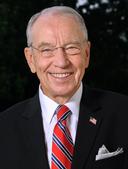
Sen. Charles Grassley, R-Iowa, on Jan. 14 sent a letter to the U.S. EPA and three other federal agencies seeking an update on actions they have taken to respond to serious concerns regarding Renewable Fuel Standard refinery exemptions.
The USDA on Dec. 31 announced the per-acre payment rates for $11 billion of the $12 billion farm aid package announced in December. U.S. corn, soybean and sorghum farmers will receive respective per-acre payments of $44.36, $30.88, and $48.11.
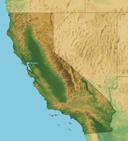
California Gov. Gavin Newsom on Jan. 9 released a proposed 2026-27 state budget. Details published by the California Senate Committee on Budget and Fiscal Review indicate the proposed budget includes provisions for a new SAF tax credit.
The U.S. EPA on Jan. 7 delivered a draft final rule to the White House Office of Management and Budget to repeal the agency’s 2009 Endangerment Finding and tailpipe greenhouse gas regulations for motor vehicles and engines.
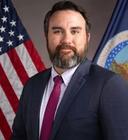
U.S. Secretary of Agriculture Brooke L. Rollins has announced the appointment of Justin Benavidez as USDA’s Chief Economist. Benavidez’s appointment follows the retirement of Seth Meyer, who served as USDA’s Chief Economist since 2021.

The U.S. House of Representatives on Jan. 8 voted 397 to 28 in favor of an appropriations package that includes language on biomass energy and sustainability. Reports accompanying the legislation include guidance on SREs and SAF.
Clean Fuels Alliance America on Jan. 8 sent a letter to U.S. EPA Administrator Lee Zeldin, asking the agency to maintain the 2025 Renewable Fuel Standard compliance deadline on March 31, 2026, to mitigate the impacts of rulemaking delays.
Agenda released for 19th Annual International Biomass Conference & Expo

By BBI International
January 09, 2026
Biomass Magazine has released the agenda for the 19th Annual International Biomass Conference & Expo, scheduled for March 31-April 2, 2026, at the Gaylord Opryland Resort & Convention Center in Nashville, Tennessee.
The U.K. Department for Transport late 2025 signaled it may be softening its stance on crop-based SAF. The agency is gathering stakeholder input that could provide a pathway to open the country’s SAF Mandate program to crop-based biofuels.
The USDA on Dec. 30 announced new research and development priorities for 2026. One of the five new priorities focuses on market expansion and creating new uses for U.S. agricultural products, including for use in biofuel and bioenergy.
The clean fuels industry strengthened its foundation in 2025 behind record policy targets, new engine capabilities and proven performance, setting expectations for continued growth in 2026, according to Clean Fuels Alliance America.
Advertisement

@ Copyright 2026 - BBI International - All rights reserved.