


A recent OPIS webinar examined evolving biofuel policy and what it means for market dynamics, investment decisions and growth ahead.
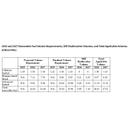
The U.S. EPA on March 27 finalized the 2026 and 2027 RFS RVOs at levels higher than originally proposed. The increase is attributed to the decision delay implementation of provisions penalizing imported fuels and feedstocks until 2028 or later.
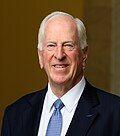
Rep. Mike Thompson, D-Calif., applauded the City of Napa’s new anaerobic digestion system, a transformative clean energy project that will convert organic waste into renewable natural gas to power the city’s garbage and recycling trucks.

NACS and several cosigners on March 26 sent a letter to Congressional leadership reiterating that reinstatement of the lapsed 40A biodiesel blenders credit can quickly and efficiently help control rising diesel prices across the supply chain

The California Air Resources Board in early March issued a request for proposals (RFP) seeking a vendor that can help the agency identify used cooking oil (UCO) that has been fraudulently mixed with virgin oils, such as palm oil.
The Sustainable Aviation Fuel (SAF) Coalition, a nonpartisan group of more than 50 organizations spanning the sustainable aviation fuel value chain, convened in Washington, D.C. on March 25 for its second annual D.C. Fly-In.

The RFA, Growth Energy, Clean Fuels Alliance America and the SAF Coalition on March 25 joined more 20 state and national ag groups in urging the Trump Administration to make the upcoming 45Z regulations workable for farmers.
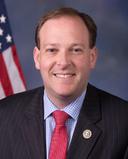
U.S. EPA Administrator Lee Zeldin on March 24 confirmed the agency will release a final rule setting 2026 and 2027 Renewable Fuel Standard renewable volume obligations (RVOs) before the end of March.

A bill pending in the Louisiana state legislature aims to benefit the state’s wood pellet manufacturing industry by streamlining permitting, developing a skilled workforce and facilitating the efficient transportation and export of wood pellets.

Nearly 1.65 billion RINs were generated under the RFS in February, down 10% when compared to the same month of last year. Total RIN generation for the first two months of 2026 reached 3.44 billion, down 2% when compared to the same period of 2025.
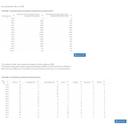
The U.S. EPA on March 19 released data showing six additional SRE petitions have been filed under the RFS during the past month. A total of 37 SRE petitions are currently pending, up from 31 that were pending as of mid-February.

The U.S. Senate and U.S. House of Representatives in March each voted in favor of a bill to reauthorize the Small Business Innovation Research and Small Technology Transfer programs. The legislation currently awaits action from President Trump.

BBI International and Ethanol Producer Magazine are pleased to announce the preliminary agenda for the 2026 International Fuel Ethanol Workshop & Expo, taking place June 2–4 in St. Louis, Missouri.
Agendas released for co-located events at 42nd Annual International Fuel Ethanol Workshop & Expo

By BBI International
March 18, 2026
Produced by BBI International, the Sustainable Fuels Summit, Carbon Capture & Storage Summit and Ethanol 101 expand FEW into a comprehensive platform for biofuels innovation, carbon management and industry education.

The U.S. Department of Energy on March 17 opened a $293 million funding opportunity focused on the use of AI to tackle a wide range of complex science and technology problems, including those in the field of biotechnology.

On March 17, six trade associations wrote a letter to President Trump urging him to unleash U.S. biodiesel and renewable diesel production to bolster America’s energy security during the conflict with Iran.

Nearly two dozen federal lawmakers are urging Treasury to ensure its final rule to implement the 45Z clean fuel production credit recognizes the ability of a wide array of on-farm practices to produce lower-carbon biofuel feedstocks.

On March 11, the Justice Department’s Environment and Natural Resources Division announced a settlement with Chevron U.S.A. Inc. for violations of the Clean Air Act’s Renewable Fuel Standard program.

U.S. EPA Administrator Lee Zeldin on March 9 announced the selection of new members to the Clean Air Scientific Advisory Committee. The newly appointed CASAC will consist of a chair and six new members.
Fuel retailers are calling on the Senate Committee on Agriculture, Nutrition and Forestry to reinstate the Biodiesel Blenders’ Tax Credit, noting that the transition to the 45Z clean fuel production credit has stifled the biodiesel market.
The House Agriculture Committee on March 5 voted 34 to 17 to advance the Farm, Food and National Security Act of 2026, commonly known as the 2026 Farm Bill. The vote followed a two-day markup session that spanned roughly 25 hours.

Strategic Biofuels announced on March 4 it has received a draft Class VI Well Permit from the Louisiana Department of Conservation and Energy for the CCS project under development as part of its Louisiana Green Fuels project.

SAF Magazine, in collaboration with the Commercial Aviation Alternative Fuels Initiative, has announced the 2026 North American SAF Conference & Expo will take place Aug. 25-27, in Tacoma, Washington, at the Greater Tacoma Convention Center.

EcoCeres Inc. on Feb.27 urged European policymakers and aviation stakeholders to keep the EU SAF market open and competitive, cautioning that potential trade defense measures on imported SAF could undermine EU climate objectives
The California Legislative Analyst’s Office, the state legislature’s nonpartisan fiscal and policy advisor, on Feb. 24 recommended state lawmakers do not move forward with California Gov. Gavin Newsom’s proposal to create a SAF tax credit.

The National Oilseed Processors Association, the American Soybean Association, and Clean Fuels Alliance America on Feb. 26 commended the U.S. EPA for transmitting its final 2026-2027 RFS rule to the OMB for interagency review.
U.S. EPA Assistant Administrator for Air and Radiation Aaron Szabo on Feb. 25 announced the agency has submitted the long-awaited rule to set 2026 and 2027 RFS RVOs to the White House Office of Management and Budget.

The U.S. Forest service is offering $95 million through its Wood Innovations program for projects that advance innovative wood uses, expand wood-based construction, and grow U.S. wood energy markets and forest product processing capacity.

The USDA on Feb. 23 opened enrollment for its Farmer Bridge Assistance program, which is providing $11 billion in one-time bridge payments to row crop producers in response to temporary trade market disruptions and increased production costs.

The U.S. EPA on Feb. 19 announced plans to revamp its Clean School Bus program to focus on a wider range of alternative fuels, including renewable natural gas (RNG), biodiesel, renewable diesel and E85.
Advertisement

@ Copyright 2026 - BBI International - All rights reserved.