


Kemvera on Jan. 21 announced it has completed the process design package for its planned 50,000 metric tons per year commercial-scale plant. The company’s technology can convert ethanol into drop-in chemicals.

Gevo Inc. has been awarded U.S. Patent No. 12,486,207 B2. The patent broadens protections for different catalyst combinations and explicitly protects the use of ethanol-to-olefins (ETO) technology to produce fuels.

CPM has introduced the 1200 Direct Drive pellet mill. The new system eliminates the gearbox and V-belt found in traditional pellet mills, making it the most advanced, energy-efficient pellet mill available.

Advanced biofuels pioneer Haffner Energy and power-to-energy player IGNIS P2X kicked off their bio/e-SAF collaborative project AeroVerde. The companies are currently identifying the project’s first site’s precise location in Spain.

While electric and hydrogen aircraft may eventually transform aviation, sustainable aviation fuel offers the most viable path to immediate emissions reduction.

Capstone Green Energy Holdings Inc. on Jan. 7 announced completing the installation of its 6.6-MW CHP microturbine system at a facility in North Carolina that will use pyrolysis to produce biogas from swine waste.
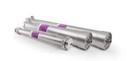
Evonik has won two legal disputes, unquestionably securing European Union and U.S. patent rights for the company’s pioneering 3-stage biogas upgrading process with SEPURAN Green membranes.

Clean Energy Technologies Inc. (CETY) on Dec. 10 announced a dedicated HTAP based platform designed for integration with existing and planned anaerobic digestion (AD) and renewable natural gas (RNG) facilities.

Dutch biomethanol producer Perpetual Next and American equipment supplier TSI celebrated their long-term collaboration on Nov. 24 with the kick-off of constructing the world's largest torrefaction reactor in Estonia.

Hydron Energy Inc. announced on Dec. 1 that it has received funding from NGIF Accelerator to support demonstration of its INTRUPTor solution for single stage low-cost landfill biogas upgrading at the Bailey Landfill in British Columbia.

The U.S. Department of Energy on Dec. 1 announced it has renamed the National Renewable Energy Laboratory as the National Laboratory of the Rockies. The change is effective immediately, according to the agency.

Calpech, a spin-off from the University of Alicante (UA) in Spain, is becoming a key player in the transformation of the biogas sector through a disruptive technological solution based on iron nanoparticles encapsulated in carbon.

With support from Minnesota Corn, University of Minnesota Professor of Chemical Engineering Paul Dauenhauer is exploring the corn-to-methanol pathway for biofuels, which could be used to produce SAF.
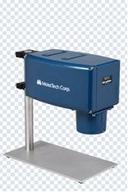
MoistTech Corp. is highlighting the long-standing sustainability benefits of its advanced IR-3000 Series Moisture Sensor. Built on precision near-infrared technology, the IR-3000 enables manufacturers to reduce material waste and energy consumption.
Project developer OroCarbo has selected Haffner Energy’s SYNOCA 20 MW module for integration into a 100 metric tons per day biomethanol project in California, using Maverick Synfuels’ syngas-to-methanol conversion technology.

Aether Fuels, a SAF producer, and Aster, a leading provider of energy and chemical solutions in Southeast Asia, on Nov. 11 signed an agreement to develop the first next-generation, commercial-scale SAF production facility in Southeast Asia.

Topsoe has been selected to deliver its HydroFlex, SynCOR and H2bridge technologies, as well as catalysts and equipment, for NXTClean Fuels’ Port Westward project in Clatskanie, Oregon, to produce SAF and renewable diesel.

The International Biomass Conference & Expo and the American Boiler Manufacturers Association BOILER Expo are joining forces in 2026 for an unprecedented colocation event in Nashville, Tennessee, March 31 – April 2, 2026.

Honeywell on Oct. 28 introduced its new Biocrude Upgrading process technology, which converts agricultural and forestry waste into ready-to-use renewable fuels, including marine fuels, gasoline and SAF.

Steel Dynamics Inc. on Oct. 27 announced lower-embodied-carbon steel product offerings, BIOEDGE and EDGE, to support customers in achieving their greenhouse gas emissions reduction and sustainability initiatives.

Greenlane Renewables Inc. has announced the filing of a new patent application for a linear nitrogen rejection unit (NRU) as part of its Cascade LF product line, the company’s next-generation landfill gas upgrading technology.

A United Kingdom biogas plant turned to progressive cavity pump technology to solve a costly digestate handling issue.

Utility Global Inc. and Maas Energy Works on Oct. 7 announced an agreement to advance the development of the first commercial project in California to use dairy digester biogas for direct hydrogen fuel production. The

Green Carbon Development, led by Process Technical Services, announced on Oct. 2 that it has selected Axens Vegan technology for its upcoming renewable fuels facility. The 10,500 BPSD facility will produce SAF and renewable diesel.
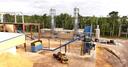
The recently completed installation of a pellet mill and innovative drying system is empowering Georgian family-owned lumber company Conner Holdings to expand its potential.

Lux Research provided insight regarding the approaching 2030 SAF mandate, potential technology pathways, gaps in the value chain and the road to success.
Opportunities in biochar production continue to present themselves to organizations with biomass streams, and although launching and successfully executing a project can be a daunting process, it doesn’t have to be.

XCF Global Inc. and FlyORO Technologies Pte. Ltd. on Oct. 1 announced the signing of a MOU to explore the creation of a global partnership to help solve one of aviation's biggest bottlenecks: SAF supply chain and blending inefficiencies.
SAF producer XCF Global Inc. has signed a letter of intent with Posh Robotics through its subsidiary New Rise Renewables Reno LLC to explore deploying Posh Energy's flex-fuel gensets at the New Rise Reno renewable fuels facility.

The sustainable aviation fuel (SAF) industry’s biggest players gathered at the North American SAF Conference and Expo in Minneapolis on Sept. 22-24 to confront the sector’s steep challenges and chart its path forward.
Advertisement

@ Copyright 2026 - BBI International - All rights reserved.