

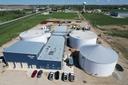
PurposeEnergy on Oct. 19 announced the commissioning of its industrial food waste and wastewater pre-treatment facility in Minster, Ohio. The facility converts organic waste into biogas, clean water and fertilizer.

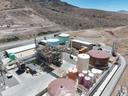
XCF Global Inc. on Oct.13 announced September gross product sales of more than $12 million, driven by increasing production and expanding commercial contracts and shipments of 1.4 million gallons from the New Rise Renewables Reno facility.

ARC Bio, the Canadian joint venture between an affiliate of Bioénergie AECN and Alder Renewables, on Sept. 30 announced the successful demonstration of a pathway to produce SAF Canadian forest residues through refinery co-processing.

Verbio on Oct. 6 commissioned the world’s first large-scale ethenolysis plant based on rapeseed methyl ester at its Bitterfeld site. The new plant is capable of producing up to 60,000 metric tons of biobased chemicals annually.

CHAR Technologies Ltd. on Oct. 1 announced the substantial completion of Phase 1 mechanical and electrical construction at its Thorold Renewable Energy Facility, the company's first commercial renewable energy and biocarbon production facility.

France-based Waga Energy on Sept. 29 announced the company produced 426 gigawatt hours (GWh), or 1.5 million MMBtu, of renewable natural gas (RNG) during the first half of 2026, up 31% when compared to the same period of 2025.

Verbio on Sept. 24 announced the company produced a record 1.218 million metric tons of liquid biofuels and 1,410 gigawatt hours (GWh) of biomethane during the company’s fiscal year (FY) 2025-‘26, which ended June 30.

For OEMs and cement manufacturers, the decision to keep a functioning component in service can be more complicated than simply asking whether it still works.

Surging diesel prices are squeezing biomass and pellet producers, putting new pressure on feedstock sourcing, transportation and already-narrow operating margins.

Casella Waste Systems Inc. and Waga Energy have announced the start of operations of the RNG production facility at the McKean Landfill in Mount Jewett, Pennsylvania. The McKean facility is the third to come online this year.

The U.S. Energy Information Administration maintained its 2026 and 2027 production forecasts for biodiesel, renewable diesel and sustainable aviation fuel (SAF) in its latest Short-Term Energy Outlook, released Sept. 9.
XCF Global advances commercial execution
By XCF Global Inc.
September 02, 2026
XCF Global Inc., a scaling U.S.-based producer of renewable diesel and SAF, on Sept. 1 announced another milestone in the company's transition from development-stage operations to active, revenue-generating commercial production.
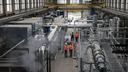
Nova Pangaea Technologies, the U.K. company with a unique process to create sustainable aviation fuel (SAF) from waste biomass, has completed successful endurance trials that further validate its technology.

Waga Energy and Decatur Hills Landfill, part of the family-owned waste management group Best Way Disposal, have commissioned a new renewable natural gas (RNG) production unit in Greensburg, Indiana.
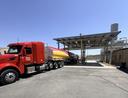
XCF Global Inc. on Aug. 18 announced a key operational and revenue-generating milestone: its flagship New Rise Renewables Reno facility is actively delivering approximately 55,000 gallons of renewable diesel per day to the market.
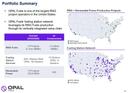
OPAL Fuels on Aug. 10 announced the company produced 1.3 million MMBtu of RNG during the second quarter, up 4% when compared to the same period of last year. RNG production for the first half of 2026 reached 2.4 million MMBtu, up 6%.

Tidewater Renewables Ltd. on Aug.13 announced its renewable diesel and renewable hydrogen (HDRD) complex in Prince George, British Columbia, achieved record average daily throughput of 3,315 barrels per day during the second quarter of 2026.

Imperial Oil Ltd. is prioritizing renewable diesel production at its Strathcona refinery in Canada due to strong economics. The company is also adding additional rail handling capacity to the facility.

Swinergy celebrated the completion and commencement of operations at its first commercial project during a ribbon-cutting ceremony held at HollandAg near Ellendale, Minnesota. The facility produces RNG from swine waste.
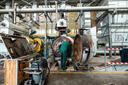
Artificial intelligence has a growing role in improving pellet plant performance, efficiency and reliability.

CHAR Technologies Ltd. has announced installation of the commercial HTP kiln at its Thorold Renewable energy Facility is now complete. Commercial operations are currently expected to begin by the end of September.
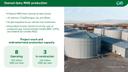
Clean Energy Fuels Corp. on Aug. 6 announced the company sold 63.2 million gasoline gallon equivalents (CCEs) of renewable natural gas (RNG) during the second quarter of 2026, up 2.9% when compared to the same period of 2025.
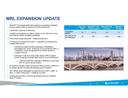
With the initial phase of its MaxSAF 150 initiative now complete, Montana Renewables is preparing to further increase sustainable aviation fuel (SAF) capacity. The company plans to expand SAF production to more approximately 200 MMgy by 2028.

Gevo Inc. on Aug. 6 announced it has cancelled plans to develop a SAF project in South Dakota. Rather, the company remains focused on its North Dakota operations, including plans to expand ethanol production capacity and develop a 30 MMgy SAF plant.

Montauk Renewables Inc. on Aug. 5 reported the company’s renewable natural gas (RNG) production increased by 3% during the second quarter. Renewable electricity production expanded by nearly 5% during the three-month period.

Aemetis Inc. on Aug. 6 reported the company achieved 20% revenue growth during the second quarter. During an earnings call, company officials discussed ongoing improvements at the Keyes ethanol plant and plans to expand biogas production.
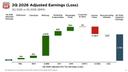
Phillips 66 on Aug. 5 reported the company’s renewable fuel segment achieved significantly higher pre-tax income during the second quarter due to higher regulatory credits from higher pricing and renewable fuels production.
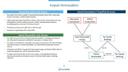
Par Pacific Holdings Inc. released second quarter financial results on Aug. 5, reporting its Hawaii renewable fuels facility ramped up production during the three-month period after commencing operations in April.

Marathon Petroleum Corp. released second quarter financial results on Aug. 4, reporting significantly improved performance for its renewable diesel segment on stronger margins, higher throughputs and improved regulatory credit values.

PBF Energy Inc. on July 31 announced the St. Bernard Renewables facility produced approximately 15,100 barrels per day of renewable diesel during the second quarter, up from 14,200 barrels per day reported for the same period of last year.
Advertisement

@ Copyright 2026 - BBI International - All rights reserved.