


U.S. biofuel producers consumed 31.275 billion pounds of feedstock in July, up nearly 3% when compared to June and up nearly 7% when compared to July 2025, according to data released by the U.S. Energy Information Administration on June 30.

Old crop soybean stocks in all positions as of Sept. 1 were at 315 million bushels, down 3% when compared to the same period of 2025, according to the USDA’s latest quarterly Grain Stocks report, released Sept. 30.

Scaling food waste-based RNG requires more than proven digestion technology—it takes reliable feedstock, preprocessing infrastructure, long-term contracts and durable markets.

The USDA on Sept. 29 announced increased financial assistance for the Regenerative Pilot Program from $700 million to $1 billion in fiscal year 2027, providing more producers with the opportunity to adopt conservation systems.

A new report co-authored by the National Corn Growers Association and American Soybean Association documents ongoing economic pressures across farm country, despite recent price improvements in both commodity markets.

Surging diesel prices are squeezing biomass and pellet producers, putting new pressure on feedstock sourcing, transportation and already-narrow operating margins.


The USDA’s National Agricultural Statistics Service (NASS) today launched AgInsights, a new data dissemination tool that will serve as a key component of NASS’s ongoing modernization strategy.

CHS on Sept. 14 announced plans to construct a soybean processing facility near Evansville, Wisconsin, representing an investment of approximately $700 million. The facility will have the capacity to process 80 million bushels annually

Be Noble Inc., Ecostrat and the BDO Zone Initiative are pleased to announce the issue of a BDO Zone ‘A’ Rating for Noble County, Indiana. The region is rated for 475,000 bone dry tons per year of low-risk corn stover and spans a 75-mile drive radius.

The Ontario government is building a strong and self-reliant economy by investing over $17.3 million in four projects that will modernize forest sector manufacturing, enhance the industry’s competitive advantage and strengthen forestry supply chains.
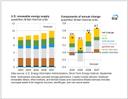
Renewables are expected to account for more than 26% of U.S. electricity generation this year, expanding to nearly 28% in 2027, according to the U.S. Energy Information Administration’s latest Short-Term Energy Outlook, released Sept. 9.
The USDA maintained its forecast for 2026-’27 soybean oil use in biofuel production in its latest World Agricultural Supply and Demand Estimates report, released Sept. 11. The estimate for 2025-’26 soybean use in biofuel production was revised up.

The USDA released its latest monthly Crop Production report on Sept. 11, predicting soybean production for beans will reach 4.53 billion bushels in 2026, up slightly from the previous forecast and up 6% from 2025.
The U.S. biofuel industry consumed 30.46 billion pounds of feedstock in June, up 4% when compared to May and up 6% when compared to June 2025, according to data released by the U.S. Energy Information Administration on Aug. 31.
Bayer and Neste close commercial agreement to jointly scale newgold winter canola for biofuels production

September 10, 2026
Bayer and Neste, the world’s leading producer of renewable diesel and sustainable aviation fuel (SAF), on Sept. 9 announced the companies have finalized a commercial agreement to jointly scale Bayer’s newgold winter canola.

The BDO Zone Initiative on Aug. 31 released its 2025 Annual Report, Building the Bioeconomy Infrastructure. The report documents the year the network moved from expansion to execution, with CAD $10 billion in announced biomanufacturing investment.

Allegany County Industrial Development Agency, Ecostrat and the BDO Zone Initiative have announce the issue of a BDO Zone ‘A’ Rating for Allegany County, New York, for 300,000 bone dry tons per year of low-risk woody biomass
The ASA is sounding the alarm over reports that small refinery exemptions for the 2025 RFS compliance year could far exceed previous government projections, delivering a major blow to domestic biofuel demand.

FatHopes Energy Sdn Bhd has strengthened its logistics capabilities with the acquisition of additional prime movers from Hap Seng Truck Sdn Bhd, marking another step in the company’s investment in biofuel feedstock infrastructure across Malaysia.

Sioux Metro Growth Alliance, Ecostrat and the BDO Zone Initiative issued a BDO Zone ‘A’ Rating for Canton, South Dakota. The BDO Zone is the first rating in the state of South Dakota, rated for 700,000 bone dry tons per year of low-risk corn stover.

CoverCress Inc., developer of the winter oilseed crop CoverCress, has announced that the U.S. EPA has approved renewable fuel pathways for CoverCress oil under the Renewable Fuel Standard program, a key regulatory milestone
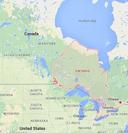
The Ontario government is investing over $2.1 million in four projects to increase forest sector competitiveness and drive innovative uses for mill by-products and underused wood known as forest biomass.

The Intermediate Oilseed Crop Alliance on Aug. 17 announced its formal incorporation as a new 501(c)(6) trade association dedicated to advancing the commercialization of intermediate oilseed crops including camelina, carinata, and pennycress.

Sustainable Northwest, the Intertribal Timber Council, and the U.S. Endowment for Forestry and Communities announced a five-year, $1.7 million award to help Tribes across the country build new markets for wood that's often left behind.

RevaTerra, an advanced materials company engineering natural residuals into industrial-grade bioenergy products, on Nov. 11 announced the final close of an oversubscribed $1.265 million seed financing.
The USDA maintained its forecast for 2026-’27 soybean oil use in biofuel production in its latest World Agricultural Supply and Demand Estimates report, released Aug. 12. The estimate for 2025-’26 soybean oil use in biofuel was revised up.
U.S. biofuel producers consumed 30.749 billion pounds of feedstock in May, up 10% when compared to April and up 8% when compared to May 2025, according to data released by the U.S. Energy Information Administration on Aug. 5.

ADM on July 30 announced a series of investments designed to expand North American oilseed crush capacity and strengthen the company's ability to meet growing demand for renewable fuels and other vegetable oil markets.
The U.S. EPA on July 14 approved a RFS fuel pathway petition filed by Chevron Renewable Energy Group Inc. that will allow the company’s Geismar, Louisiana, faculty to generate RIN for fuel produced from CoverCress oil feedstock.
Advertisement

@ Copyright 2026 - BBI International - All rights reserved.