

A new report from Clean Air Task Force finds that directing SAF to a small number of high-impact airports, rather than spreading it across the aviation network, could significantly increase the fuel’s climate and public health benefits.

The USDA’s National Institute of Food and Agriculture has awarded $5.6 million to support 11 projects that focus on converting, treating, processing, refining or manufacturing products to utilize plant, animal and woody biomass.
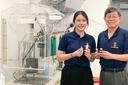
A research team at the University of Illinois Urbana-Champaign has developed a method to produce jet-grade fuel from food waste, contributing to a circular bioeconomy.

The U.S. Department of Energy's Alternative Fuels and Feedstocks Office will hold its 2027 Peer Review Meeting the week of April 19, 2027, to evaluate office-funded projects for their contributions to DOE's goals.

The Horizon Europe-funded TITAN project is nearing completion after 48 months of research, demonstrating a new process that converts raw biogas into hydrogen and solid carbon. The project formally closes Aug. 31.
MIT Energy Initiative launches study of sustainable fuels for hard-to-decarbonize transportation

By Massachusetts Institute of Technology
June 10, 2026
Earlier this year, the MIT Energy Initiative (MITEI) launched a major study to examine the sustainable fuel options for aviation, international shipping, long-haul trucking, and freight rail. The two-year study will be complete in 2028.
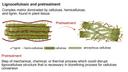
A researcher at the University of Wisconsin-Madison has published a paper that demonstrates hybrid combinations of lignocellulosic feedstock pretreatment methods can achieve high glucose yields with reduced energy consumption.
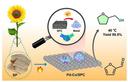
A research team at Shenyang Agricultural University has developed a highly efficient biochar-supported catalyst that can convert biomass-derived chemicals into valuable industrial products under remarkably mild conditions.

OMV has partnered with Technical University of Leoben to establish a one-of-a-kind research facility where various process routes to manufacture sustainable aviation fuels (SAF) are being researched and developed.
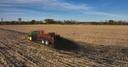
Two University of Nebraska–Lincoln scientists, partnering with American Farmland Trust and four Nebraska farmers, have established a biochar on-farm research network. It is among the first and largest in the United States.

The U.S. Department of Defense’s Defense Advance Research Projects Agency on Feb. 13 announced plans to support research to develop novel catalysts to enable the conversion of biomass into chemicals.
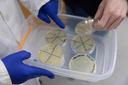
Researchers at the University of Wisconsin’s Great Lakes Bioenergy Research Center are developing toolkits for investigating microbial DNA to identify and tweak genes that can boost production of biofuels and plant-based chemicals.
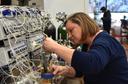
Using a tiny, acid-tolerant yeast, scientists have demonstrated a cost-effective way to make disposable diapers, microplastics, and acrylic paint more sustainable through biomanufacturing.

Cathay is welcoming the release of Igniting the SAF Market: Policy Pathways for Scaling Sustainable Aviation Fuel in China, a research study published by Peking University’s National School of Development in late 2025.
A recent study offers new insight into the air quality and health benefits of switching household cooking fuels from charcoal to biofuel briquettes made from sawdust, according to the Biochar Editorial Office at Shenyang Agricultural University.

A new study from researchers at the University of Western Australia and Universitas Brawijaya has found that adding biochar to advanced food waste recycling systems can significantly increase the clean energy yields of hydrogen and methane.

Researchers at the Idaho National Laboratory have developed computer models that apply to processing bioenergy crops using equipment traditionally used by the food, minerals and pharmaceuticals industries.
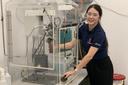
Researchers at the University of Illinois Urbana-Champaign have discovered a novel way to convert food waste into sustainable aviation fuel (SAF) that meets industry standards without relying on fossil fuel blends.
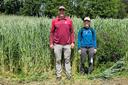
New research has found cover crops that are viable in Washington’s normal “off season” don’t hurt the soil and can be sold as a biofuel source. The study evaluated four cover crops that were grown for multiple years.

Rolls-Royce is leading a new project to find smarter ways of using sustainable aviation fuel (SAF) to increase its effectiveness and role in reducing non-CO2 emissions, specifically those associated with contrail formation.

In a recent academic forum, Professor Yen Wah Tong from the National University of Singapore presented compelling findings on how biochar can significantly enhance the process of anaerobic digestion.

With support from Minnesota Corn, University of Minnesota Professor of Chemical Engineering Paul Dauenhauer is exploring the corn-to-methanol pathway for biofuels, which could be used to produce SAF.
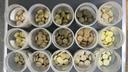
Researchers at the University of Queensland in Australia are assessing the potential to convert 15 weed species found west of Brisbane into biomass pellets, which were used as a solid biomass fuel.
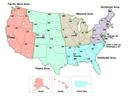
Iowa officials and lawmakers are calling on U.S. Agriculture Secretary Brooke Rollins to relocate the USDA’s Agricultural Research Service projects to Ames, Iowa, as part of the agency’s ongoing reorganization plan.

Engineers at Washington University in St. Louis will be working to improve energy efficiency in production of dimethyl ether (DME) thanks to a $2.1 million grant from the U.S. Department of Energy (DOE).

New research at Iowa State University shows that using advanced planting techniques can triple the amount of biomass produced by the perennial, bioenergy crop miscanthus in its establishment year.

Using technology developed by researchers working with ORNL’s Center for Bioenergy and Dartmouth College, Terragia Biofuel is targeting commercial biofuel production, including ethanol, from lignocellulose.

The Washington State Conservation Commission has awarded researchers from Washington State University Tri-Cities $200,000 to test a new process for managing manure that could significantly boost biogas production.
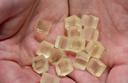
NREL researchers see a realistic path forward to the manufacture of bio-derivable wind blades that can be chemically recycled and the components reused, ending the practice of old blades winding up in landfills at the end of their useful life.
Getting into the (sea)weeds: Exploring algae storage for biofuel conversion

By Lynn Wendt, Laboratory Relationship Manager, Idaho National Laboratory
August 23, 2024
Idaho National Laboratory is exploring the potential of processing sargassum, a type of seeweed, for conversion to biofuel. The team is working with affected communities and starting with the question of how to store the stuff.
Advertisement

@ Copyright 2026 - BBI International - All rights reserved.