


The U.S. exported 903,374.4 metric tons of wood pellets in August, down 17% when compared to July, but up 1% from August 2025, according to data released by the USDA Foreign Agricultural Service on Oct. 6.

The European Union Aviation Safety Agency on Sept. 17 released its annual ReFuelEU Aviation technical report, which indicates sustainable aviation fuel (SAF) accounted for approximately 2.79% of EU aviation fuel use last year.

Technology providers and producers are working to scale biocoal as a drop-in replacement for fossil steam coal, opening a potentially massive market for thermally treated biomass.

The U.K. Department for Transport on Sept. 17 released preliminary 2026 data regarding the country’s SAF mandate, reporting that 292 million liters (77.14 million gallons) SAF was supplied to the U.K. aviation market from Jan. 1 through Aug. 15.

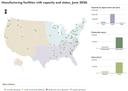
U.S. manufacturers produced approximately 950,000 tons of densified biomass fuel in June, according to the U.S. EIA’s Monthly Densified Biomass Fuels Report. Sales of densified biomass fuel reached 960,000 tons during the month.

Green Fuel Forward, launched by GenZero and the World Economic Forum in May 2025 to scale demand for SAF, on Sept. 22 announced an expanded partnership structure and new members as it enters its next phase of market activation.

On Sept. 16, the USDA released the American Biofuels Trade Outlook, a plan that builds upon 2025’s record U.S. ethanol export performance, removes restrictions to American biofuels, and secures new market opportunities for U.S. farmers.
Rollins announces launch of American Biofuels Trade Outlook

September 15, 2026
U.S. Agriculture Secretary Brook Rollins on Sept. 15 announced the launch of USDA’s new American Biofuels Trade Outlook, a four-part strategy that aims to boost export opportunities for U.S. biofuel producers.

The U.S. Energy Information Administration maintained its 2026 and 2027 production forecasts for biodiesel, renewable diesel and sustainable aviation fuel (SAF) in its latest Short-Term Energy Outlook, released Sept. 9.

The U.K. Trade Remedies Authority on Sept. 10 announced it will not apply anti-subsidy duties to imports of renewable diesel from the U.S., as previously proposed duties “would not be in the U.K.’s economic interests.”
The U.S. exported more than 1.08 million metric tons of wood pellets in July, up 15% when compared to June and up 11% when compared to July 2025, according to data released by the USDA Foreign Agricultural Service on Sept. 3.

The government of Australia is seeking stakeholder input on options to grow the country’s domestic low carbon liquid fuels (LCLF) industry, which includes ethanol, renewable diesel, sustainable aviation fuel (SAF), and biodiesel.
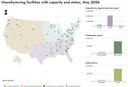
U.S. manufacturers produced approximately 930,000 tons of densified biomass fuel in May, according to the U.S. EIA’s Monthly Densified Biomass Fuels Report. Sales of densified biomass fuel reached 900,000 tons during the month.

China's first sustainable aviation fuel (SAF) compliance service for foreign-registered business jets was successfully implemented at Beijing Capital International Airport in China, according to Sino Jet.
The European Commission on July 30 approved a EUR 290 million ($338.61 million) Dutch state aid package to support sustainable aviation fuel (SAF). The two approved support schemes aim to boost SAF supply and demand.

The government of Brazil on Aug. 12 published a decree that establishes rules and regulations for the country’s sustainable aviation fuel (SAF) mandate, formally referred to as the National Sustainable Aviation Fuel Program (ProBioQAV).

Pellet Mill Magazine examines the challenges holding back North America's industrial pellet industry—and the catalysts that could finally ignite a strong domestic market.
The U.S. Energy Information Administration maintained its 2026 and 2027 production forecasts for biodiesel, renewable diesel and sustainable aviation fuel (SAF) in its latest Short-Term Energy Outlook, released Aug. 11.
The U.S. exported 946,522.4 metric tons of wood pellets in June up nearly 8% when compared to May and up nearly 28% when compared to June 2025, according to data released by the USDA Foreign Agricultural Service on Aug. 4.

U.S. manufacturers produced approximately 880,000 tons of densified biomass fuel in April, according to the U.S. EIA’s Monthly Densified Biomass Fuels Report. Sales of densified biomass fuel reached 900,000 tons during the month.

HAMR Energy has welcomed up to $32 million in conditional funding from the Australian Renewable Energy Agency to advance its landmark projects that will transform Australian plantation forestry residues and renewable energy into SAF.
The RNG Coalition on July 23 celebrates Hawaii Gov. Josh Green's signing of SB 2999 into law. The new law directs the Hawaii Department of Transportation to establish a Clean Fuel Standard (CFS) program.
XCF Global Inc. on July 23 announced that it has entered into a joint commercialization and development agreement with Continual Renewable Ventures Pty Ltd and New Rise Australia Pty Ltd. for a proposed biorefinery project in Australia.

Wood pellet consumption in the EU is expected to expand by 2% this year, driven by increased residual use, according to a report filed with the USDA. That increased demand is forecast to result in a partial recovery of EU wood pellet imports.

The U.K. government on July 23 announced plans to broaden eligibility criteria for sustainable aviation fuel (SAF) financing and released updated statistics on the volume of fuel used to meet the country’s SAF mandate last year.

Sustainable aviation fuel (SAF) could become a major driver of Canada's industrial and economic growth, according to a macroeconomic study conducted by Airbus and ICF, unveiled at the Farnborough International Airshow.

Quebec has set a goal to more than double its bioenergy production by 2050 as part of the province’s new Integrated Energy Resource Management Plan, which was released by Quebec’s Ministry of Economy, Innovation and Energy on June 30.

CARB on July 14 provided additional clarity on its 2025 LCFS amendments with the release of a new 13-page frequently asked questions (FAQ) document. The agency said the FAQs will continue to be updated periodically.
Advertisement

@ Copyright 2026 - BBI International - All rights reserved.