


Hawaii Gov. Josh Green on July 14 signed legislation to create a clean fuel standard (CFS) that aims to reduce the carbon intensity (CI) of transportation fuels by at least 50% below 2019 levels by 2045. Hawaii is the fifth state to implement a CFS.

The U.K. Department for Transport on July 13 published a document that sets out the agency’s planned approach to allocating contracts under the government’s upcoming sustainable aviation fuel (SAF) revenue certainty mechanism.

The European Parliament on July 8 voted to reject a proposed EU regulation that would have phased out the use of soybean oil as a biofuel feedstock by 2030. Representatives of the EU’s biobased diesel industry applauded the decision.

The U.S. exported 879,590.7 metric tons of wood pellets in May, down 6% when compared to April, but up 3% when compared to May 2025, according to data released by the USDA Foreign Agricultural Service on July 7.

A new nationwide poll of more than 2,000 registered voters found a strong majority of Americans support the Renewable Fuel Standard and believe renewable fuel play a key role in enhancing national energy security.

The government of Alberta, Canada, on June 12 launched an effort to update its renewable fuels standard (RFS) program, which has been in effect since 2011. The province aims to implement updates by Jan. 1, 2028.

Braya Renewable Fuels on June 15 celebrated an exciting milestone for the Come By Chance refinery when it completed its first sale of renewable diesel for the Canadian market. The transaction was for 100,000 barrels of renewable diesel.
2026 International Fuel Ethanol Workshop & Expo showcases innovation, insight and industry momentum

By BBI International
June 16, 2026
The 2026 International Fuel Ethanol Workshop & Expo (FEW) concluded after three days of education, networking and collaboration that highlighted the ethanol industry's continued commitment to expansion, innovation and operational excellence.

Colorado Gov. Jared Polis on June 3 signed HB 26-1289, a legislative tax package that creates a new tax credit to encourage the purchase of SAF. The bill also repeals an existing tax credit that supports construction of SAF facilities.
IATA: Brazil’s opportunity to be a SAF powerhouse

By International Air Transport Association
June 12, 2026
The International Air Transport Association highlighted Brazil’s opportunity to become a sustainable aviation fuel (SAF) powerhouse as its 82nd Annual General Meeting gathered in Rio de Janeiro, Brazil.

The U.S. exported 933,792.6 metric tons of wood pellets in April, down 15% when compared to March, but up 10% when compared to April 2025, according to data released by the USDA Foreign Agricultural Service on June 9.

The International Air Transport Association on June 6 announced its analysis shows global SAF production is expected to reach approximately 2.4 million metric tons (792.6 million gallons) this year, accounting for 0.8% of total aviation fuel use.
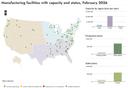
U.S. manufacturers produced approximately 800,000 tons of densified biomass fuel in February, according to the U.S. EIA’s Monthly Densified Biomass Fuels Report. Sales of densified biomass fuel reached 710,000 tons during the month.

The Netherlands imported $535 million of U.S. biofuels last year. Regulatory changes that came into force on Jan. 1, 2026, could boost demand for both U.S. biofuels and feedstocks, according to a report filed with the USDA.

U.S. manufacturers produced approximately 900,000 tons of densified biomass fuel in January, according to the U.S. EIA’s Monthly Densified Biomass Fuels Report. Sales of densified biomass fuel reached 990,000 tons during the month.

Iowa and Missouri are challenging New York’s Mandatory Greenhouse Gas Reporting Program, claiming it unfairly imposes reporting and compliance obligations on ethanol and biodiesel producers located outside the state.

The U.S. EIA increased its forecast for 2026 renewable diesel production in its latest Short-Term Energy Outlook, released May 12. The 2026 forecasts for biodiesel and other biobased diesel fuels, which includes SAF, were maintained.
EIA: One-fifth of US renewable diesel and SAF production was exported in 2H25
By U.S. Energy Information Administration
May 08, 2026
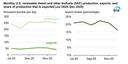
The U.S. exported nearly 50,000 barrels per day (b/d) of renewable diesel and other biofuels—a category which includes sustainable aviation fuel (SAF)—in the second half of 2025 (2H25), about 20% of the combined production for those fuels.

Hawaii lawmakers on May 6 approved legislation to create a clean fuel standard (CFS) that aims to reduce the CI of transportation fuels by at lease 50% below 2019 levels by 2045. The bill will now be considered by Hawaii Gov. Josh Green.
The European Commission in April approved a delegated regulation to update the methodology and data for high-ILUC risk biofuels. The change, if formally adopted, would phase out the use of soybean oil as a biofuel feedstock in the EU by 2030.

The U.S. exported more than 1.1 million metric tons of wood pellets in March, up from 608,572.1 metric tons in February and 781,576.4 metric tons in March 2025, according to data released by the USDA Foreign Agricultural Service on May 5.

On April 29, the USDA announced an expanded partnership with the Export-Import Bank of the United States (EXIM) to increase domestic agricultural production and exports, while reducing the agricultural trade deficit. Alongside

Roeslein Renewables announced its support for a new national push to secure a central role for American made biofuels in the future of global maritime shipping, following the company’s decision to sign onto a joint letter organized by the ABMI.
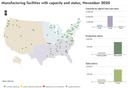
U.S. manufacturers produced approximately 900,000 tons of densified biomass fuel in November, according to the U.S. EIA’s Monthly Densified Biomass Fuels Report. Sales of densified biomass fuel reached 970,000 tons during the month.

The government of Queensland, Australia, has announced it will invest $25 million to support a project that will enable renewable diesel production at Ampol’s Lytton oil refinery. The project could expand in the future to include SAF production.

The case for adopting lower-carbon alternative maritime shipping fuels is strong and getting stronger, according to a report released today by the NGO Energy Vision: The Future of Shipping: Cleaner Fuel Options for the Maritime Sector.

The American Biofuels Maritime Initiative, which includes members representing the ethanol and biogas industries, on April 23 sent a letter to U.S. Secretary of State Marco Rubio calling for strong U.S. leadership in IMO negotiations.

The government of India on April 23 announced it has amended its Aviation Turbine Fuel regulations to allow SAF to be blended with fossil-based jet fuel. The change aims to reduce emissions and keep India aligned with the global supply chain.

Researchers at the U.S. Forest Service’s Southern Research Station and Louisiana State University have published a paper that investigates how the European Union Deforestation Regulations could alter global wood pellet trade patterns.

The Minnesota House of Representatives Taxes Committee on April 8 heard testimony in support of a bill that aims to expand and extend the state’s existing sustainable aviation fuel (SAF) tax credit, which was established in 2023.
Advertisement

@ Copyright 2026 - BBI International - All rights reserved.