


DHL Express has announced a significant SAF agreement with Phillips 66 that will see the delivery of over 240,000 metric tons of SAF over a three-year period. The majority of the SAF will be delivered to Los Angeles International Airport (LAX).

The USDA maintained its forecast for 2025-’26 soybean oil use in biofuel production in its latest World Agricultural Supply and Demand Estimates report, released Nov. 14. The estimate for 2024-’25 soybean use in biofuel production was reduced.

The USDA National Agricultural Statistics Service on Nov. 14 released its latest Crop Production report, predicting record-setting soybean yields. The agency reduced its forecast for soybean production.

Renewables are currently expected to account for 24% of U.S. electricity production in 2025, increasing to 26% in 2026, according to the U.S. Energy Information Administration’s latest Short-Term Energy Outlook, released Nov. 12.

The U.S. EIA maintained its forecasts for 2026 renewable diesel and biodiesel production in its latest Short-Term Energy Outlook, released Nov. 12. The 2026 outlook for “other” biofuel production, which includes SAF, was reduced.

The American Biogas Council announced on Nov. 13 that it has certified 26 additional anaerobic digester operators who passed the organization’s rigorous operator certification exam.

In a recent academic forum, Professor Yen Wah Tong from the National University of Singapore presented compelling findings on how biochar can significantly enhance the process of anaerobic digestion.

DG Fuels LLC has appointed SAMSUNG E&A as a contractor for its SAF in St. James Parish, Louisiana, with responsibilities for the blue hydrogen, green hydrogen, and power generation portions of the project.

With support from Minnesota Corn, University of Minnesota Professor of Chemical Engineering Paul Dauenhauer is exploring the corn-to-methanol pathway for biofuels, which could be used to produce SAF.
The National Oilseed Processors Association and the American Soybean Association on Nov. 12 sent a joint letter to President Donald J. Trump, urging the administration to finalize key biofuel policies.
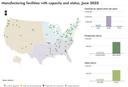
U.S. manufacturers produced approximately 900,000 tons of densified biomass fuel in June, according to the latest edition of the U.S. EIA’s Monthly Densified Biomass Fuels Report. Sales of densified biomass fuel reached 850,000 tons.

Pengerang Biorefinery Sdn. Bhd., a joint venture between PETRONAS, Enilive S.p.A and Euglena Co., Ltd, marked a key milestone with the groundbreaking ceremony for the development of the new biorefinery in Pengerang, Johor, Malaysia.
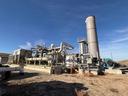
Peaks Renewables and Biogas Development are teaming up to enhance renewable gas production at Biogas Development’s Hidden Hollow Energy Landfill Gas Project in Boise, Idaho. Peaks is making a preferred equity investment in the project.

LanzaJet Inc. on Nov. 13 announced that it has fully operated and produced fuels at its LanzaJet Freedom Pines Fuels facility in Soperton, Georgia. The commercial-scale facility produces SAF via an alcohol-to-jet technology.
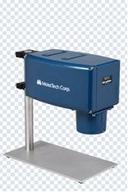
MoistTech Corp. is highlighting the long-standing sustainability benefits of its advanced IR-3000 Series Moisture Sensor. Built on precision near-infrared technology, the IR-3000 enables manufacturers to reduce material waste and energy consumption.
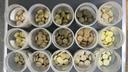
Researchers at the University of Queensland in Australia are assessing the potential to convert 15 weed species found west of Brisbane into biomass pellets, which were used as a solid biomass fuel.

OPAL Fuels on Nov. 6 the company produced 1.3 million MMBtu of renewable natural gas (RNG) during the third quarter of 2025, up 8% when compared to the proceeding quarter and up 30% when compared to the third quarter of last year.

Gevo Inc. could close financing on a proposed 30 MMgy SAF facility under development adjacent to its existing corn ethanol plant in North Dakota as soon as mid-2026, according to comments during a third quarter earnings call.

Montauk Renewables Inc. on Nov. 5 announced the company produced 1.4 million MMBtu of renewable natural gas (RNG) during the third quarter of 2025, up 3.8% or 53,000 MMBtu, when compared to the same period of last year.
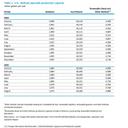
U.S. operable biofuel production capacity expanded by 237 MMgy in August, with gains for ethanol and renewable diesel, according to data released by the U.S. EIA. Biofuel feedstock consumption was up when compared to the previous month.

UGI Energy Services LLC, a subsidiary of UGI Corp., on Nov. 12 announced a partnership with the City of Philadelphia to supply renewable natural gas (RNG) for the city’s compressed natural gas (CNG) powered trash compactors.

West Biofuels is celebrating the official ribbon cutting for Hat Creek Bioenergy, a biomass-to-energy facility which the company constructed and is operating. The plant produces renewable electricity and biochar.

Project developer OroCarbo has selected Haffner Energy’s SYNOCA 20 MW module for integration into a 100 metric tons per day biomethanol project in California, using Maverick Synfuels’ syngas-to-methanol conversion technology.

Aether Fuels, a SAF producer, and Aster, a leading provider of energy and chemical solutions in Southeast Asia, on Nov. 11 signed an agreement to develop the first next-generation, commercial-scale SAF production facility in Southeast Asia.

FedEx in October continued its sustainable aviation fuel (SAF) procurement momentum, beginning to take delivery of blended SAF at two additional U.S. airports for the first time: Chicago-O’Hare Airport and Miami International Airport.

Calumet Inc. on Nov. 7 announced the MaxSAF expansion at its Montana Renewables facility is progressing on schedule. Renewable fuels production during the third quarter was impacted by a sustainable aviation fuel (SAF) expansion test run.

Aemetis Inc. released Q3 results on Nov. 6, reporting increased RNG capacity and higher capacity utilization at the company’s California ethanol plant. Aemetis also provided an update of biodiesel, SAF and CCS projects.

Clean Fuels Alliance America on Nov. 7 urged the U.S. EPA to quickly finalize the overdue Renewable Fuel Standard rule for 2026 and 2027 and to fully reallocate all granted and expected small refinery exemptions.
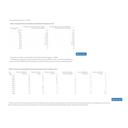
The U.S. EPA on Nov. 7 issued decisions on 16 small refinery exemption (SRE) petitions filed by eight small refineries. The agency granted full exemptions to two petitions, partial (50%) exemptions to 12 petitions, and denied two petitions.

University of British Columbia researchers have identified a previously unknown bacterium in the Natronincolaceae family that plays a crucial role in the process of converting food waste into renewable natural gas (RNG).
Advertisement

@ Copyright 2026 - BBI International - All rights reserved.