

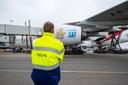
Neste has started supplying sustainable aviation fuel (SAF) to Emirates at Amsterdam Airport Schiphol, expanding the partnership the two companies announced in October last year.
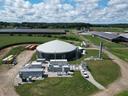
EnviTec Biogas is expanding its presence in the U.S. with locations in Rochester, New York; Watertown, South Dakota; and Beaverton, Oregon. To date, the company has completed eight biogas projects in the U.S.
TotalEnergies and China Petroleum and Chemical Corp. (SINOPEC) have signed a heads of agreement (HoA) to jointly develop a sustainable aviation fuel (SAF) production unit at a SINOPEC's refinery in China.
Japan-based petroleum company ENEOS Corp. on March 22 announced that a coalition of Japanese and South Korean companies have entered an MOU to cooperate on feedstock for a SAF project ENOES is developing.
NordFuel has selected Chempolis as a technology provider for its next generation bioproduct factory in Haapavesi, Finland. The facility will produce biofuels and bioproducts, including ethanol, biogas and lignin.
FortisBC has announced that the BC Utilities Commission has approved key elements of its Revised Renewable Natural Gas application, which will mean that all FortisBC natural gas customers will have a portion of their gas designated as RNG.

In a landmark conservation effort, 2,808.16 acres of Pierce’s Low Grounds in Greensville County, Virginia, have been permanently protected, securing a vital ecological asset for future generations.
Vision RNG LLC has signed definitive agreements to develop, build, own and operate three landfill gas-to-RNG facilities at three privately-owned Southeastern U.S. landfills located in Alabama and Tennessee.

Drax Group has announced an MOU with Viking CCS, the Humber-based CO2 transportation and storage network led by Harbour Energy, together with non-operated partner bp, to assess options to transport and store CO2 in the Humber region.

Air New Zealand has launched a global open invitation to innovators and start-ups in the sustainable aviation fuel (SAF) sector to become a supply partner to the airline.
The U.S. Department of Energy’s Office of Fossil Energy and Carbon Management in March issued a notice of intent (NOI) to launch a Voluntary Carbon Dioxide Removal Purchasing (CO2RP) Challenge.
U.K.-based SAF technology developer Velocys in February announced a new consortium of growth investors have infused the company with $40 million of growth capital as part of take-private transaction completed in January.

Jet Zero Australia Pty Ltd and Trovio Operating Pty Ltd announced that they have entered a strategic partnership to design and develop the ‘Book and Claim’ Registry for Australian sustainable aviation fuel (SAF) and renewable diesel (RD).
The U.S. EPA on March 21 released updated RIN data, reporting that nearly 2.02 billion RINs were generated under the RFS in February, up from 1.91 billion generated the previous month and 1.76 billion generated in February of last year.
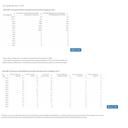
The U.S. EPA released updated SRE data on March 21, reporting that one new SRE petition has been filed under the RFS in the past month. A total of 36 SRE petitions are now pending, up from 35 that were pending as of mid-February.
Aemetis Inc. has announced approval by USCIS for $200 million of EB-5 program investment for the Riverbank SAF production plant, the dairy RNG project, the carbon sequestration project, and energy efficiency upgrades to the Keyes ethanol plant.
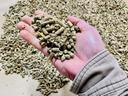
Prairie Clean Energy has been approved by the Saskatchewan government for a 45% new investor tax credit through the Saskatchewan Technology Startup Incentive program. The company produces flax straw pellets.
ABB has signed an agreement with Cap Clean Energy to collaborate on SAF production sites in Canada. As part of the MOU, ABB will explore how its automation, electrification and digital technology can optimize the biofuel facilities.
The U.S. Energy Information Administration is providing an opportunity for stakeholders in the U.S. densified biomass industry, such as wood pellet producers, to comment on ways to improve its monthly data collection efforts.
World Energy LLC on March 18 announced it has been invited by the U.S. Department of Energy to submit the Part II Application for an approximately $2 billion loan guarantee to support a proposed SAF project.
U.S. Energy has signed a long-term RNG supply agreement with the Canton, Ohio-based Stark Area Regional Transit Authority. Under the agreement, U.S. Energy will provide landfill-based RNG to SARTA’s fleet of 36 CNG transit buses.

Sasol, the global chemicals and energy company, and Topsoe, leader in carbon emission reduction technologies, announced the successful launch of their joint venture, Zaffra, which will focus on the development and delivery of SAF.
President Joe Biden, Agriculture Secretary Tom Vilsack and U.S. EPA Administrator Michael Regan on March 19 recognized National Agriculture Day by honoring the farmers and ranchers who produce our nation’s food, feed, fuel and fiber.
The Michigan Senate Committee on Energy and Environment on March 14 held a hearing to consider legislation introduced last year that aims to create a tax credit to support the purchase of sustainable aviation fuel (SAF).
The Michigan Public Service Commission on March 15 rejected applications by Consumers Energy Co. for early termination of power purchase agreements (PPAs) with biomass plant operators.

Viridi Energy has acquired a legacy biosolids digester plant in Brunswick, Maine, with plans to transform the site into an industry-leading waste-to-RNG facility. Casella Waste Systems Inc. will manage feedstock collection and delivery logistics.
Vanguard Renewables, a farm-based provider of organic material solutions for the food and beverage industry, is celebrating a decade in clean energy innovation and organic materials solutions.

Enviva Inc. on March 15 announced that the U.S. Bankruptcy Court for the Eastern District of Virginia has approved its previously announced $500 million debtor-in-possession (DIP) financing related to its Chapter 11 bankruptcy filing.
New Energy Blue on March 18 announced the formation of New Energy Chemicals. In phase one, the biochemical subsidiary will produce biobased ethylene for use in Dow’s renewable plastics. In phase two, the subsidiary will expand to SAF production.
Waga Energy and Steuben County on March 18 announced that renewable natural gas (RNG) production has commenced at the Steuben County Landfill in Bath, New York. The RNG is delivered into the Corning Natural Gas system.
Advertisement

@ Copyright 2026 - BBI International - All rights reserved.