

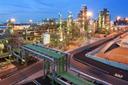
Neste Corp. released third quarter financial results on Oct. 26, reporting a 40 percent increase in comparable EBITDA for its Renewable Products segment. Margins and sales volumes for renewable diesel and SAF were also up.
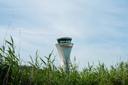
Farnborough Airport, the home of British aviation and Europe’s leading airport for premium air travel connectivity, on Oct. 25 announced the sale of its millionth liter of SAF. The airport began offering SAF to its customers in 2021.
2024 International Biomass Conference & Expo opens call for abstracts

By BBI International
November 28, 2023
The call for presentation abstracts for the 17th Annual International Biomass Conference & Expo, produced by Biomass Magazine, is now open. The event will take place March 4-6, 2024, at the Greater Richmond Convention Center in Richmond, Virginia.
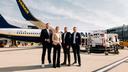
OMV and Ryanair on Oct. 19 announced the signing of an offtake agreement to supply 500 metric tons of sustainable aviation fuel (SAF) at Vienna Airport in 2023. The agreement will save over 1,250 metric tons in CO2 emissions .

Cebu Pacific, the Philippines' leading airline, has signed a memorandum of understanding (MOU) with Neste, the world’s leading producer of sustainable aviation fuel (SAF), to explore the supply and purchase of SAF in Asia Pacific.

Clean Fuels Alliance America announces the strategic addition of Cory-Ann Wind, the visionary leader behind Oregon’s groundbreaking Clean Fuel Program. Wind will assume the director of state regulatory affairs role beginning Jan. 8, 2024.

Rolls-Royce on Oct. 18 announced the successful completion of a series of tests with 100 percent sustainable aviation fuel (SAF) on its latest generation of business aviation engines, the Pearl 15 and the Pearl 10X.

Velocys plc on Oct. 23 announce the launch of its new technology facility in Plain City, Ohio, that will house the reactor core assembly and catalysis operations related to its production process for sustainable aviation fuel (SAF).

Clean Fuels Alliance America has promoted Jeff Earl to the director of state governmental affairs following the retirement of Floyd Vergara. Earl will lead the organization’s efforts in advocating for enhanced state policies and initiatives.
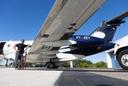
Embraer on Oct. 15 announced it has successfully tested the Phenom 300E and Praetor 600 on 100 percent neat sustainable aviation fuel (SAF). SAF for the testing was provided by World Fuel and used to fuel one engine.
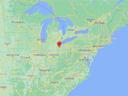
Louis Dreyfus Co. is constructing a soybean processing plant in Ohio, with crushing, vegetable oil refining and lecithin production and packaging capabilities. The plant also provides an option to participate in the biofuel feedstock market.
Nearly 1.95 billion RINs were generated under the RFS in September, up from 1.73 billion generated during the same month of 2022, according to data released by the U.S. EPA. Total RIN generation for the first nine months of 2023 was at 17.41 billion.

DHL Express and World Energy have signed a long-term strategic agreement to accelerate the decarbonization of aviation logistics through the purchase of approximately 668 million liters of SAF via sustainable aviation fuel certificates (SAFc).
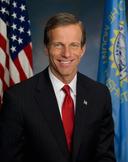
Sens. John Thune, R-S.D., and Amy Klobuchar, D-Minn., on Oct. 17 reintroduced the Adopt GREET Act, which aims to require the U.S. EPA to update its greenhouse gas (GHG) modeling for all renewable fuels under the Renewable Fuel Standard.
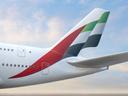
Emirates and Neste have expanded their partnership by solidifying their collaboration for the supply of over 3 million gallons of blended Neste MY Sustainable Aviation Fuel in 2024 and 2025. The SAF will be supplied over the course of 2024 and 2025.
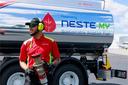
Avfuel Corp. is launching its Avfuel Zero, a program that aims to help flight operators create tailored emissions reduction plans by leveraging a wide array of sustainable solutions, including SAF, book and claim for SAF, and carbon credits.
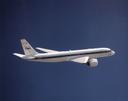
Boeing is partnering with NASA and United Airlines for in-flight testing to measure how sustainable aviation fuel (SAF) affects contrails and non-carbon emissions, in addition to reducing the fuel's life cycle climate impact.

Carbon Capture Magazine has announced that Tom Buis, CEO at American Carbon Alliance, will keynote the general session panel of the National Carbon Capture Conference & Expo. The event takes place Nov. 7-8 in Des Moines, Iowa.

Honeywell and GranBio Technologies on Oct. 10 announced that they will combine Honeywell’s ethanol to jet (ETJ) technology with GranBio’s cellulosic ethanol AVAP technology to produce carbon-neutral SAF from biomass residues.
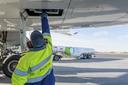
Neste, ISCC and DHL Group have joined forces to pioneer and test a system through which airlines, logistics service providers and end customers such as corporates can credibly report the emission reduction achieved by using SAF.
Aircraft flying into Las Vegas’ three airports for the 2023 National Business Aviation Association Business Aviation Convention & Exhibition will have an opportunity to fuel up with sustainable aviation fuel (SAF).
Council of the European Union adopts ReFuelEU regulations
By Erin Voegele
November 28, 2023
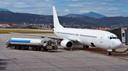
The Council of the European Union on Oct. 9 adopted regulations for the ReFuelEU initiative. The new law aims to boost both the demand for and supply of sustainable aviation fuel (SAF) within the European Union.
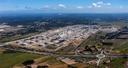
Technip Energies on Oct. 5 announced it has been awarded engineering, procurement services and construction management (EPsCm) contracts by Galp for a SAF, renewable diesel and green hydrogen project under development in Portugal.
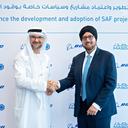
Abu Dhabi Future Energy Company PJSC – Masdar, a global leader in green hydrogen, is teaming up with aerospace company Boeing to propel the sustainable aviation fuel (SAF) industry in the United Arab Emirates and globally.
DOE awards $16.7M to advance production of affordable biofuels, biochemicals
By U.S. Department of Energy
November 28, 2023
The U.S. Department of Energy Bioenergy Technologies Office has announced $16.7 million in funding for five projects to advance the production of affordable biofuels and biochemicals that will significantly reduce greenhouse gas (GHG) emissions.

Airbus has joined Japan’s “ACT FOR SKY,” a voluntary organization that works to commercialize, promote, and expand the use of locally produced SAF. Airbus will contribute technical information and cooperate on research and technology activities.
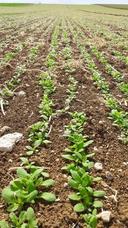
Global Clean Energy Holdings Inc. on Oct. 4 announced that its subsidiaries Sustainable Oils Inc. and Camelina Company worked with growers to contract a record 65,000 acres of camelina crop during the 2023 growing season.

In an aviation industry first, VoltAero has flown the proprietary electric-hybrid powertrain for its Cassio family of aircraft with 100 percent sustainable provided by TotalEnergies. The fuel, Excellium Racing 100, is made from ethanol.

SAF producer World Energy has announced a long-term agreement with Microsoft to accelerate the decarbonization of corporate air travel and its supply chain cargo through the purchase of sustainable aviation fuel certificates (SAFc).
Yield10 generates revenue from camelina feedstock delivery

By Yield10 Bioscience Inc
November 28, 2023
Yield10 Bioscience Inc. announced that the harvest of a majority of the winter and spring camelina grain produced under grower contracts in 2022/2023 has been completed and the company is generating revenue from feedstock delivery.
Advertisement

@ Copyright 2026 - BBI International - All rights reserved.