


A research team in England has discovered that differences in the ease with which sugars can be extracted from willow can be explained by differences in their wood composition in response to conditions that induce growth stress.

Chromatin Inc. will host a meeting on Feb. 5 at the Doubletree by Hilton in Modesto, Calif., to introduce production opportunities for grain sorghum in California. The grower meeting will provide details on the Chromatin 2013 Grain Sorghum Program.

Pacific Ethanol Inc. has contracted to install Edeniq Inc.'s Cellunator technology at its 60 MMgy Stockton, Calif., ethanol plant. The company also announced it has increased its ownership in the four plants it operates.

The Renewable Fuels Association is urging the California Air Resources Board to revise indirect land use change (ILUC) penalties assigned to certain biofuels under the state's low carbon fuel standard (LCFS).

In a case of the Goldilocks story retold at the molecular level, scientists at the U.S. DOE's Argonne National Laboratory and Northwestern University have discovered a new path to the development of more stable and efficient catalysts.

A two-year research project aims to crack the lignin question by engineering a microbe to break down the byproduct into a lipid, or fat, and then into biodiesel. The research has the potential to make cellulosic ethanol refineries more profitable.

University of Illinois at Urbana-Champaign professors Scott Irwin and Darrel Good have revised a prediction posted to the university's farmdoc daily website on Jan. 10 regarding the use of Brazilian ethanol and biodiesel to meet 2013 mandates.


Three USDA reports issued within hours of each other increase global corn supplies slightly, ups the 2012 U.S. corn yield estimate to 123.4 bushels per acre and shows Dec. 1 corn stocks at 8 billion bushels.

In a four-year University of Illinois study that compared miscanthus, switchgrass, and mixed prairie species to typical corn-corn-soybean rotations, each of the perennial crops were highly efficient at reducing nitrogen losses.

An international collaboration led by scientists at the U.S. DOE's Joint BioEnergy Institute has identified the first enzyme capable of substantially boosting the amount of galactan in plant cell walls.

A U.S. DOE award of up to $2.5 million will help Novozymes identify new and efficient enzymes to produce advanced biofuels and chemicals from corn stover, including cellulosic ethanol. Novozymes is partnering on this with MBI International.

Ace Ethanol, will partner with Sweetwater Energy Inc., a Rochester, N.Y.-based cellulosic sugar producer to generate cellulosic ethanol at Ace's plant for up to 16 years. Sweetwater will place a cellulosic sugar facility adjacent to the plant.

The U.S. DOE has announced more than $10 million to five projects in California, Washington, Maryland, and Texas that will develop new technologies to convert biomass into advanced biofuels and bioproducts like plastics and chemical intermediates.

Legislators have passed the "fiscal cliff bill," which extended the farm bill through Sept. 30 and several biofuel-related tax incentives through 2013. However, all mandatory funding for energy title programs was eliminated at the last moment.
Joint BioEnergy Institute researchers are exploring new ways to meet the challenge of recalcitrant cellulosic feedstocks and lower the cost of biofuels. They recently published two papers detailing their work to genetically modify xylan and lignin.

Researchers at Clemson University's Pee Dee Research and Education Center and ArborGen Inc. have collaborated to plant thousands of poplars at the Pee Dee center to determine if certain varieties of the tree are suitable for bioenergy stock.
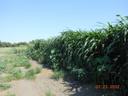
Sorghum is poised to come into its own as an alternative to corn. It proved its mettle in the 2012 drought, producing decent dryland yields with very little rainfall, and EPA's pathway approval for sorghum ethanol should open new markets.
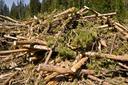
Biofuels made from high-yield, short rotation woody crops or from forest residuals and thinnings that are currently left unused have substantial potential to reduce CO2 emissions as well as to contribute to energy independence.

The Japan-based New Energy and Industrial Technology Development Organization is launching a demonstration project in Thailand to produce ethanol from cassava residue obtained after starch extraction.

Advanced production techniques, informed growing practices and improved seed varieties helped corn growers achieve high yields in the National Corn Growers Association 2012 National Corn Yield Contest, in some cases doubling the national average.

With new funding in hand, Proterro Inc. is poised to take its sucrose-producing process to the pilot stage, using full scale-bioreactors. The company expects the process can produce fermentation-ready sugar at a cost of less than 5 cents per pound.

Patriot Bioenergy Corp. joined the Kentucky Hemp Growers Cooperative Association and sees value in industrial hemp for biomass blending with bituminous coal for power generation as well as a possible cellulosic feedstock for biofuels.

Delta BioRenewables LLC has announced that its collaboration partner Commonwealth Agri-Energy LLC has successfully produced ethanol from sweet sorghum sugars at its corn ethanol facility in Hopkinsville, Ky. using Ceres Inc.'s sweet sorghum hybrid.

A Colorado State University team has received a $2 million grant from the U.S. DOE to produce a biological control system for bioenergy crops. The work will develop technology that allows rapid and precise improvement of bioenergy crops.

Chromatin Inc. announced a successful grain sorghum trial for both a California ethanol producer and new sorghum grower. L and R Mussi Farms of Stockton, Calif., produced 40 acres of sorghum that was harvested and delivered to Pacific Ethanol.

The Renewable Fuels Association has sent a letter to the U.S. EPA concerning the obsolete lifecycle analyses of corn and sugarcane ethanol for the renewable fuel standard. The RFA wants EPA to update the analyses to reflect new science.
Advertisement

@ Copyright 2026 - BBI International - All rights reserved.