


The DDGS market is still waiting to see what China is going to do in the container markets. As many as 35 boats having been reported as traded for the upcoming March through September time frame.

Parallels to 2012 invite natural gas users to dream of prices dropping below $2. However, different conditions with respect to storage inventories are likely to drive a more typical seasonal pattern, with the low price for the year coming in Q3.

Brazil-based Raozen has released financial results for the third quarter of fiscal year 2015, reporting net revenue of R$16.98 billion ($5.9 billion), up from R$14.88 billion during the same period of the prior year.

Abengoa's biofuels segment experienced the best year in its history in 2014 due, in part, to high margins and increased ethanol production and sales, company CEO Manuel Sanchez Ortega reported during the company's 2014 fiscal year financial results.

The corn market stayed in a constant trade range during February. The USDA did not offer any new exciting data in the report this month but did lower carryout by 50 million bushels.

Ethanol and gasoline prices moved higher through the month of February as the focus on spring and summer driving demand created additional buyer support over the last couple of weeks. Ethanol futures have rallied more than 14 cents per gallon.
In December, a reader email put me on the path of investigating E85 prices and ethanol producers selling directly to retailers. I'm still on that path and wondering where it will take me next.

Fuel with 15 percent ethanol, known as E15, has made its way into south Florida recently. E15 has been approved for sale by the U.S. EPA since January 2011 and has been offered to consumers since July of 2012.

Different gasoline retailers are having very different experiences with E85 sales, John Eichberger told attendees on the last day of the National Ethanol Conference, during a presentation called "The Road Ahead for Higher Blends."

The Surface Transportation Board has announced the Rail Energy Transportation Advisory Committee will hold a meeting March 5 in Washington, D.C. The meeting is open to the public. Written comments can be submitted at any time.

Export numbers from the Wisconsin Department of Trade, Agriculture and Consumer Protection show an 18 percent increase in ethanol exports from Wisconsin, totaling an export value of over $250 million.
RFA: Study reveals wide-ranging economic impact of ethanol

By Renewable Fuels Association
February 19, 2015
At this year's National Ethanol Conference, the Renewable Fuels Association released a new ABF Economics study titled "Contribution of the Ethanol Industry to the Economy of the United States in 2014."

The National Renewable Energy Laboratory has released its 2013 Renewable Energy Data Book, which features statistics on U.S. and global renewable energy generation, renewable energy development, clean energy investments, and technology-specific data.

The first monthly survey of industrial grain crush and coproducts was released Feb. 19 by the USDA National Agricultural Statistics Survey, showing corn and sorghum consumption data for fuel ethanol, beverage alcohol and other uses.

In 2014, the U.S. ethanol industry had its most profitable year in history, Bob Dinneen, president and CEO of the Renewable Fuels Association, said Feb. 19. "Critics may be legion but we will prevail," he said. "We are here to stay."

Growth Energy has filed comments with the California Air Resources Board outlining its opposition to CARB's proposed amendments to the Low Carbon Fuel Standard and a proposed regulation on the commercialization of alternative diesel fuels.
UAI, EFC urge recognition of ethanol as a way to reduce carbon

By The Energy Future Coalition, Urban Air Initiative
February 18, 2015
The California Air Resources Board was urged to enhance its efforts to require low carbon fuels by supporting the increased use of clean burning ethanol as a means of displacing aromatics in gasoline to reduce carbon and protect public health.
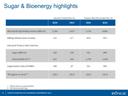
Bunge has released fourth quarter and 2014 financial results, reporting improved quarterly performance for its sugarcane milling and biofuels segment. The segment reported an adjusted EBIT $9 million loss, an improvement over the same period of 2013.

The recent fall in oil prices makes an even stronger case for all forms of domestic energy, both renewable and nonrenewable, writes Mike Bryan. In fact, the current situation makes a strong case for greater energy independence in general.

The future is bright as hundreds of E15 stations are in the works with many expected to open, writes Bob Dinneen of RFA. It's still early in the game for E15 and it will take time for E15 to work its way across the country, just as it did for E10.

A consortium of organizations from the recreational marine industry have completed more than four years of testing on Gevo Inc.'s renewable isobutanol. Results show isobutanol blends of up to 16.1 percent can be successfully used in marine engines.

Murphy USA Inc. has announced plans to bring E15 to consumers in the suburbs of Chicago and Houston this year. According to the company, the decision to expand E15 availability was made after several successful introductions of E15 in Iowa.

The Washington Department of Ecology recently published a discussion document to jumpstart dialogue on a potential rulemaking for a state clean fuel standard. The program would be similar to the California and Oregon low carbon fuel standards.

The USDA has released new 10-year projections for the food and agricultural sector, reporting that approximately 35 percent of total corn use is projected to go to ethanol production through 2024.

Even while taking advantage of recent export opportunity to China, the U.S. sorghum industry continues developing long-term markets, like supplying California's ethanol plants with bigger volumes of feedstock.

The U.S. Energy Information Administration has published the February issue of its Short-Term Energy Outlook, reporting ethanol production is expected to average 938,000 barrels per day this year, increasing to 936,000 barrels per day next year.

USDA put a number to a projected increase in ethanol use in its Feb. 10, supply/demand report. Based on the higher forecasts for 2015 gasoline consumption, the USDA raised expected corn use for ethanol production by 75 million bushels.

Utilization of the fiber portion of a corn kernel may be the next big thing, writes Kurt A. Rosentrater of Distillers Grains Technology Council.
Ethanol can be part of a winning strategy to improve air quality in the Omaha area, says the Nebraska Ethanol Board. The association recently started a conversation about ways to lower the levels of toxic compounds mixed in gas.

European-based CropEnergies AG has announced revenues of EUR 626 million ($710.42 million) for the first nine months of fiscal year 2014/2015, up 9.4 percent from EUR 573 million in revenue reported for the same period of the prior year.
Advertisement

@ Copyright 2026 - BBI International - All rights reserved.