

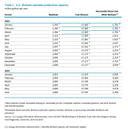
U.S. operable biofuels capacity was up in June, with gains for both ethanol and renewable diesel and associated fuels, according to data released by the U.S. EIA on Aug. 31. Feedstock consumption was also up during the month.

POET has reopened its bioprocessing facility in Cloverdale, Indiana. POET Bioprocessing – Cloverdale celebrated the occasion on Aug. 31 with an event at the facility that included area farmers, community members, and state officials.

The American Coalition for Ethanol honored a select group of advocates for their contributions to the ethanol industry during its 36th annual conference this month in Minneapolis.

A report commissioned by the U.S. Grains Council outlining the decarbonization potential of ethanol in Indonesia was recently presented at a national energy event organized by the Indonesian Ministry of Energy and Mineral Resources.
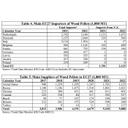
The European Union consumed a record 24.8 million metric tons of wood pellets in 2022, according to a report filed with the USDA FAS's Global Agricultural Information Network. Consumption is expected to grow to 25.6 million metric tons this year.

Fiji Airways' newest Airbus A350-900 XWB aircraft, named the Island of Vatulele, on Aug. 31 arrived into Nadi, Fiji from Singapore, having flown the entire 8,520 kilometer (km) journey powered by a sustainable aviation fuel (SAF) blend.
Cummins approves use of renewable diesel in industrial engines

By Cummins Inc.
August 31, 2023
Cummins Inc. on Aug. 25 announced approval of its entire line of diesel high horsepower engines across all ratings for use with unblended paraffinic fuels (EN15940), often referred to as renewable diesel, including hydrotreated vegetable oil (HVO).

U.S. operable biofuels capacity was up in June, with gains for both ethanol and renewable diesel and associated fuels, according to data released by the U.S. EIA on Aug. 31. Feedstock consumption was also up during the month.
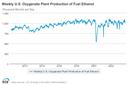
U.S. fuel ethanol production fell by nearly 4 percent the week ending Aug. 25, according to data released by the U.S. EIA on Aug. 30. Stocks of fuel ethanol were down more than 5 percent and exports were down nearly 27 percent.
RFA continues higher blend infrastructure funding education, support for retailers

By Renewable Fuels Association
August 30, 2023
Following the opening of the most recent tranche of funding for higher blends infrastructure incentives via the Inflation Reduction Act, the Renewable Fuels Association is off to a solid start in assisting fuel retailers.

Growth Energy filed briefs to intervene in three cases in late August in support of the U.S. EPA and its decisions to deny SREs for refiners seeking to avoid complying with their blending obligations under the RFS.

The Canadian government on Aug. 30 announced it is investing up to $5.3 million in an initiative that aims to support the development of biomass supply chains and cutting-edge technologies to produce biomass and value-added agricultural products.

Idemitsu Kosan, a Japanese petroleum company, and LOPS Corp., a Japan-based trading company that supplies oil and fats, on Aug. 24 announced plans to conduct a joint study focused on the procurement of feedstocks for SAF production.

Neste has entered a cooperation with Suntory, ENEOS and Mitsubishi Corp. to enable the production of PET (polyethylene terephthalate) resin made with renewable Neste RE on a commercial scale. Neste RE is made from 100 percent biobased materials.

The International Biochar Initiative has announced new logo, brand, and refreshed organizational values. The new brand identity brings a modern, professional look to the organization's robust programming, resources, and certification standards.

Toyota Kirloskar Motor, an India-based joint venture between Toyota Motor Corp. and Kirloskar Group, on Aug. 29 unveiled a prototype of a BS 6 (stage II) electrified flex fuel vehicle (FFV) that can be fueled with ethanol blends beyond E20.
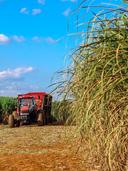
Sugarcane processing in the south-central region of Brazil was up significantly during the first half of August, according to data released by UNICA, the Brazilian sugarcane industry association. Ethanol production and sales were also up.
ACE’s 36th annual conference featured a panel of tax experts that explained enhancements to Sections 45, 45Q, 45V, 48 and the new Section 45Z of the Internal Revenue Code, and share insights on how to maximize on these incentives.

Through the GREATER MSP Partnership, Bank of America, Delta Air Lines, Ecolab and Xcel Energy have established the Minnesota SAF Hub – the first large-scale SAF Hub in the U.S. committed to scaling SAF production.

A school located in the south-central region of Canada's Yukon Territory, roughly 250 miles northeast of Juneau, Alaska, will source up to 90 percent of its heat from biomass under an agreement announced on Aug. 22.

The U.S. DOE's Bioenergy Technologies Office and the U.S. National Science Foundation have funded three new projects that aim to help accelerate innovation and develop new biomanufacturing approaches.

Through the GREATER MSP Partnership, Bank of America, Delta Air Lines, Ecolab and Xcel Energy have established the Minnesota SAF Hub – the first large-scale SAF Hub in the U.S. committed to scaling SAF production.
USDA: Corn use for fuel alcohol production at 441 million bushels in June
By Erin Voegele
August 28, 2023
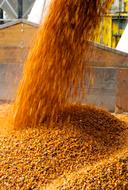
Corn use for fuel alcohol production in June was down approximately 1 percent when compared to the same month of last year, according to the August edition of the USDA’s Grain Crushings and Co-Product Production Report.

Minnesota Department of Agriculture Commissioner Thom Petersen is encouraging the federal government to allow the U.S. DOE's GREET model to be used to calculate GHG reductions for the purposes of the SAF tax credit.

A major farm show and state fair this week in two Midwest states will provide the backdrop for the Renewable Fuels Association’s latest push to see American-made, lower-carbon ethanol supported as a feedstock for sustainable aviation fuel (SAF).

Two years after the public unveiling of the American Coalition for Ethanol Hybrid Electric Flex Fuel vehicle at its 2021 annual conference in Minneapolis, ACE demonstrated the project’s value to conference attendees at this year’s conference.

Minnesota Department of Agriculture Commissioner Thom Petersen is encouraging the federal government to allow the U.S. DOE's GREET model to be used to calculate GHG reductions for the purposes of the SAF tax credit.

Syngenta Seeds LLC and Sustainable Oils Inc. have entered into a new agreement to sell camelina sativa seed – an ultra-low carbon oilseed crop that can be used as feedstock for sustainable aviation fuel (SAF) and other biofuels.
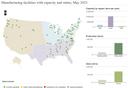
U.S. manufacturers produced approximately 900,000 tons of densified biomass fuels in May, according to the August edition of the U.S. EIA's Monthly Densified Biomass Fuels Report. Sales of densified biomass reached 840,000 tons during the month.

ACE announced the re-election of several board members and the election of two new members to the organization’s board of directors during its annual business meeting prior to ACE’s 36th annual conference in Minneapolis, Minnesota.
Advertisement

@ Copyright 2026 - BBI International - All rights reserved.