


The DOE on Aug. 31 announced $46 million for 22 projects that will create biofuel energy to help decarbonize the transportation and power generation sectors. The projects include those focused on waste conversion, carbon capture and algae.

The Oregon Department of Environmental Quality on Aug. 31 approved the air quality permit for Next Renewable Fuels' $2 billion clean fuels project. The facility, under development in Oregon, will produce renewable diesel and SAF.

U.S. fuel ethanol production fell by nearly 2 percent the week ending Aug. 26, according to data released by the U.S. Energy Information Administration on Aug. 31. Stocks of fuel ethanol were down approximately 1 percent.

U.S. operable biofuel production capacity expanded to 21.58 billion gallons per year in June, up 125 MMgy when compared to May, according to data released by the U.S. Energy Information Administration on Aug. 31. Feedstock consumption was also up.

Evonik and Shell are working to decarbonize heavy-duty road transport with biobased liquid natural gas (bio-LNG).. Shell is supplying 100 tons of bio-LNG made from agricultural waste to Evonik. The fuel can reduce GHG emissions by 86 percent.

Aemetis Inc. has completed the installation and commissioning at the Keyes ethanol plant in California of the first Mitsubishi Zebrex system in North America, reducing overall energy use and lowering the carbon intensity of ethanol.

U.S. operable biofuel production capacity expanded to 21.58 billion gallons per year in June, up 125 MMgy when compared to May, according to data released by the U.S. Energy Information Administration on Aug. 31. Feedstock consumption was also up.

Clean Energy Fuels Corp. has announced new supply deals for renewable natural gas (RNG), as it forges ahead with development projects to meet the growing demand for the sustainable fuel made from organic waste.

The U.S. EPA on Aug. 29 issued a final rule creating an optional alternative renewable identification number (RIN) retirement schedule for small refineries under the Renewable Fuel Standard for compliance year 2020.

Rex American Resources on Aug. 30 released financial results for its fiscal Q2, reporting increased net sales and revenue. Moving into Q3, operations currently remain profitable but the company is facing increased challenges.

The USDA's Commodity Credit Corp. announced on Aug. 30 that it does not expect to purchase and sell sugar under the Feedstock Flexibility Program for crop year 2021, which runs from Oct. 1, 2021 through Sept. 30, 2022.

The U.S. EPA on Aug. 29 issued a final rule creating an optional alternative renewable identification number (RIN) retirement schedule for small refineries under the Renewable Fuel Standard for compliance year 2020.

Delta and DG Fuels LLC have anounced a new agreement under which DG Fuels plans to plans to establish a new SAF supply stream that could provide Delta with 385 million gallons of unblended SAF over seven years.

EverGen Infrastructure Corp. has signed a term sheet with Roynat Capital and Export Development Canada for a $31 million syndicated senior term loan to support the upgrade and construction of two RNG projects in British Columbia.

Fuel ethanol consumption in Canada is expected to grow by approximately 8.6 percent this year, according to a report filed with the USDA. Imports of U.S. fuel ethanol are expected to reach a record 1.5 billion liters (396.26 million gallons).

ACE has announced Heath Huschitt, Tyler Robert and Mallorie Schultz as its 2022 scholarship recipients. Each of the three students was awarded a $1,000 scholarship through ACE's Scholarship Program to help further their collegiate education.
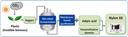
Toray Industries Inc. announced on Aug. 24 that it has developed the world's first 100 percent biobased adipic acid, a raw material for nylon 66 (polyamide 66), from sugars derived from inedible biomass.

Canadian consumption of both renewable diesel and biodiesel is expected to be up slightly in 2022, according to a report filed with the USDA Foreign Agricultural Service's Global Agricultural Information Network.

Funding for researchers at Cranfield University to look at new ways to generate hydrogen energy from biomass has been announced by the U.K. government. The funds support a collaborative pilot project called Bio-HyPER.

A new study by the U.S. Department of Energy's National Renewable Energy Laboratory shows biorefineries can increase their financial returns by selling renewable propane versus using it as a processing fuel or as a hydrogen feedstock.

CARB on Aug. 25 approved a rule that aims to phase out the sale of new cars and light-duty trucks with internal combustion engines by 2035. The RFA called the rule disappointing and is highlighting the GHG reduction impacts of the LCFS.

The U.S. Grains Council's Southeast Asia and Oceania (SEA&O) office recently participated in the Clean EDGE Asia business mission, a clean and renewable energy-focused trade mission organized by the U.S. Department of Commerce.

Brazil-based CB Bioenergia plans to develop a 10 MMly (2.64 MMgy) ethanol plant in Rio Grande do Sul, according to a statement released by the state government on Aug. 23. The facility will process wheat, triticale and corn feedstock.

The U.K. government on Aug. 24 announced it is now accepting submissions from power bioenergy with carbon capture and storage (BECCS) projects that want to take part in Track-1 of its carbon, capture, usage and storage (CCUS) sequencing process.

Cutting Carbon Via Sails

August 25, 2022
In a bid to further reduce its carbon footprint, Drax Group is working with MOL Drybulk to deploy environmentally friendly bulk carriers.

U.S. production capacity for renewable diesel and associated fuels more than doubled between 2021 and 2022, reaching 1.75 billion gallons per year, according to data released by the U.S. Energy Information Administration.
Building Out Capacity

August 25, 2022
Pellet Mill Magazine provides a roundup of pellet production capacity that is under development, active construction or recently acquired.

The U.S. was home to 192 fuel ethanol plants with a combined capacity of 17.38 billion gallons per year as of Jan. 1, 2022, according to data released by the U.S. EIA. Capacity fell by five plants and 166 MMgy when compared to Jan. 1, 2021.
O&M Tips for Efficient Pellet Production

By Timo Müller
August 25, 2022
A pellet mill is built to pelletize. Each hour that it is not in operation equals to lost money.
Advertisement

@ Copyright 2026 - BBI International - All rights reserved.