


CHAR Technologies Ltd. on July 28 provided an update on the bio-méthane provence (BMP) project in Gardanne, France, an industrial-scale high-temperature pyrolysis (HTP) project being developed by GazoTech SAS.

Sagepoint Logistics, a subsidiary of Sagepoint Energy, announced on Aug. 5 it has closed a senior secured financing with Power Sustainable Infrastructure Credit Manager L.P. (PSIC) to expand its dedicated truckload carrier fueled by RNG.
KLM, together with SkyNRG and invited guests, on Aug. 5 marked the start of construction of the first facility in the Netherlands fully dedicated to the production of sustainable aviation fuel (SAF).
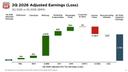
Phillips 66 on Aug. 5 reported the company’s renewable fuel segment achieved significantly higher pre-tax income during the second quarter due to higher regulatory credits from higher pricing and renewable fuels production.
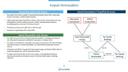
Par Pacific Holdings Inc. released second quarter financial results on Aug. 5, reporting its Hawaii renewable fuels facility ramped up production during the three-month period after commencing operations in April.

U.S. biofuel producers consumed 30.749 billion pounds of feedstock in May, up 10% when compared to April and up 8% when compared to May 2025, according to data released by the U.S. Energy Information Administration on Aug. 5.
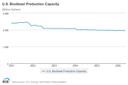
Total operable U.S. biofuels capacity increased slightly in May, with gains for ethanol, according to data released by the U.S. Energy Information Administration on July 31. Biodiesel and renewable diesel capacity were unchanged.
LoCI Controls on Aug. 3 announced the launch of WellWatcher AI-powered Action Plan, a new diagnostic tool that helps landfill operators detect operational issues and opportunities earlier and deploy field resources efficiently.

Montana Renewables LLC (MRL) joined the Minnesota SAF Hub in celebration of new supply to Minneapolis-St. Paul International Airport (MSP). MRL will supply up to 30 million gallons of neat SAF annually through its existing Shell offtake agreement.

The U.S. exported 946,522.4 metric tons of wood pellets in June up nearly 8% when compared to May and up nearly 28% when compared to June 2025, according to data released by the USDA Foreign Agricultural Service on Aug. 4.

bp on Aug. 4 announced plans to sell Archaea Energy, it’s U.S.-based biogas business less than four years after acquiring the company. The planned sale is part of a larger effort at bp to simplify and strengthen the company’s portfolio.

Marathon Petroleum Corp. released second quarter financial results on Aug. 4, reporting significantly improved performance for its renewable diesel segment on stronger margins, higher throughputs and improved regulatory credit values.

OPAL Fuels on July 30 announced that it is building a new fueling station in the City of Dinuba, California, and will own and maintain the station through a long-term agreement with the city and its partners that provide municipal services.

Argus has launched sustainable aviation fuel (SAF) emissions reduction indexes (ERIs), enabling aviation market participants to compare SAF economics with compliance and voluntary carbon market obligations.

The Senate Agriculture Committee on July 31 released an updated draft of its 2026 Farm Bill 2.0 that includes language to enable year-round sales of E15 and revamp the Renewable Fuel Standard small refinery exemption (SRE) program.
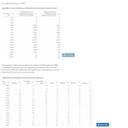
The U.S. EPA on Aug. 3 issued decisions on six small refinery exemption (SRE) petitions for RFS compliance years 2023 and 2024. The agency granted one full exemption, two partial 50% exemptions, and declared three petitions as ineligible.

Drax Group plc on July 30 announced the company’s North American pellet mills produced 1.9 million metric tons of wood pellets during the first half of 2026, down from 2.1 million metric tons of production reported for the same period of 2025.

PBF Energy Inc. on July 31 announced the St. Bernard Renewables facility produced approximately 15,100 barrels per day of renewable diesel during the second quarter, up from 14,200 barrels per day reported for the same period of last year.

Valero Energy Corp. released second quarter financial results on July 30, reporting significantly improved earnings for both its ethanol segment and its Diamond Green Diesel joint venture, which produces renewable diesel and SAF.

ADM on July 30 announced a series of investments designed to expand North American oilseed crush capacity and strengthen the company's ability to meet growing demand for renewable fuels and other vegetable oil markets.

The North American SAF Conference & Expo is excited to announce its expanded its agenda with the addition of the Aviation & Maritime Fuels Forum, a dedicated program exploring the rapidly evolving role of sustainable fuels in the maritime sector.

Casella Waste Systems Inc. and Waga Energy, a global expert in the production of renewable natural gas (RNG) from landfills, announced the start of operations of the RNG production facility at the Hyland Landfill in Angelica, New York.

XCF Global Inc. on July 28 issued the following letter to shareholders from CEO Chris Cooper. The letter provides additional context on the progress underway at New Rise Renewables Reno, the company’s biorefinery in Nevada.

CCI BioEnergy announced it has been awarded the contract to supply key process equipment for the expansion of the City of Toronto's Disco Road Organics Processing Facility.

Ecostrat Inc., New Energy Risk, Torrgas, and Torrgreen have formed a strategic alliance to offer feedstock supply insurance to project developers licensing Torrgreen’s torrefaction technology and Torrgas’s syngas production technology.

Allied Biofuels FE LLC has executed a logistics cooperation agreement with Pro Logistic Services SIA to establish the international export framework for the movement of SAF and e-SAF from Uzbekistan to strategic markets across Europe and beyond.

CHAR Technologies Ltd. on July 21 welcomed a significant regulatory development in France that, if adopted, would open the country's flagship long-term support mechanism for renewable gas to pyrolysis-based production
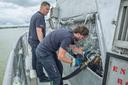
Neste is supporting the Tara Ocean Foundation’s work by supplying Neste MY Renewable Diesel to help reduce the expedition’s climate impact, e.g. by replacing fossil fuel use in the polar station’s energy systems in extreme arctic weather conditions.
Self-driving lab: AI and automated biology combine to improve enzymes

By University of Illinois
July 30, 2026
By combining artificial intelligence with automated robotics and synthetic biology, researchers at the University of Illinois Urbana-Champaign have dramatically improved performance of two important industrial enzymes.
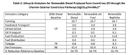
The U.S. EPA on July 14 approved a RFS fuel pathway petition filed by Chevron Renewable Energy Group Inc. that will allow the company’s Geismar, Louisiana, faculty to generate RIN for fuel produced from CoverCress oil feedstock.
Advertisement

@ Copyright 2026 - BBI International - All rights reserved.