


SAF Magazine, in collaboration with the CAAFI, has announced the 2025 North American SAF Conference & Expo will be held Sept. 22-24 in Minneapolis, Minnesota, at the Minneapolis Convention Center. Speaker abstracts can be submitted through May 9.
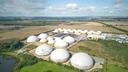
Germany biogas producer EnviTec Biogas AG has been leveraging chicken manure for the production of biogas, RNG and LNG for 23 years. The company is now exploring opportunities in the growing U.S. market for the anaerobic digestion of poultry manure.

SkiesFifty and Frontline BioEnergy have announced a new partnership to advance the commercialization of waste-to-energy technology, targeting the production of SAF. Together, they will establish a new company to spearhead the initiative.

OMV and Airbus have signed a memorandum of understanding to advance the decarbonization of the aviation industry through SAF. The companies will explore joint solutions to broaden the voluntary access to SAF for various customer groups.

The U.S. Department of Energy Bioenergy Technologies Office (BETO) announced up to $10 million in funding to support high-impact research and development (R&D) focused on algae system cultivation and preprocessing.

Comstock Inc. on Jan. 21 announced that its subsidiary, Comstock Fuels Corp., has executed an agreement with Hexas Biomass Inc., securing exclusive rights to Hexas’ intellectual properties in liquid fuels applications.

Brooke Rollins, President Donald Trump’s nominee to serve as secretary of agriculture, discussed her support for biofuels and addressed concerns over her ties to the oil industry during a Senate confirmation hearing on Jan. 23.

The Senate Environment and Public Works Committee on Jan. 23 voted 11-8 to advance the nomination of Lee Zeldin to serve as administrator of the U.S. EPA. The next step in the confirmation process is a full Senate vote.

Enilive has announced commissioning is underway at it’s the Gela biorefinery in on the Italian island of Sicily. The facility has the capacity to produce 400,000 metric tons per year of sustainable aviation fuel (SAF).

Topsoe has signed an agreement with Chuangui New Energy company to provide technology and services to produce SAF and renewable diesel. Construction on the project has begun and the facility is expected to be operational in December 2026.

LanzaTech Global Inc. on Jan. 21 announced its intent to form LanzaX, a business unit dedicated to its wholly owned synthetic biology platform. LanzaTech intends to spin out LanzaX from its core biorefining business as a JV with Tharsis Capital LLC
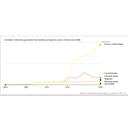
South Korea in late 2024 announced it will end subsidies for new biomass energy projects and existing state-owned facilities that co-fire imported biomass starting in 2025 and phase out subsidies privately owned facilities starting in 2026.

LanzaJet on Jan. 22 announced the selection of the site for its next production facility, Project Speedbird, in Teesside’s Wilton International. The U.K.-based facility will have the capacity to produce 30 MMgy of SAF and renewable diesel.
Tidewater Renewables Ltd. has closed on the sale of its interest in the Rimrock Renewables Limited Partnership (RNG partnership) to Biocirc Canada Holdings Inc., a global renewable natural gas (RNG) developer.
Clean Fuels Alliance America recognized Floyd Vergara, a chief architect of California’s LCFS, the Union Pacific railroad, and the California Advanced Biofuels Alliance for their outstanding efforts in advancing biodiesel, renewable diesel and SAF.

Sen. Jerry Moran, R-Kan., and a bipartisan groups of colleagues on Jan. 16 reintroduced the Farm to Fly Act, a bill that aims to accelerate the production and development of sustainable aviation fuel (SAF).

USDA Rural Development on Jan. 21 announced the launch of a new Clean Energy website that aims to support the expanded use of biomass, wind, solar, hydropower and geothermal energy in rural power production.
Synthica Energy announces Clark Water, the water and wastewater infrastructure construction arm of Clark Construction Group, has been contracted to lead the construction of its new anaerobic digestion and RNG facility in Rome, Georgia.

Wizz Air, Airbus, as well as Moeve and Charleroi Airport, on Jan. 16 announced the successful completion of sustainable aviation fuel (SAF) operational trial. During the trial, Wizz Air operated more than 50 flights using a blend of SAF.
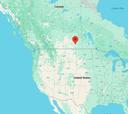
Federated Co-operatives Ltd. on Jan. 17 announced it has shelved plans for a 15,000-barrel-per-day renewable diesel plant proposed for development in Regina, Saskatchewan. Plans for an adjacent canola crush facility are also being paused.
The U.S. EPA on Jan. 17 published its third triennial report to Congress on biofuels and the environment. The document, the third in a series of required reports to Congress, takes a critical view of the RFS’s impact on the environment.

Reps. Hillary Scholten, D-Mich., and David Valadao, R-Calif., have introduced the Agricultural Environmental Stewardship Act of 2025 to extend the Section 48 investment tax credit (ITC) for qualified biogas properties.

Clean Fuels is asking the U.S. EPA to pause the rulemaking process on its proposed partial waiver of 2024 cellulosic volumes until it can provide a full accounting of all available cellulosic RINs for 2024 and consider the impact of SREs.

In late November, EcoEngineers presented a webinar exploring hydrogen’s place in the renewables transition.

The U.S. EPA on Jan. 17 released updated data showing that more than 25.22 billion renewable identification numbers (RINs) were generated under the Renewable Fuel Standard in 2024, up from 23.85 billion in 2023.
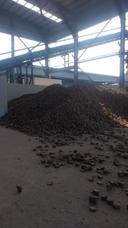
Piramal Pharma Ltd. has achieved a notable environmental milestone at its API and intermediates manufacturing facility in Digwal, India, by converting its coal-fired steam boiler to operate on biomass briquettes.

Terviva Inc. on Jan. 14 announced a strategic investment from Idemitsu Kosan Co. Ltd. Idemitsu, in partnership with Terviva and Australia-based Stanmore is beginning a trial plantation of Terviva’s pongamia in Queensland, Australia.

Biochar production company Myno is on track to have its first carbon removal facility operating by 2026.
Advertisement

@ Copyright 2026 - BBI International - All rights reserved.