

IATA: South Africa has vast potential for SAF production

By International Air Transport Association
July 11, 2024
The International Air Transport Association has called on South Africa to mobilize its experience, resources, and infrastructure to accelerate the development of sustainable aviation fuel (SAF) production.
Study: US oilseed industry ready to meet higher RFS obligations

By National Oilseed Processors Association
July 10, 2024
A new study shows feedstocks produced within the U.S. are on track to support domestic production of an additional 1.4 billion gallons of renewable diesel and biodiesel, also known as biomass-based diesel (BBD), by 2030.

U.S. operable biofuels production capacity increased in April, with gains for ethanol, biodiesel and renewable diesel, according to data released by the U.S. EIA on June 28. Feedstock consumption was down from the previous month.

The U.S. has enough biomass potential to produce 35 billion gallons per year of aviation biofuel by 2050, a new report confirms. Oak Ridge National Laboratory’s John Field provided biomass feedstock production expertise within the report.

The USDA announced improvements to the camelina pilot crop insurance program for the 2025 and succeeding crop years. USDA’s RMA is expanding coverage options by allowing enterprise units and increasing maximum coverage levels.
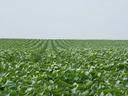
The USDA’s National Agricultural Statistics Service estimates 2024 soybean planted acreage at 86.1 million acres, up 3% when compared to last year, according to the agency’s annual Acreage report, released June 28.

The USDA on June 26 launched a RFI seeking public comments on procedures for quantifying, reporting and verifying the effect of climate-smart farming practices on the GHG emissions associated with U.S.-grown biofuel feedstocks.

A bipartisan group of six senators on June 20 send a letter to the U.S. EPA, USDA, U.S. Trade Representative, and U.S. Customers and Board Protection expressing concern with dramatic increases in used cooking oil (UCO) imports from China.
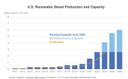
The USDA Foreign Agricultural Service on June 11 published a report discussing how the recent boom in U.S. renewable diesel production has caused market-altering shifts to both foreign and domestic feedstock trade.

The U.S. EPA on May 22 announced it has approved a RFS pathway for BP’s Cherry Point refinery in Blaine, Washington, that will allow the facility to generate D5 advanced biofuel RINs for renewable diesel produced via the coprocessing of carinata oil.
The USDA maintained its forecast for 2024-’25 soybean oil use in biofuel production in its latest World Agricultural Supply and Demand Estimates report, released June 12. The overall 2024-’25 outlook for soybeans includes higher beginning and ending stocks.

U.S. biofuels operable production capacity expanded slightly in March, according to data released by the U.S. Energy Information Administration on May 31. Feedstock consumption was up when compared to both the previous month and March 2023.

The USDA is seeking information from the public on protocols that may be considered for inclusion in a new Greenhouse Gas Technical Assistance Provider and Third-Party Verifier Program, the main program of the Growing Climate Solutions Act.
The USDA currently predicts soybean oil use in biofuel production will increase by 1 billion pounds to 14 billion pounds for 2024-25, according to the agency’s latest World Agricultural Supply and Demand Estimates Report, released May 10.

The USDA’s Agricultural Research Service, the University of Nebraska–Lincoln, and Nebraska Innovation Campus on May 6 celebrated the groundbreaking of the National Center for Resilient and Regenerative Precision Agriculture.

The U.S. Department of Energy is offering up to $17.5 million in federal funding to develop cost-effective strategies for communities to sustainably manage and recover potential clean energy sources from their waste streams.
The USDA maintained its forecast for 2023-’24 soybean oil use in biofuel production in its latest World Agricultural Supply and Demand Estimates report, released April 11. The forecasted price for soybean oil was also unchanged.

Farmers Edge Inc. and Gevo Inc. will work with growers spanning three states to track and quantify the carbon intensity impact of climate-smart practices helping to accelerate the production of SAF and low-CI ethanol,
The U.S. Department of Energy will award up $18.8 million to address research and development (R&D) challenges in converting algae, such as seaweeds and other wet waste feedstocks, to biofuels and bioproducts.
TEXEL Energy AB, Jord AB partner to produce green electricity from densified fuel made from C4 grass

TEXEL Energy has announced it has signed an agreement with Jord AB to adapt TEXEL's energy production technology to generate electricity from Jord's pellets and briquettes, made from C4 grass.
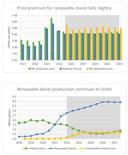
The University of Missouri’s FAPRI in March released a report featuring 10-year baseline projections for U.S. agricultural markets that predicts renewable diesel and SAF production will grow over the next decade while biodiesel production declines.
CE+P partners with Booker Tate on sugarcane, ethanol production

By Erin Voegele
April 08, 2024
California Ethanol + Power on April 3 announced that Booker Tate Ltd. will help guide sugarcane cultivation plans for Sugar Valley Energy, a proposed bioenergy project in California that is expected to produce ethanol, biogas, power and SAF.
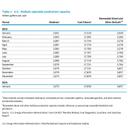
U.S. biofuels operable production capacity was unchanged in January, according to data released by the U.S. Energy Information Administration on March 29. Total feedstock consumption was down when compared to the previous month.
The USDA’s National Agricultural Statistics Service is predicting a 3% increase in soybean planted area for 2024, according to the agency’s annual Prospective Plantings report, which was released March 28.
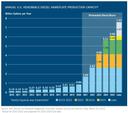
CoBank is predicting U.S. soybean crush capacity will expand 23% over the next three years. In a report released March 21, the company discusses the risk that this rapidly expanding capacity could exceed renewable diesel growth.

Japan-based petroleum company ENEOS Corp. on March 22 announced that a coalition of Japanese and South Korean companies have entered an MOU to cooperate on feedstock for a SAF project ENOES is developing.

Yield10 Bioscience Inc. has reported that its proprietary varieties of winter Camelina sativa (camelina) in development responded as expected to herbicides in the first field tests conducted in the U.S.
DOE report explains how America can sustainably produce more than 1 billion tons of biomass per year
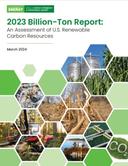
The U.S. Department of Energy on March 15 released the 2023 Billion-Ton Report (BT23), which shows that the U.S. could sustainably triple its production of biomass to more than 1 billion tons per year.

Canadian canola growers will soon be able to benefit from new and expanding market opportunities for renewable fuel feedstocks linked to bioenergy with the new Cargill Power Canola program.

Haffner Energy and Hexas Biomass Inc. announce that they have signed a memorandum of understanding (MOU) to establish a non-exclusive partnership to develop a turnkey solution for the co-production of biochar and biogenic CO2.
Advertisement

@ Copyright 2026 - BBI International - All rights reserved.