

The USDA recently released its Grain Crushings and Co-Products Production Report for April, reporting that corn use for fuel ethanol in February was down when compared to both the previous month and February 2022.

UNICA, the Brazilian sugarcane industry association, has released data indicating sugarcane processing by mills in the south-central region of Brazil was up 5 percent during the 2020-'23 harvest season. Ethanol production was also up 5 percent.
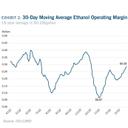
Despite seasonally lower ethanol demand, U.S ethanol production and profitability were in line with long-term averages during the first quarter of 2023, according to CoBank Knowledge Exchange's latest quarterly report, released April 6.

Technip Energies has been awarded the contract for the FEED phase of LanzaTech's DRAGON SAF project based on LanzaJet alcohol-to-jet (ATJ) technology. The project is on track to be one of the first commercial SAF facilities in the U.K.

The USDA maintained its forecast for 2022-'23 corn use in ethanol production in its latest WASDE report, released April 11. The current 2022-'23 corn outlook is for reduced imports and reduced food, seed and industrial (FIS) use.

The USDA is expanding its Margin Protection insurance plan, adding more than a thousand counties to the insurance option that provides coverage against an unexpected decrease in operating margin for corn and soybean producers.

Total U.S. operatable biofuels production capacity expanded to 22.209 billion gallons in January with gains for both renewable diesel and ethanol, according to data released by the U.S. EIA. Total feedstock consumption was down from January 2022.

The DOE has launched an initiative that aims to help industry and universities leverage the Feedstock-Conversion Interface Consortium's capabilities to help solve real-world problems that the bioenergy and bioproduct industries are facing.

UNICA, the Brazilian sugarcane industry association, has released data showing ethanol production was up during the first half of March, with a significant increase in corn ethanol production. Ethanol sales for the two-week period were down.

U.S. farmers intend to plant 92 million acres of corn this year, up 4 percent when compared to 2022, according to the USDA National Agricultural Statistics Service's Prospective Plantings report, released March 31.
The USDA recently released its Grain Crushings and Co-Products Production Report for March, reporting that corn use for fuel ethanol production in January was up when compared to the same month of 2022.

The USDA's Commodity Credit Corp. announced on March 20 that it does not expect to purchase and sell sugar under the Feedstock Flexibility Program for crop year 2022, which runs from Oct. 1, 2022 through Sept. 30, 2023.

Ethanol Producer Magazine announced this week the preliminary agenda for the 2023 International Fuel Ethanol Workshop & Expo (FEW) taking place June 12-14, 2023 at the CHI Health Center in Omaha, Nebraska.

UNICA, the Brazilian sugarcane industry association, has announced ethanol sales for February were up nearly 5 percent when compared to the same month of 2022. Corn ethanol production also continued to grow.

President Joe Biden has proclaimed March 21 as National Agriculture Day. Agriculture Secretary Tom Vilsack and EPA Administrator Michael Regan issued comments recognizing the ag community for its work to provide the U.S. with food, fuel and fiber.
Minnesota ethanol industry contributes $2.7B to state's economy

By Minnesota Bio-Fuels Association
March 20, 2023
Minnesota's ethanol industry contributed $2.7 billion to the state's gross domestic product (GDP) in 2022, according to a new study by the University of Minnesota Extension that was sponsored by the Minnesota Bio-Fuels Association.

The USDA on March 8 kicked off the inaugural National Biobased Products Day and highlighted the accomplishments of people and organizations working to improve sustainability within the federal government.

On the inaugural National Biobased Products Day, the Agriculture Energy Coalition released a letter to Senate and House Agriculture Committee leaders urging them to preserve funding for Farm Bill energy title programs.

POET is celebrating its 35th anniversary. The company, founded in 1987, currently boasts an annual production rate of 3 billion gallons of bioethanol, 14 billion pounds of animal feed, and 1 billion pounds of corn oil.

UNICA, the Brazilian sugarcane industry association, has announced facilities in the south-central region of Brazil produced 207.26 million liters of ethanol during the first half of February. Corn ethanol accounded for 98 percent of that volume.

The USDA maintained its forecast for 2022-'23 corn use in ethanol production in its latest World Agricultural Supply and Demand estimates report, released March 8. The agency also lowered its forecast for season-average corn prices.
Cooper: Persistence, momentum key to ethanol industry success

By Renewable Fuels Association
March 01, 2023
The innate persistence of the U.S. ethanol industry and its champions can drive renewable fuels to new heights in 2023, RFA President and CEO Geoff Cooper said in his annual “State of the Industry� presentation at the NEC.

Swedish Biofuels AB announced on Feb. 27 an investment by Mitsubishi Corp. to jointly accelerate commercial deployment of clean renewable fuels using Swedish Biofuels advanced alcohol to jet (ATJ) technology.
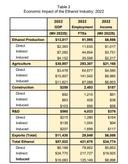
The ethanol industry's contribution to the U.S. economy increased in 2022 as production volumes continued to recover from COVID pandemic levels and producers received higher prices for ethanol and co-products like distiller grains and corn oil.
RFA release 2023 Ethanol Industry Outlook, Pocket Guide

By Renewable Fuels Association
February 28, 2023
The RFA released its 2023 Ethanol Industry Outlook and Pocket Guide during the 28th annual National Ethanol Conference in Orlando. The annual publications serve as the go-to source of ethanol industry information, facts, and statistics.

Total U.S. operable biofuels production capacity expanded in December. Total biofuel feedstock consumption was down when compared to both the previous month and December 2021, according to data released by the U.S. EIA on Feb. 28.

The USDA recently released its Grain Crushings and Co-Products Production report for February, reporting that corn use for fuel ethanol production in December was down from both the previous month and December 2021.

UNICA, the Brazilian sugarcane industry association, has released data showing that ethanol production was up during the second half of January. Ethanol sales for the full month were up more than 23 percent.

The use of science-based, consistent and transparent lifecycle analysis methods will be crucially important in implementing the SAF tax credit under the Inflation Reduction Act, the RFA said in comments to the U.S. Department of Treasury.

The USDA lowered its forecast for 2022-'23 corn use in ethanol production in its latest World Agricultural Supply and Demand Estimates report, released Feb. 8. The outlook for corn ending stocks was increased.
Advertisement

@ Copyright 2026 - BBI International - All rights reserved.