


The BC Forest Safety Council board of directors is pleased to announce the appointment of Cherie Whelan as BCFSC’s new chief executive officer effective April 1, 2026.
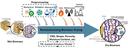
South Dakota Mines is partnering with Idaho National Laboratory on two-year project focused on improving biomass drying. The project combines advanced AI developed by Mines with cutting-edge research at INL.

Bunge’s Brazilian operation has become the first company to certify soybeans for use in the production of SAF under the ISCC CORSIA PLUS protocol, an advanced certification recognized by the International Civil Aviation Organization.

The USDA on Dec. 31 announced the per-acre payment rates for $11 billion of the $12 billion farm aid package announced in December. U.S. corn, soybean and sorghum farmers will receive respective per-acre payments of $44.36, $30.88, and $48.11.

The USDA reduced its forecast for 2025-’26 soybean oil use in biofuel production in its latest World Agricultural Supply and Demand Estimates report, released Jan. 12. The forecast price for soybean oil was unchanged.

U.S. soybean production fell by approximately 3% in 2025, according to the USDA’s latest Crop Production report, released Jan. 12. Soybean yields, however, reached a record high of 53 bushels per acre.

The question is no longer which fuel pathway grows fastest, but which sector secures the biomass first.

The U.S. EIA on Dec. 31 released data showing U.S. biofuel producers consumed 30.097 billion pounds of feedstock in October, up nearly 8% when compared to the previous month and up nearly 2% when compared to October 2024.

Biochar and localized biomass solutions offer a new way forward for managing orchard and other ag residues in the wake of California open burning bans.

Corteva Inc. and bp on Jan. 7 announced the launch of Etlas, their new 50:50 joint venture that will produce oil from crops – including canola, mustard and sunflower – for use in the production of biofuels like SAF and renewable diesel.

The U.K. Department for Transport late 2025 signaled it may be softening its stance on crop-based SAF. The agency is gathering stakeholder input that could provide a pathway to open the country’s SAF Mandate program to crop-based biofuels.
Comstock Inc. on Dec. 8 announced that one of its strategic investees, Bioleum Corp., acquired Hexas Biomass Inc., a global leader in the development and deployment of purpose grown energy crops and biomaterials
A new economic analysis finds that EPA’s proposal to assign 50% of the RIN credits to imported biofuels and biofuels made from imported feedstocks compared to domestic would strengthen domestic soybean markets.
The USDA maintained its outlook for 2025-’26 soybean oil use in biofuel production in its latest WASDE report, released Dec. 9. The estimate for 2024-’25 soybean oil use in biofuel production was revised down.
The USDA on Dec. 8 announced it will make $12 billion available in one time bridge payments to U.S. farmers in response to temporary trade market disruptions and increased production costs. The payments are expected to be released by Feb. 28, 2026.

Clean Fuels Alliance America along with the California Advanced Biofuels Alliance submitted formal comments to the California Air Resources Board following the agency’s recent public forum on biofuels and land use change.
A study commissioned by Clean Fuels Alliance America and Farmers Fueling the Future finds that California’s ILUC assumptions for U.S. soy-based biodiesel and renewable diesel are outdated lacking modern agricultural practices and current science.
The U.K. Department for Energy Security and Net Zero on Dec. 2 opened a public comment period on a common biomass sustainability framework that is designed to strengthen existing biomass criteria and ensure greater consistency across sectors.

The European Commission on Nov. 26 adopted a new Strategic Framework for a Competitive and Sustainable EU Bioeconomy, which focuses on sustainable solutions for food, health, energy, industry, the ecosystem and other services.
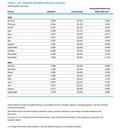
Operable U.S. biofuels capacity was largely unchanged in September, according to data released by the U.S. EIA on Nov. 28. Feedstock consumption was down when compared to both the previous month and September 2024.

Researchers at the Idaho National Laboratory have developed computer models that apply to processing bioenergy crops using equipment traditionally used by the food, minerals and pharmaceuticals industries.

Researchers at the University of Illinois Urbana-Champaign have discovered a novel way to convert food waste into sustainable aviation fuel (SAF) that meets industry standards without relying on fossil fuel blends.

New research has found cover crops that are viable in Washington’s normal “off season” don’t hurt the soil and can be sold as a biofuel source. The study evaluated four cover crops that were grown for multiple years.
The USDA maintained its forecast for 2025-’26 soybean oil use in biofuel production in its latest World Agricultural Supply and Demand Estimates report, released Nov. 14. The estimate for 2024-’25 soybean use in biofuel production was reduced.
The USDA National Agricultural Statistics Service on Nov. 14 released its latest Crop Production report, predicting record-setting soybean yields. The agency reduced its forecast for soybean production.

With support from Minnesota Corn, University of Minnesota Professor of Chemical Engineering Paul Dauenhauer is exploring the corn-to-methanol pathway for biofuels, which could be used to produce SAF.

The National Oilseed Processors Association and the American Soybean Association on Nov. 12 sent a joint letter to President Donald J. Trump, urging the administration to finalize key biofuel policies.
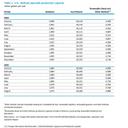
U.S. operable biofuel production capacity expanded by 237 MMgy in August, with gains for ethanol and renewable diesel, according to data released by the U.S. EIA. Biofuel feedstock consumption was up when compared to the previous month.

The U.S. EPA on Oct. 29 announced it will reopen a comment period related to a proposed extension of an information collection request (ICR) focused on provisions regarding biointermediates under the Renewable Fuel Standard.
The U.S. Energy Information Administration is proposing to update current disclosure rules for biofuel feedstock consumption as part of a proposed three-year extension of its Petroleum Supply Reporting System.
Advertisement

@ Copyright 2026 - BBI International - All rights reserved.