


Biomass Magazine has announced the six companies selected to pitch to a group of angel investors and venture capital firms at the International Biomass Conference & Expo, taking place March 18-20, 2025, in Atlanta, Georgia.

U.S. operable biofuels capacity held steady in December, with no changes for ethanol, biodiesel or renewable diesel, according to data released by the U.S. EIA on Feb. 28. Feedstock consumption was up slightly from the previous month.

The General Court of the European Union on Feb. 27 dismissed a challenge against the ReFuelEU Aviation regulations brought by European biofuel producers last year regarding regulation’s exclusion of crop-based fuels.
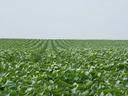
The USDA on Feb. 27 released its Grains and Oilseed Outlook for 2025, predicting a modest increase for 2025-’26 soybean production. Soybean oil prices are projected down slightly, and soybean oil use for biofuels Is expected to increase.

CoBank is predicting soybean planted acreage for 2025 will decline by 3.6% this year, falling to 84 million acres, according to the company’s spring acreage outlook report, which was released Feb. 20.

Pathway Energy CEO Steve Roberts discusses the company’s plans to use industrial wood pellets for the production of sustainable aviation fuel.
The USDA maintained its forecast for 2024-’25 soybean oil use in biofuel production in its latest World Agricultural Supply and Demand Estimates report, released Feb. 11. The outlook for soybean oil prices was also unchanged.

Sasol, Anglo American and De Beers entered into a joint development agreement on Feb. 4 to pilot the production of feedstock for renewable diesel. The initiative aims to support the development of a value chain for renewable fuels in South Africa.

Verity Holdings LLC, a subsidiary of Gevo Inc., and Landus have announced a new agreement aimed at unlocking added value for farmers through sustainability premiums via export markets.
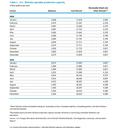
U.S. operatable biofuel production capacity was unchanged in November 2024, according to data released by the U.S. EIA on Jan. 31. Feedstock consumption was up from both the previous month and November 2023.
The U.S. Department of Energy Bioenergy Technologies Office released the Feedstock-Conversion Interface Consortium Capstone Report. The report summarizes the FCIC’s goals, research activities, and achievements over the past three years.
CarbonScape signs feedstock agreements to support industrial biographite production

January 30, 2025
CarbonScape, a pioneer in sustainable battery materials, on Jan. 27 announced the signing of several agreements for the supply woodchip feedstock to the company’s future biographite industrial plants in North America and Europe.

SAF Magazine, in collaboration with the CAAFI, has announced the 2025 North American SAF Conference & Expo will be held Sept. 22-24 in Minneapolis, Minnesota, at the Minneapolis Convention Center. Speaker abstracts can be submitted through May 9.

The U.S. Department of Energy Bioenergy Technologies Office (BETO) announced up to $10 million in funding to support high-impact research and development (R&D) focused on algae system cultivation and preprocessing.

Brooke Rollins, President Donald Trump’s nominee to serve as secretary of agriculture, discussed her support for biofuels and addressed concerns over her ties to the oil industry during a Senate confirmation hearing on Jan. 23.

Sen. Jerry Moran, R-Kan., and a bipartisan groups of colleagues on Jan. 16 reintroduced the Farm to Fly Act, a bill that aims to accelerate the production and development of sustainable aviation fuel (SAF).

Terviva Inc. on Jan. 14 announced a strategic investment from Idemitsu Kosan Co. Ltd. Idemitsu, in partnership with Terviva and Australia-based Stanmore is beginning a trial plantation of Terviva’s pongamia in Queensland, Australia.

The USDA on Jan. 15 published an interim rule that establishes guidelines for quantifying, reporting and verifying GHG emissions associated with the production of biofuel feedstock commodity crops grown in the U.S.

The SAF industry’s path forward depends on utilizing many feedstock streams, mastering complex value chains and embracing innovative technologies.

The U.S. DOE Advanced Research Projects Agency-Energy (ARPA-E) has announced $25 million to develop a U.S.-led marine energy hydrocarbon and industrial commodity supply through the deep-water cultivation of seaweed biomass at million-ton scale.

U.S. soybean production was up 5% last year, according to the 2024 Crop Production Annual Summary released Jan. 10 by the USDA's National Agricultural Statistics Service. Soybean yields were also up from 2023.
The USDA reduced its forecast for 2024-’25 soybean use in biofuel production in its latest World Agricultural Supply and Demand Estimates report, released Jan. 10. The forecast for soybean oil prices is unchanged.
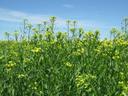
Bayer on Jan. 9 announced a deal with Canada-based Smart Earth Camelina Corp., whereby Bayer has acquired their camelina germplasm, intellectual property, and materials to expand its global leadership position in biomass-based feedstock markets.

Neste and Bayer have signed an MOU aimed at developing a winter canola ecosystem in the U.S, including identifying partners and developing the value chain together, and scaling winter canola production as a raw material for renewable products.

The USDA has appointed 36 members to serve on the newly formed Greenhouse Gas Technical Assistance Provider and Third-Party Verifier Program Advisory Council, informally known as the Growing Climate Solutions Act Advisory Council.
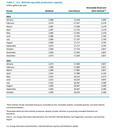
U.S. operable biofuels production capacity increased slightly in October, with a small gain for ethanol, according to data released by the U.S. EIA on Dec. 31. Feedstock consumption was down when compared to October 2023.
U.S. Agriculture Secretary Tom Vilsack on Dec. 23 unveiled the Timber Production Expansion Guaranteed Loan Program, a new program to support American wood processing facilities. The agency is currently offering $220 million in program funding.
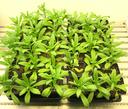
Kansas State University biochemists have used synthetic biology techniques to significantly increase the amount of acetyl-triacylglycerols in pennycress and camelina. The achievement could benefit biofuel producers.
The Soil and Water Outcomes Fund has begun a pilot project with Chevron REG as part of the larger Midwest Climate-Smart Commodity Program. The initiative represents a notable step toward integrating biofuels into sustainable agriculture outcomes.

The U.S. DOE has announced $52 million in funding for six university and industry projects to advance the production of low carbon intensity, purpose-grown energy crops critical to accelerating a clean energy bioeconomy.
Advertisement

@ Copyright 2026 - BBI International - All rights reserved.