


CARB on June 27 announced amendments to the state’s LCFS regulations will take effect beginning on July 1. The amended regulations were approved by the agency in November 2024, but implementation was delayed due to regulatory clarity issues.
Legislation introduced in the California Senate on June 23 aims to cap the price of Low Carbon Fuel Standard credits as part of a larger effort to overhaul the state’s fuel regulations and mitigate rising gas prices.

Taiwan has postponed plans to convert one of its largest coal boilers to burn wood pellets, according to a report filed with the USDA. Opportunities for wood pellets remain in the country’s paper and petrochemical industries.

The U.S. Department of Commerce on June 10 confirmed the termination of 14 discretionary federal advisory committees, including one aimed at boosting the competitiveness of U.S. renewable energy and energy efficiency exports

The U.S. EIA reduced its 2025 and 2026 production forecasts for a category of biofuels that includes SAF in its latest Short-Term Energy Outlook, released June 10. The forecast for 2025 renewable diesel production was also revised down.

A new report by Baringa on behalf of the U.K. REA finds that the use of biomass delivers significant benefits to the U.K. energy system, including providing up to 5.5 GW of reliable “firm” power to help balance variable renewables.

A report published by the International Energy Agency on May 28 shows that biogas production using sustainable feedstocks and current technologies could offset as much as one-fourth of the world’s current annual natural gas demand.

The U.S. exported 846,693.2 metric tons of wood pellets in April, up when compared to both the 781,576.4 metric tons exported in March and the 819,341.5 metric tons exported in April 2024, according to data released by the USDA on June 5.

Darrell Smith chats with Pellet Mill Magazine about his new role as executive director of the U.S. Industrial Pellet Association.

During her trade delegation visit to the U.K., U.S. Agriculture Secretary Brook Rollins met with the U.K. Department for Energy Security and other officials to ensure fair market access for ethanol and wood pellets.

The U.S. Energy Information Administration maintained its 2025 and 2026 forecasts for renewable diesel and “other biofuel” production, which includes SAF, in its latest Short Term Energy Outlook, released May 6.

Ethanol Producer Magazine has announced the keynote speakers for the 2025 International Fuel Ethanol Workshop & Expo (FEW) being held June 9-11, 2025, at the CHI Health Center in Omaha, Nebraska. The general session will take place June 10.
The U.S. exported 781,576.4 metric tons of wood pellets in March, down from 796,490.2 metric tons exported the previous month and 938,622.3 metric tons exported in March 2024, according to data released by the USDA on May 6.

The Canadian International Trade Tribunal on May 5 announced that a preliminary investigation launched earlier this year did not find evidence that imports of U.S. renewable diesel are causing harm to Canada’s domestic renewable diesel industry.
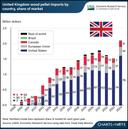
Wood pellets accounted for nearly 19.6% of U.S. forest products exports in 2024, up from 1.6% in 2010, according to data released by the USDA. The vast majority of U.S. wood pellet exports are destined for the U.K.

CoBank latest quarterly research report highlights current challenges facing the biobased diesel industry. The report cites policy uncertainty and trade disruptions due to tariff disputes as factors impacting biofuel producers.

Wood Pellet Association of Canada has launched a multi-lingual website and Japanese market awareness campaign that aims to allow stakeholders to easily access information about the sustainability, quality and reliability of Canadian wood pellets.
The U.S. exported 796,490.2 metric tons of wood pellets in February, down from 825,269.9 metric tons in January, but up when compared to the 696,692.9 metric tons exported in February 2024, according to date released by the USDA on April 3.
The U.S. Department of Commerce has disbanded an advisory committee that provided the agency with private sector advice aimed at boosting the competitiveness of U.S. renewable energy and energy efficiency exports, including ethanol and wood pellets.

Technology group Wärtsilä has partnered with Brazilian energy company Energetica Suape II S.A to conduct a world-first clean energy trial, which will see ethanol – a biofuel mainly produced from sugarcane – used to generate clean power.
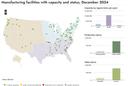
U.S. manufacturers produced approximately 900,000 tons of densified biomass fuels in December, according to the March edition of the U.S. Energy Information Administration’s Monthly Densified Biomass Fuels Report.

The U.K. Trade Remedies Authority on March 17 announced it has initiated an anti-dumping investigation and a countervailing investigation into imports of hydrotreated vegetable oil (HVO), commonly known as renewable diesel, from the U.S.

The Canada Boarder Services Agency on March 6 announced it is initiating investigations into alleged dumping and subsidizing of renewable diesel from the U.S. The announcement follows complaints filed by Tidewater Renewables Ltd. in 2024.
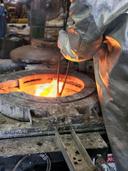
Federally funded research is bringing biomass to steelmaking to reduce the use of fossil coal and lower carbon emissions.

Lawmakers in both the U.S. House of Representatives and the U.S. Senate on March 6 reintroduced legislation that aims to ensure that RINs generated for renewable fuel used by ocean-going vessels would be eligible for RFS compliance.

The Minnesota Senate Taxes Committee on March 3 voted to approved legislation that aims to extend and expand the state’s existing tax credit for sustainable aviation fuel (SAF), which was established in 2023.

The U.K. government on March 3 opened a public consultation on a SAF revenue certainty scheme, which aims to reduce financial risks for emerging SAF producers. The scheme complements the U.K.’s SAF mandate, which came into force Jan. 1, 2025.

After a decade in the torrefaction technology industry and a successfully launched commercial black pellet plant in Thailand, Blackwood Technology B.V. is preparing for growth.

CARB on Feb. 18 announced that amendments to its LCFS program that were approved in November 2024 have been put on hold following the California Office of Administrative Law’s decision to disapprove the amendments due to clarity issues.

Renewable diesel is increasingly replacing petroleum diesel on the U.S. West Coast, where state-level policies are attracting new production capacity and shipments to the region. The fuel continues to mostly be consumed in California.
Advertisement

@ Copyright 2026 - BBI International - All rights reserved.