


The government of Brazil announced Sept. 2 it has raised the quota on U.S. ethanol imports under the tariff rate quote (TRQ) to 750 million liters (198.13 million gallons), up from 600 million liters per year.

UNICA, the Brazilian sugarcane industry association, has announced ethanol production during the first half of August was up more than 20 percent when compared to the same period of last year. The volume of sugarcane milled was also up.

President Donald Trump issued a tweet Aug. 29 suggesting his administration is working on a “giant package� to boost demand for ethanol. He did not indicate what the timeframe for the release of that package might be.

The U.S. Grains Council organized a trade team in July to connect representatives from national refineries, ministries of energy and other key stakeholders in Latin America with U.S. refiners currently blending ethanol with gasoline.

ACE welcomed USGC CEO Ryan LeGrand as a keynote speaker during its 32nd annual conference last week in Omaha. USGC's Stephan Wittig and Jorge Lerdo de Tejada also shared a Mexico specific update with conference attendees.

A report recently filed with the USDA Foreign Agricultural Service's Global Agricultural Information Network provides an overview of Canada's biofuel industry and the country's changing biofuels policy framework.

American Coalition for Ethanol Senior Vice President Ron Lamberty moderated a fuel retailer panel at ACE's annual conference in Omaha, Nebraska Aug. 16. On the panel were Mike Lewis of Pearson Fuels and Randy Gard of Bosselman Enterprises.

UNICA, the Brazilian sugarcane industry association, has announced the volume of sugarcane processed was up during the second half of July. Sugar production was down, while ethanol production was up slightly from 2018.

FROM THE SEPTEMBER ISSUE: Editor Lisa Gibson previews the magazine, including feature articles about emissions control, pump design and technology, finances and risk management, and more.

In a letter sent today, the Renewable Fuels Association encouraged Australia's energy minister to strongly consider U.S. ethanol imports as a cleaner, more affordable alternative to purchasing oil from the U.S. Strategic Petroleum Reserve.

The American Coalition for Ethanol kicked off its annual conference in Omaha Aug. 15. While there was some discussion of the state of the industry and the harm done by small refinery exemptions, there were also messages of optimism.

The U.S. Energy Information Administration has maintained its forecasts for 2019 and 2020 ethanol production in its latest Short Term Energy Outlook, released Aug. 6. Short-term forecasts for ethanol consumption were also maintained.

A report recently filed with the USDA Foreign Agricultural Service's Global Agricultural Information Network shows the average ethanol blend rate in India is expected to reach a record 5.8 percent this year, up from a record of 4.1 percent in 2018.

FROM THE SEPTEMBER ISSUE: The EU's opportunity to grow European ethanol by aligning trade policy with its environmental goals.

Growth Energy and GasBuddy announced Aug. 13 that drivers across the nation can now take advantage of Unleaded 88's affordable prices through GasBuddy's database and app. The app tracks E15 prices at more than 1,800 retail locations.

FROM THE SEPTEMBER ISSUE: Low Carbon Octane Standard could be the way to increase ethanol use beyond E15.

A new report filed with the USDA Foreign Agricultural Service's Global Agricultural Information Network predicts China will miss its goal to implement E10 by 2020 by a wide margin, likely only achieving a blend rate of 3 to 3.5 percent in 2020.

Data released Wednesday by the Minnesota Department of Commerce prove that the marketplace is already responding to President Trump's elimination of a decades-old regulatory barrier severely limiting the sale of E15 in the summertime.

Aemetis Inc. released second quarter financial results Aug. 8, reporting growth for its biodiesel business in India, outlining improvement projects underway at its corn ethanol plant, and discussing planned RNG and cellulosic ethanol production.

The Minnesota Department of Agriculture announced Aug. 6 funding for a bioenergy pilot plant and three biofuel blending infrastructure projects, including one that that focuses on E15 and E85 distribution.

The U.S. exported 128.42 million gallons of ethanol and 962,592 tons of distillers grain in June, according to data released by the USDA Foreign Agricultural Service on Aug. 2. Exports of both products were both down when compared to June 2018.

Utilizing Market Access Program and Agricultural Trade Program funds, the U.S. Grains Council's Mexico office has invested in marketing U.S. distillers dried grains with solubles (DDGS) through strategic feeding trials in southeast Mexico.

A recent report filed with the USDA Foreign Agricultural Service's Global Agricultural Information Network discusses the current use of biofuels in the European Union and the potential for increased use in the future.
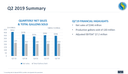
Pacific Ethanol president and said the company's second quarter crush margin improved, but the industry is still suffering from oversupply.

FROM THE JULY ISSUE: Editor Lisa Gibson previews the magazine, including feature articles about Nebraska's importance to the ethanol industry, a review of the 2019 Fuel Ethanol Workshop and Expo, and more.

FROM THE AUGUST ISSUE: Finances, technology, streamlined processes and more take the stage at FEW 2019.

FROM THE AUGUST ISSUE: In Nebraska, ethanol, cattle and agriculture are intertwined, with major impacts on the state's economy.

FROM THE AUGUST ISSUE: Nations around the globe need to follow Brazil, U.S.'s lead in ethanol adoption to lower GHG emissions.

FROM THE AUGUST ISSUE: An inside look at President Trump's June visit to SIRE celebrating year-round E15.

FROM THE AUGUST ISSUE: Emissions testing reforms needed to reduce misinformation about ethanol.
Advertisement

@ Copyright 2026 - BBI International - All rights reserved.