


UNICA, the Brazilian sugarcane industry association, has announced that sugarcane processing and ethanol production were both down during the first half of August. Ethanol sales were also down during the two-week period.

Aemetis Inc. has completed the installation and commissioning at the Keyes ethanol plant in California of the first Mitsubishi Zebrex system in North America, reducing overall energy use and lowering the carbon intensity of ethanol.

U.S. operable biofuel production capacity expanded to 21.58 billion gallons per year in June, up 125 MMgy when compared to May, according to data released by the U.S. Energy Information Administration on Aug. 31. Feedstock consumption was also up.

The ethanol industry is poised to help alleviate fuel shortages in Illinois, Indiana, Michigan and Wisconsin caused by the temporary shutdown of Bp's oil refinery in Whiting, Indiana, following an Aug. 24 electric fire.

U.S. fuel ethanol production fell by nearly 2 percent the week ending Aug. 26, according to data released by the U.S. Energy Information Administration on Aug. 31. Stocks of fuel ethanol were down approximately 1 percent.

Rex American Resources on Aug. 30 released financial results for its fiscal Q2, reporting increased net sales and revenue. Moving into Q3, operations currently remain profitable but the company is facing increased challenges.

Fuel ethanol consumption in Canada is expected to grow by approximately 8.6 percent this year, according to a report filed with the USDA. Imports of U.S. fuel ethanol are expected to reach a record 1.5 billion liters (396.26 million gallons).
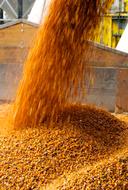
The USDA recently released its Grain Crushings and Co-Products Production report for August, reporting that corn use for fuel ethanol production in June was down when compared to the previous month, but up when compared to June 2021.

The U.S. was home to 192 fuel ethanol plants with a combined capacity of 17.38 billion gallons per year as of Jan. 1, 2022, according to data released by the U.S. EIA. Capacity fell by five plants and 166 MMgy when compared to Jan. 1, 2021.

Brazil-based CB Bioenergia plans to develop a 10 MMly (2.64 MMgy) ethanol plant in Rio Grande do Sul, according to a statement released by the state government on Aug. 23. The facility will process wheat, triticale and corn feedstock.

Poet on Aug. 24 announced that it has formally received the Global Food Safety Initiative Food Safety Management System Certification (FSSC 22000) its bioprocessing facilities in Shell Rock, Iowa, and Fairmont, Nebraska.

IHI Power Services Corp has announced a 15-year asset management deal with California Ethanol + Power to oversee its forthcoming Sugar Valley Energy campus in California. The facility will produce ethanol, biomass power and RNG.

U.S. fuel ethanol production capacity was up slightly the week ending Aug. 19, according to data released by the U.S. Energy Information Administration on Aug. 24. Stocks of fuel ethanol were up nearly 2 percent.

As of January 1, 2022, biofuel plant production capacity in the United States reached 21 billion gallons per year (gal/y) from 275 facilities. More than four-fifths of U.S. biofuel production capacity was for fuel ethanol.
Project aims to reduce water, energy in ethanol production

By University of Nebraska – Lincoln, Research and Economic Development
August 23, 2022
Nebraska researchers are studying how to make ethanol production more environmentally sensitive by reducing the amount of water and energy required to produce it and cutting the air emissions that result.

Industry leaders had plenty to laud at the International Fuel Ethanol Workshop & Expo in June. The show, back in Minneapolis, Minnesota, was once again focused on technology, services and solutions in the context of current marketplace dynamics.

At the 2022 International Fuel Ethanol Workshop & Expo, the world's largest biofuels conference, producers, industry stakeholders and vendors gathered to connect and learn in Minneapolis, Minnesota.

Praj has announced the inauguration of Indian Oil Corp. Ltd.'s 2G ethanol plant. Praj is technology licensor and EPCM partner for the landmark project. The facility produces ethanol from rice straw feedstock.

UNICA, the Brazilian sugarcane industry association, has released data showing that sugarcane processing and ethanol production by mills in the south-central region of the country was up during the second half of July.

U.S. fuel ethanol production dropped nearly 4 percent the week ending Aug. 12, falling below 1 million barrels per day for the first time since mid-May, according to data released by the U.S. EIA on Aug. 17. Ethanol stocks were up nearly 1 percent.
Some facilities that were originally designed and operated as fuel-grade ethanol plants are diversifying to produce higher-grade alcohol. There are permitting and compliance hurdles that may be encountered when making these changes to a biorefinery.

President Joe Biden on Aug. 16 signed the Inflation Reduction Act into law, calling the legislation the "biggest step forward in climate—ever" and stressing it will allow the U.S. to boldly take additional steps towards meeting its climate goals.

Thailand's consumption of fuel ethanol is expected to increase in 2022, but remain below pre-COVID levels, according to a report filed with the USDA Foreign Agricultural Service's Global Agricultural Information Network.

BBI International has announced the 39th Annual International Fuel Ethanol Workshop & Expo will be held June 12-14, 2023 at the CHI Health Center in Omaha, Nebraska. Speaker presentation abstracts will be accepted through Feb. 10, 2023.

U.S. fuel ethanol production fell by 2 percent the week ending Aug. 5, according to data released by the U.S. Energy Information Administration on Aug. 10. Stocks of fuel ethanol were down approximately 1 percent.

Gevo Inc. plans to host a groundbreaking ceremony in September to kick off the initial site work phase at its proposed Net Zero 1 facility under development in Lake Preston, South Dakota, according to comments made by CEO Patrick Gruber on Aug. 8.

Alto Ingredients Inc. released second quarter financial results on Aug. 8, reporting increased net sales and net income. During a second quarter earnings call, CEO Mike Kandris discussed various plant improvement and upgrade projects.

The U.S. Energy Information Administration maintained its forecasts for 2022 and 2023 fuel ethanol production in its latest Short-Term Energy Outlook, released Aug. 9. The agency also maintained its forecast for 2022 and 2023 ethanol consumption.

In a recently signed contract, ICM, Impacto Energia S/A and its sister company, Impacto Bioenergia, have agreed to build a new dry-mill ethanol production facility in Bahia, Brazil, with an estimated Q1 2025 start date.

Aemetis Inc. released Q2 financial results on Aug. 3, reporting renenues of $65.9 million, up 20 percent when compared to the second quarter of 2021. The company also dicussed its biogas, advanced biofuel and CCS projects.
Advertisement

@ Copyright 2026 - BBI International - All rights reserved.