


The Canadian International Trade Tribunal on May 5 announced that a preliminary investigation launched earlier this year did not find evidence that imports of U.S. renewable diesel are causing harm to Canada’s domestic renewable diesel industry.

USDA on May 6 announced it will offer $23 million in grants through the Forest Service’s Hazardous Fuels Transportation Program to support transporting hazardous fuels – such as dead or downed trees – from national forests to processing facilities.

Reps. Mike Carey, R-Ohio, and Mariannette Miller-Meeks, R-Iowa, on May 1 introduced legislation that aims to retroactively extend the biodiesel blenders tax credit (BTC) and the second-generation biofuel producer tax credit.

A broad coalition representing more than 350 trucking fleets, shippers, and supporters of freight movement is urging Congress to extend the biodiesel blenders’ tax credit to lower supply chain costs and protect consumers from inflationary pressures.

The Oregon DEQ has confirmed that the 2024 annual report deadline for the state’s Clean Fuels Program will be delayed until May 30 due to a cyberattack the resulted in an extended outage of the Oregon Fuels Reporting System.

Legislation currently under consideration by the New York legislature aims to establish a clean fuel standard (CFS) that would reduce the greenhouse gas (GHG) intensity from on-road transportation by 20% by 2033.
ABFA: EPA must issue 2026 RVOs reflecting strong domestic biofuel production capacity

By Advanced Biofuels Association
April 24, 2025
On April 23, the Advanced Biofuels Association (ABFA) met with officials in the U.S. EPA to convey the vital importance of domestic biofuel production to the Trump-Vance administration’s energy dominance policy agenda.
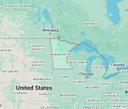
Legislation pending in Minnesota aims to classify certain types of woody biomass as carbon free. It would also provide grant funding to a biomass power producer to support the disposal of wood infested by emerald ash borer.

CARB on April 4 released a third set of proposed changes to the state’s LCFS. More than 80 public comments were filed ahead of an April 21 deadline, including those filed by representatives of the ethanol, biobased diesel and biogas industries.

The Oregon Department of Environmental Quality on April 18 proposed to delay the 2024 annual report deadline for the state’s Clean Fuels Program due to a cyberattack and extended outage of the Oregon Fuels Reporting System.

The Washington Senate on April 15 voted 25 to 23 in favor of legislation that aims to update the state’s Clean Fuels Standard, setting more ambitious carbon reduction goals that would require a 45% reduction in greenhouse gas (GHG) emissions by 2038.

The 2025 International Biomass Conference & Expo focused on innovation, policy, strategy and collaboration across the bioenergy industry sectors.

In a rapidly evolving energy landscape, the 41st International Fuel Ethanol Workshop & Expo will return June 9–11 to the CHI Health Center in Omaha, Nebraska. The event is recognized as the largest and longest-running ethanol conference in the world.

The U.S. EPA on April 17 reported that 1.82 billion RINs were generated under the RFS in March, down from 1.93 billion generated during the same month of 2024. Approximately 5.34 billion RINs were generated during the first quarter of 2025.

The U.S. EPA on April 17 published updated SRE data showing that five new SRE petitions have been filed under the RFS during the past month. According to the agency, 161 SRE petitions are currently pending,
A recent media brief explored the biogas industry’s successes in 2024 and examined policy influencing the future of biogas.

CoBank latest quarterly research report highlights current challenges facing the biobased diesel industry. The report cites policy uncertainty and trade disruptions due to tariff disputes as factors impacting biofuel producers.

The U.S. EIA on April 15 released its Annual Energy Outlook 2025, which includes energy trend projections through 2050. The U.S. DOE, however, is cautioning that the forecasts do not reflect the Trump administration’s energy policy changes.

On April 9, the Pellet Fuels Institute hosted a fly-in, visiting 29 different congressional offices to discuss the wood pellet industry and the PFI’s policy and regulatory agenda. A dozen PFI member representatives participated in the event.

The USDA on April 14 announced the cancellation of its Partnerships for Climate-Smart Commodities program. Select projects that meet certain requirements may continue under a new Advancing Markets for Producers initiative.

The governors of Iowa, Nebraska, South Dakota and Missouri on April 10 sent a letter to U.S. EPA Administrator Lee Zeldin urging the agency to set higher Renewable Fuel Standard renewable volume obligations (RVOs).

President Donald Trump on April 8 issued an executive order that aims to protect oil, natural gas, coal, hydropower, geothermal, biofuel, critical mineral, and nuclear energy resources from state overreach.

Growth Energy and Clean Fuels Alliance America on April 14 filed a reply brief in a case challenging the U.S. EPA for its failure to reallocate gallons lost due to SREs granted after RVOs have been issued under the Renewable Fuel Standard.

Sen. Roger Marshall, R-Kan., and Rep. Marcy Kaptur, D-Ohio, on April 10 reintroduced legislation to extend the 45Z clean fuel production credit and limit eligibility for the credit to renewable fuels made from domestically sourced feedstocks.

Representatives of the U.S. biofuels industry on April 10 submitted comments to the U.S. Department of Treasury and IRFS providing recommendations on how to best implement upcoming 45Z clean fuel production credit regulations.
Lawmakers in Wisconsin on April 3 announced their intent to introduce legislation that would create a $1.50 per gallon production tax credit for SAF. The bill is currently circulating for co-sponsorship support and will be formally introduced soon.

A group of 16 senators, led by Sens. Chuck Grassley, R-Iowa, and Amy Klobuchar, D-Minn., on April 8 sent a letter to U.S. EPA Administrator Lee Zeldin urging the agency to increase RVO and account for SREs in the agency’s upcoming RFS rulemaking.

A group of small refineries on April 4 sent a letter to President Donald Trump urging him “to sent the multi-national oil and biofuels companies back to the drawing board to come up with a biofuels policy that does no harm.”

Reps. Brian Fitzpatrick, R-Pa., and Linda Sanchez, D-Calif., and Sens. Thom Tillis, R-N.C., and Mark Warner, D-Va., on April 2 reintroduced legislation that aims to create a $1-per-gallon tax credit for RNG sold for use as transportation fuel.
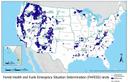
Agriculture Secretary Brooke Rollins on April 3 issued a Secretarial Memo to establish a “Emergency Situation Determination” that aims to empower the U.S. Forest Service to expedite efforts to reduce wildfire risk on National Forest System lands.
Advertisement

@ Copyright 2026 - BBI International - All rights reserved.