


On Sept. 16, the USDA released the American Biofuels Trade Outlook, a plan that builds upon 2025’s record U.S. ethanol export performance, removes restrictions to American biofuels, and secures new market opportunities for U.S. farmers.

The Senate Agriculture Committee on Sept. 16 voted 12-11 to advance the Agriculture Act of 2026, commonly referred to as Senate Farm Bill 2.0. The legislation includes provisions allowing year-round sales of E15 and supporting the SAF industry.
Rollins announces launch of American Biofuels Trade Outlook

September 15, 2026
U.S. Agriculture Secretary Brook Rollins on Sept. 15 announced the launch of USDA’s new American Biofuels Trade Outlook, a four-part strategy that aims to boost export opportunities for U.S. biofuel producers.

The Ontario government is building a strong and self-reliant economy by investing over $17.3 million in four projects that will modernize forest sector manufacturing, enhance the industry’s competitive advantage and strengthen forestry supply chains.

The IRS on Sept. 8 issued guidance on the 45Z clean fuel production credit that provides the 2026 emission rate tables used to calculate the credit and provides guidance on the use of manure-derived fuels and regenerative agriculture practices.

The U.S. Department of Energy on Sept. 8 released an update of its 45ZCF-GREET model, which is used to calculate fuel emissions rates for the 45Z clean fuel production credit. The agency previously updated the model in June 2026.
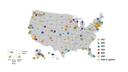
The U.S. Department of Energy’s Alternative Fuels and Feedstocks Office and the National Laboratory of the Rockies have selected recipients for the FY26 Waste to Energy and Materials Technical Assistance program.

The USDA has released a new Data Modernization Plan to put farmers first, reduce unnecessary burdens on producers, and improve the timeliness, accuracy, and usefulness of the agricultural data that informs decisions across American agriculture.

As the USDA’s regenerative ag feedstock framework moves toward implementation under the 45Z clean fuel production credit, attention is growing towards reallocating reduced-CI feedstock between separately located, but commonly owned elevators.
The U.S. Department of Energy’s Office of the Secretarial Boards & Councils on Aug. 18 published a notice announcing the Secretary of Energy Advisory Board will be renewed for a two-year period beginning on Aug. 26.

The U.S. EPA on Aug. 31 issued a final rule extending the RFS compliance reporting deadline for compliance year 2025 from Sept. 1, 2026, to Oct. 1, 2026. The delay is related to small refinery exemption (SRE) decisions issued earlier in the day.

The U.S. EPA on Aug. 31 announced decisions on 34 compliance year 2025 SRE petitions filed under the RFS. The agency granted 18 full exemptions, 11 partial (50%) exemptions, denied three petitions and determined two petitions to be ineligible.

The California Senate on Aug. 26 unanimously voted to pass the Forest Organic Residue, Energy and Safety Transformation and Wildfire Prevention Act, which authorizes a new program to maintain and expand biomass power generation within the state.

The White House Office of Management and Budget is reviewing a proposed regulatory action that would extend the 2025 compliance reporting deadline for the Renewable Fuel Standard. That deadline is currently set for Sept. 1.

The attorneys general of Iowa, South Dakota, Missouri and Nebraska sent a letter to U.S. EPA Administrator Lee Zeldin urging the agency to refrain from waiving RFS blending obligations for oil refineries that are currently making record profits.
The ASA is sounding the alarm over reports that small refinery exemptions for the 2025 RFS compliance year could far exceed previous government projections, delivering a major blow to domestic biofuel demand.

The U.S. EPA on Aug. 20 published updated Renewable Fuel Standard data, reporting that four new small refinery exemption (SRE) petitions were filed under the program during the past month. A total of 40 SRE petitions are now pending.

The U.K. Environment Agency on Aug. 14 formally granted Drax Power Ltd. a permit change that will allow carbon capture to be implemented at Drax Power Station. Drax first applied for the permit variation in May 2023.

The European Commission on July 30 approved a EUR 290 million ($338.61 million) Dutch state aid package to support sustainable aviation fuel (SAF). The two approved support schemes aim to boost SAF supply and demand.

The NCGA filed comments with the Office of Management and Budget encouraging the agency to reconsider updates recommended by one of its committees to more directly capture the economic impact of the emerging bioeconomy.
USDA Rural Development grant to West Bio-Hat Creek-Bioenergy boosts rural energy and fire mitigation

USDA Rural Development California State Director Bryan Anguiano met with REAP funding recipient West Bio-Hat Creek Bioenergy and recognize how the facility is putting $570,625 in grant to work with its bioenergy power plant.
Darling Ingredients announces agreement to sell approximately $150 million in production tax credits

Darling Ingredients Inc. on Aug. 11 announced an agreement to sell approximately $150 million of production tax credits to a corporate buyer. The credits were generated by the company’s Diamond Green Diesel joint venture.

The U.S. Forest Service on Aug. 5 warded $105.5 million in wood innovation grants to 177 projects across the nation. Funded projects include those focused on biochar, bioenergy and wood pellet production.

The Senate Agriculture Committee on Aug. 6 failed to advance the Agricultural Act of 2026, commonly referred to as the Farm Bill. Committee members are expected to continue work on the legislation when the Senate reconvenes in mid-September.

The Senate Agriculture Committee on July 31 released an updated draft of its 2026 Farm Bill 2.0 that includes language to enable year-round sales of E15 and revamp the Renewable Fuel Standard small refinery exemption (SRE) program.
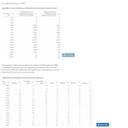
The U.S. EPA on Aug. 3 issued decisions on six small refinery exemption (SRE) petitions for RFS compliance years 2023 and 2024. The agency granted one full exemption, two partial 50% exemptions, and declared three petitions as ineligible.

CHAR Technologies Ltd. on July 21 welcomed a significant regulatory development in France that, if adopted, would open the country's flagship long-term support mechanism for renewable gas to pyrolysis-based production
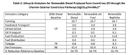
The U.S. EPA on July 14 approved a RFS fuel pathway petition filed by Chevron Renewable Energy Group Inc. that will allow the company’s Geismar, Louisiana, faculty to generate RIN for fuel produced from CoverCress oil feedstock.
In a court filing made July 28, the U.S. EPA announced it will issue a decision on two RFS compliance year 2024 SRE petitions filed by Alon Refining and HF Sinclair by Aug. 4, ahead of the Aug. 11 deadline requested by the oil companies.
Advertisement

@ Copyright 2026 - BBI International - All rights reserved.